
Executive Summary
The proposed Revell Site Deep Geological Repository (DGR) faces profound criticism regarding the integrity of its regulatory framework. Evidence from public submissions and internal technical analyses suggests a process marred by allegations of regulatory capture, the manufacturing of consent through economic inducements, and the strategic exclusion of high-risk project components—specifically long-distance transportation—from federal scrutiny. Furthermore, the systematic marginalization of unorganized territories, such as Melgund Township, which resides in the immediate shadow of the project, highlights a democratic deficit that undermines the proponent’s claim of a ‘consent-based’ siting process. A significantly strengthened regulatory process is required to restore public trust and ensure that the multi-generational risks of high-level nuclear waste are managed with absolute transparency and scientific rigor.
Institutional Bias and Regulatory Capture
A primary driver for a stronger regulatory process is the perceived lack of independence between the proponent (NWMO) and the primary lifecycle regulator, the Canadian Nuclear Safety Commission (CNSC). Stakeholders have characterized the CNSC as a “captive regulator” that is funded by the very industry it oversees, leading to a perceived lack of objective oversight [Ref: 251]. This sentiment is echoed by Indigenous representative groups who describe the CNSC as a “laggard” in implementing international standards such as the United Nations Declaration on the Rights of Indigenous Peoples (UNDRIP) [Ref: 655].
Internal analysis confirms that the NWMO, a non-Crown entity, has inappropriately taken positions regarding Section 35 constitutional rights, an authority that rests solely with the Crown [Ref: 705]. The current framework allows the proponent to lead the ‘Reconciliation Journey’ while simultaneously operating under federal acts that are admittedly ‘imposed’ on Indigenous Peoples [Analysis: Acknowledgment of Truths]. This creates a conflict of interest where the proponent manages the social license required for its own project approval.
Manufacturing Consent and Economic Coercion
The siting process has been described as a “fraudulent” and “manipulative” framework designed to target economically vulnerable communities [Ref: 251, 604]. Allegations of “buying consent” through financial inducements, such as “learning funds,” “exit payments,” and infrastructure gifts like fire trucks, have been raised as evidence of economic coercion [Ref: 116, 231, 595]. Critics argue that these payments create a “transparency barrier,” particularly regarding confidential hosting agreements that prevent the public from verifying social and environmental safeguards [Ref: 116, 256].
Furthermore, the proponent’s definition of a “willing host” is geographically and politically narrow. While the Township of Ignace and Wabigoon Lake Ojibway Nation (WLON) are recognized as hosts, the immediate neighbors in the unorganized territory of Melgund Township—specifically the communities of Dyment and Borups Corners—are excluded from the formal willingness framework despite being located less than 10 kilometers from the project centroid [Analysis: Executive Summary – Site Selection and Community Engagement]. This exclusion suggests a strategy of manufacturing consent by limiting the decision-making power to those receiving direct financial benefits while marginalizing those who bear the highest proximity risks.
Project Splitting and Scoping Deficiencies
The NWMO has been accused of “project splitting” by excluding the 50-year transportation phase from the Initial Project Description (IPD) [Ref: 189, 255, 605]. By treating the repository and the movement of 5.9 million fuel bundles as separate regulatory entities, the proponent avoids a holistic assessment of the cumulative risks to the Trans-Canada Highway (Highway 17) corridor [Analysis: Executive Summary – Description of the Project]. This scoping failure renders “corridor communities” procedurally invisible, despite the potential for a “mobile Chernobyl” scenario that could sever Canada’s primary east-west land artery [Ref: 116, 242].
Evidence from Public Registry
- Institutional Distrust: Commenters express a fundamental lack of trust in the NWMO’s ability to manage long-term risks, citing the organization’s composition of nuclear power companies with a vested interest in continued production [Ref: 230].
- Procedural Unfairness: The 30-day public comment period for a 1,200-page technical document has been labeled a “mockery of democratic engagement” and a “functional barrier to entry” for volunteer-run groups and residents of unorganized territories [Ref: 21, 116, 256].
- Indigenous Sovereignty: The Grand Council Treaty #3 and other Nations assert that the current process ignores traditional laws, such as Manito Aki Inaakonigewin (MAI), and fails to meet the standard of Free, Prior, and Informed Consent (FPIC) [Ref: 660, 705].
Technical Deficiencies & Gaps
Internal technical reviews have identified several critical gaps in the proponent’s submission:
- Data Deficiencies: The NWMO admits that baseline data for Indigenous social, cultural, and health factors remains uncharacterized, and socio-demographic data for unincorporated communities like Melgund is missing [Analysis: 15.5 Population and Demographics].
- Conceptual Safety: The safety case relies heavily on “conceptual” post-closure safety analyses and a “graded approach” that defers detailed design and risk modeling to later licensing stages, effectively asking for approval based on incomplete data [Analysis: 8. Related Provisions in the Physical Activities Regulations].
- Hydrogeological Uncertainty: The characterization of the Revell Batholith as “homogeneous” is based on only six deep boreholes for a 40 km by 15 km rock unit, which is statistically insufficient to ensure long-term containment integrity [Analysis: 14.2.3 Planned Work].
Recommendations & Mandates
To address these systemic issues, we strongly recommend the following regulatory mandates:
First, the Impact Assessment Agency of Canada (IAAC) should appoint a fully independent, multi-disciplinary Review Panel that is free from any historical or financial ties to the nuclear industry. This panel must be granted the authority to conduct a de novo review of the site selection process, including an audit of all financial disbursements made to communities to determine if they constituted economic coercion. We strongly recommend that the definition of “host community” be expanded to include all residents within a 20-kilometer radius of the project site, regardless of municipal or unorganized status, granting them equal standing in the willingness framework.
Second, we strongly recommend that the scope of the Impact Assessment be immediately expanded to include the full lifecycle of used fuel transportation as an “incidental activity” under the IAA. This must include a comprehensive risk assessment of the Highway 17 corridor, modeling accident scenarios, emergency response times in remote unorganized territories, and the long-term “stigma effect” on property values and tourism. The proponent should be required to demonstrate 100% self-sufficiency for emergency response, as the current reliance on volunteer fire departments in neighboring areas is insufficient for a Class 1B nuclear facility [Analysis: 15.7 Infrastructure and Services].
Third, we strongly recommend the formalization of an Indigenous Data Sovereignty Framework. The NWMO must fund community-led baseline studies that are owned and controlled by the First Nations and Métis groups. These studies must be completed and integrated into the Impact Statement before any further regulatory milestones are met. Furthermore, a legally binding “Sovereignty Reconciliation Agreement” should be established, ensuring that where Anishinaabe traditional laws (such as MAI) exceed federal environmental standards, the more stringent protection level is applied.
Conclusion
The current regulatory process for the Revell Site DGR is perceived by a significant portion of the public and technical experts as a closed-loop system designed to facilitate industry goals rather than protect the public interest. The combination of regulatory capture, manufactured consent, and strategic project-splitting creates an unacceptable risk profile for a project with a million-year hazard duration. Only by implementing a more rigorous, inclusive, and independently verified regulatory framework can the Government of Canada ensure the long-term safety and social legitimacy of its nuclear waste management strategy.
About the Deep Geological Repository (DGR) for Canada’s Used Nuclear Fuel Project
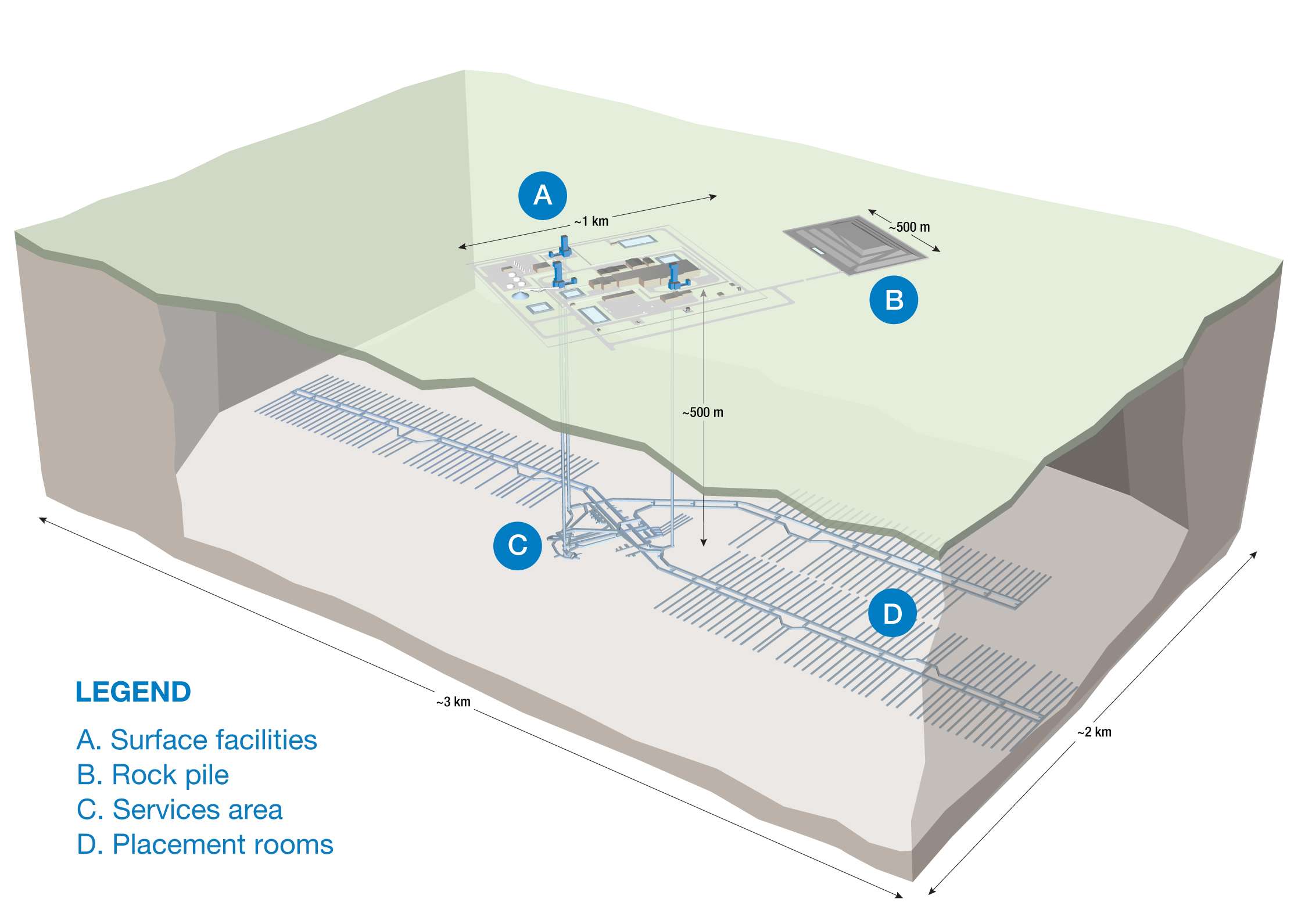
The Nuclear Waste Management Organization (the NWMO) is proposing a new underground deep geological repository system designed to safely contain and isolate used nuclear fuel. Wabigoon Lake Ojibway Nation (WLON) and the Township of Ignace have been selected as the host communities for the proposed project, which is located 21 kilometres southeast of the WLON and 43 kilometres northwest of the Town of Ignace, Ontario along Highway 17. As proposed, the Deep Geological Repository (DGR) for Canada’s Used Nuclear Fuel Project would provide permanent storage for approximately 5.9 million bundles of used nuclear fuel. The project is expected to span approximately 160 years, encompassing site preparation, construction, operation and closure monitoring. The project assessment is being conducted in collaboration with the Canadian Nuclear Safety Commission.
Learn more about the Integrated Impact Assessment process which is led by the Impact Assessment Agency of Canada and Canadian Nuclear Safety Commission.
- Read the Summary of Issues (February 16, 2026)
- Read the Summary of the Initial Project Description (January 5, 2026)
- Read the Initial Project Description (January 5, 2026)
- Learn More about the Melgund Integrated Nuclear Impact Assessment (MINIA) Project
- Learn More about the Nuclear Waste Management Organization (NWMO)
About the Author