
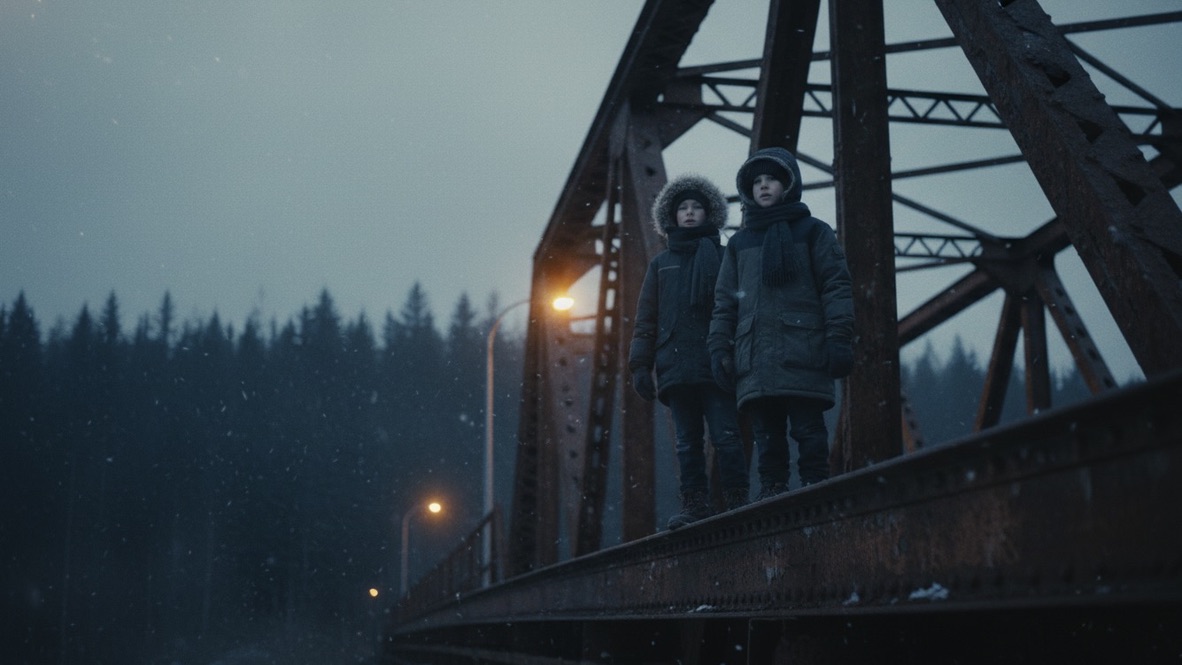
The landscapes of Northwestern Ontario inspire stories that breathe, evolve, and live in the imagination of readers.
Outcomes of Unfinished Tales and Short Stories
As we look back on the past year, one project stands out for its quiet ambition and surprising impact. Though it began as a small experiment during a few weekend workshops, it quickly revealed itself to be far more than a casual exercise. What seemed modest in scale evolved into one of our most unusual and thought-provoking initiatives, challenging assumptions about storytelling, technology, and the nature of creative practice.
One of the primary outcomes of Unfinished Tales and Short Stories was a profound shift in how artists understand their relationship to artificial intelligence and digital systems. Participants entered the project carrying a common anxiety—the fear of obsolescence, replacement, or loss of authorship. They leave with something far more durable: fluency.
Through sustained practice, artists learned to engage AI not as an abstract threat or automated author, but as a creative collaborator that responds to intention, constraint, and taste. Prompting became a poetic act rather than a technical one. Judgment, intuition, and aesthetic discernment were not diminished by generative systems; they were intensified. Artists learned that their most valuable skill is not speed or output, but the ability to recognize meaning, resonance, and emotional truth within a field of possibility.
The core capacity developed here was curatorial authorship. Artists shifted from producing every word to shaping the conditions under which meaningful language emerges. This reframed artistic identity—from solitary creator to conductor, choreographer, and systems thinker—without erasing individuality or voice.
Systems Literacy as Artistic Practice
A central outcome of the project was the development of what can best be described as creative systems literacy. Artists and community members acquired an intuitive understanding of how digital tools, workflows, and data structures behave under creative pressure. This literacy is not technical in a narrow sense; it is conceptual and transferable.
The team learned to see databases as compositional structures, metadata as narrative scaffolding, and workflows as performative sequences. These skills parallel historical craft traditions—learning to mix pigments, bind books, or tune instruments—but were firmly grounded in contemporary digital culture.
The result is not artists who become programmers, but artists who are no longer intimidated by complexity. Even though much of these experiences were deliberately introductory in nature, all gained some level of confidence in adapting to unfamiliar tools, designing their own creative processes, and asserting agency within digital environments rather than passively consuming them.

Organizational Outcomes: From Scarcity to Resilience
When these newly fluent artists apply this learning to their organizations, the impact scales beyond the individual. Unfinished Tales and Short Stories demonstrates how artistic systems thinking can directly address the structural challenges faced by small and under-resourced arts organizations.
The project modeled the creation of an elegant, low-cost digital infrastructure—a “creative nervous system”—that replaced ad hoc workflows with intentional, sustainable systems. Skills developed through storytelling metadata, narrative lifecycles, and content architecture transfer seamlessly into grant tracking, digital archives, donor databases, and public-facing platforms.
We believe, by automating repetitive administrative tasks and simplifying information management, organizations are better able reclaim time and energy for artistic development, community engagement, and long-term planning. This shift aims to represent not just incremental improvement, but a structural change in how organizations function and survive.
Northern and Remote Impact
For Northern and geographically isolated arts organizations, the outcomes are especially significant. Digital platforms developed through this project function as permanent global stages, enabling local and Indigenous stories to reach international audiences without the prohibitive costs of touring or physical distribution.
The project worked to also support the creation of living archives—searchable, durable, and culturally grounded—that preserve knowledge on community terms. In doing so, it addresses both cultural continuity and digital sovereignty, ensuring stories are shared without being extracted or flattened by external platforms.

A Studio for the Future?
Ultimately, Unfinished Tales and Short Stories reframes what artistic output can be. The project does not function as a factory producing content; it operates as a studio that cultivates skill, confidence, and agency.
The systems built, the capacities developed, and the methodologies documented form a reusable foundation upon which future projects can be created more efficiently and more ambitiously. For funders, the return on investment is cumulative: not a single finished work, but an organization and cohort of artists better equipped to deliver the next ten.
Art as Capacity, Process, and Empowerment
This project asserts that the creation of skills, tools, and creative environments is itself a legitimate artistic act. The art exists not only in the fragments produced, but in the transformation of the people and institutions involved.
As an experiment, Unfinished Tales and Short Stories functioned as a social sculpture and pedagogical installation. Its primary medium is capacity-building, and its lasting output is empowerment. The artists and organizations shaped through this work are not passive participants in the digital future—they are its architects.
The work is intentionally unfinished, because the artist is never finished. In that ongoing process of learning, adapting, and becoming, the project makes its most enduring contribution.
Acknowledgements
The project was made possible with funding and support from the Ontario Arts Council Multi and Inter-Arts Projects program and the Government of Ontario. Special thanks to The Arts Incubator Winnipeg, Art Borups Corners; The Local Services Board of Melgund and the Minneapolis College of Art and Design Creative Entrepreneurship program.
About the Author