Community infrastructure is about more than buildings. It is about bringing people together and creating the conditions for lasting participation.
There’s been a lot of work taking place in and around the recreation complex this year. The improvements taking place at the Dyment Recreation Hall and community complex are creating something much bigger than upgraded facilities. They are helping build the capacity for a community to connect, participate, adapt and have a stronger voice in its own future.
When people see the work underway in Melgund Township, they most often see the community garden, the new growing beds, or the improvements to the hall’s water system and kitchen facilities. These are tangible investments, made possible through our Ontario Trillium Foundation Capital grant and other community partnerships. But the real outcome of this year’s work extends well beyond the physical improvements.
We are building community capacity.
The improvements to the hall and recreation complex are not just about recreation programs, or food security, active living, or providing space for arts, culture and heritage. They are about creating the conditions for people to come together, share knowledge, organize activities, develop relationships and take part in community life. A functioning community facility gives local residents and organizations somewhere to meet, plan, make things, hold workshops, share resources and turn ideas into action.
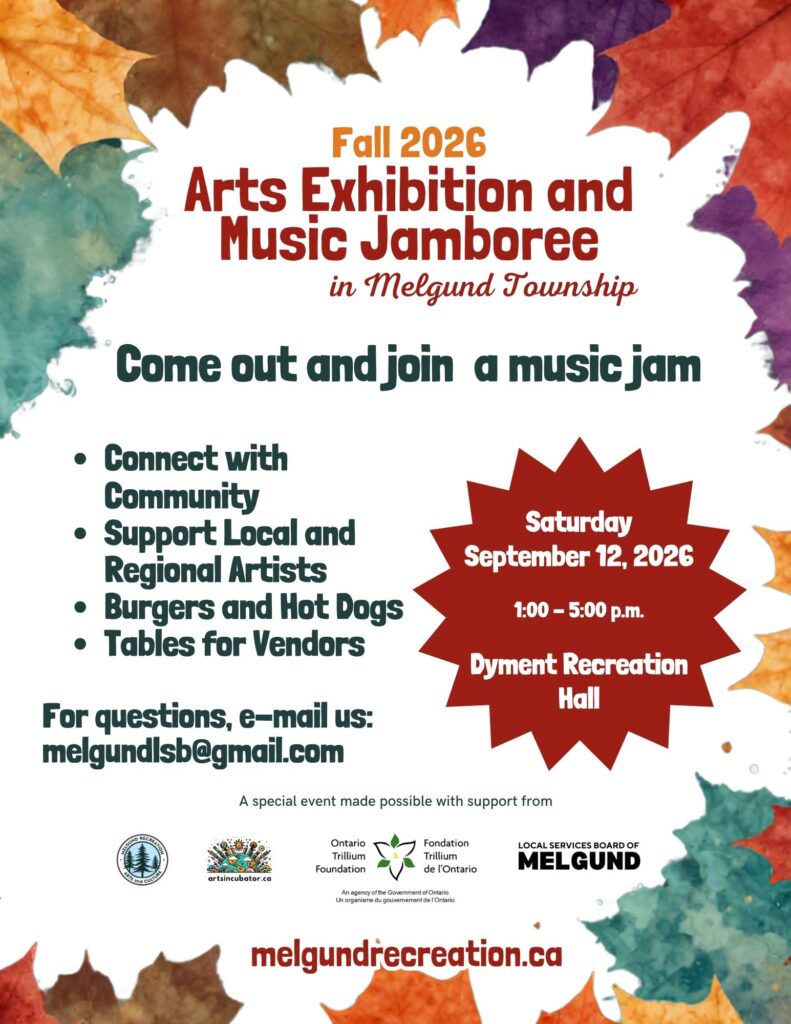
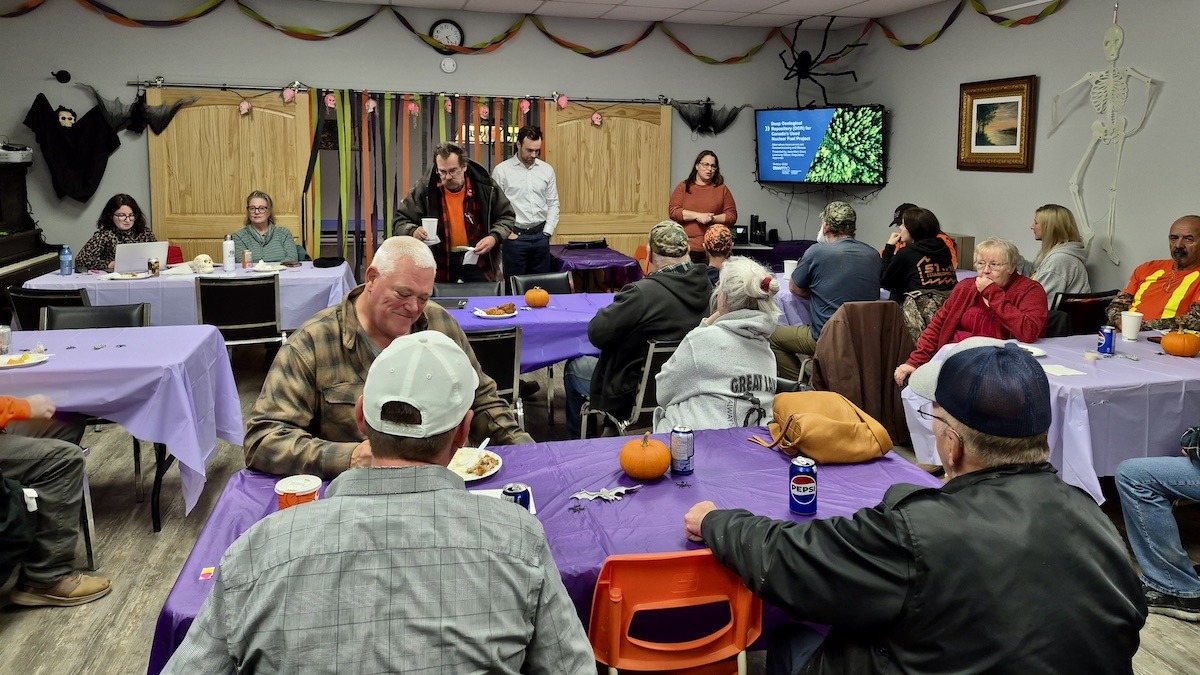
We are already seeing that capacity take shape. There are more events, more participatory workshops and more people using the complex. Importantly, we are seeing people travel from across the surrounding region to take part. The hall is increasingly becoming a place people recognize as a destination for community activity, collaboration and shared learning.
This growing capacity is particularly important as Melgund faces the prospect of a major and controversial development in its immediate region: the proposed Deep Geological Repository (DGR) for Canada’s used nuclear fuel. The project brings the prospect of immense and rapid change to the local area, with implications for community services, recreation infrastructure, land and water use, local businesses, health and well-being, and the character of the surrounding region. These changes will require communities and local organizations to adapt, respond to new demands, understand their own needs and participate meaningfully in decisions and assessment processes that affect them.
That takes more than simply having a voice. It takes the practical capacity to organize, bring people together, document local conditions, share information, develop partnerships and communicate community priorities. It takes functioning facilities, active organizations, experienced volunteers and the resources to sustain local participation over time. The investments being made at the recreation complex help establish that foundation.
The hall provides a place where residents can meet, where community organizations can coordinate their work, and where local experience can be documented and brought into wider regional conversations. The activities taking place there also help strengthen the relationships and connections that make a community more adaptable. Workshops, exhibitions, gardening activities, cultural programming and community events all contribute to a stronger network of people who know one another, share skills and can work together.
Our current infrastructure improvements are therefore contributing to something with lasting value. The garden, water system, kitchen and hall are important in their own right, but together they form part of a growing community resource. They support programming, strengthen local connections and make it easier for residents, volunteers, artists, organizations and regional partners to work together.
What we are building together in Melgund Township is not just an improved recreation complex. It is greater capacity for community participation, cooperation and adaptation at a time of significant regional change. That capacity will matter as the DGR project advances, as local needs evolve, and as residents and organizations work to shape the future of their community.
It’s the broader impact of this year’s work, and something that will continue well beyond the completion of individual infrastructure projects. Thanks to the Ontario Trillium Foundation for making the infrastructure improvements we needed to grow possible. We greatly appreciate their support and investment in our communities.