Understanding the NWMO’s Big Promises for Our Backyard
As we look toward the future of Northwestern Ontario, many of us in Melgund Township, Borups Corners, and Dyment are trying to make sense of the Impact Assessment for the proposed Revell Site. The Nuclear Waste Management Organization has laid out eight key objectives to guide the Deep Geological Repository project, ranging from fairness and safety to environmental integrity. But as neighbors, we have to ask: how do these high-level goals translate to our daily lives and the land we love?
What We Are Learning
The proponent has identified several pillars they say will ensure the project is done right. They talk about ‘Fairness,’ meaning the costs and risks should be shared fairly across generations. They also focus on ‘Community Well-Being,’ acknowledging that a project like this can cause ‘stigma’ or divide a town. Other goals include keeping workers and the public safe, protecting the environment from radiation, and making sure the project can adapt if technology or the climate changes over the next several hundred years.
The Reality Check
What is being promised: The NWMO promises a ‘fair’ distribution of risks and a commitment to ‘community well-being’ that protects our social fabric.
What we need to verify: While ‘fairness’ sounds good, the reality is that our small corner of Northwestern Ontario would host all of Canada’s used nuclear fuel. We need to know how the Nuclear Waste Management Organization plans to measure and fix ‘community polarization’ or the potential drop in property values that they’ve labeled as ‘stigma.’
The Path Forward
The report noted that while community polarization and stigma are mentioned, there is no actual plan to measure or address these social impacts (The Gap); therefore, we are calling for a formal framework co-created with local residents to monitor social cohesion and protect our community’s reputation (The Solution). Furthermore, the assessment mentions climate change but lacks specific local scenarios like extreme flooding or permafrost changes (The Gap); we are asking for detailed climate modeling that shows exactly how the Revell Site will hold up against the changing weather patterns of the North (The Solution). Finally, the current goals rely on ‘today’s safety standards’ (The Gap); we need a commitment that safety protocols will be updated as science evolves, ensuring future generations aren’t stuck with outdated protection (The Solution).
Why It Matters Here
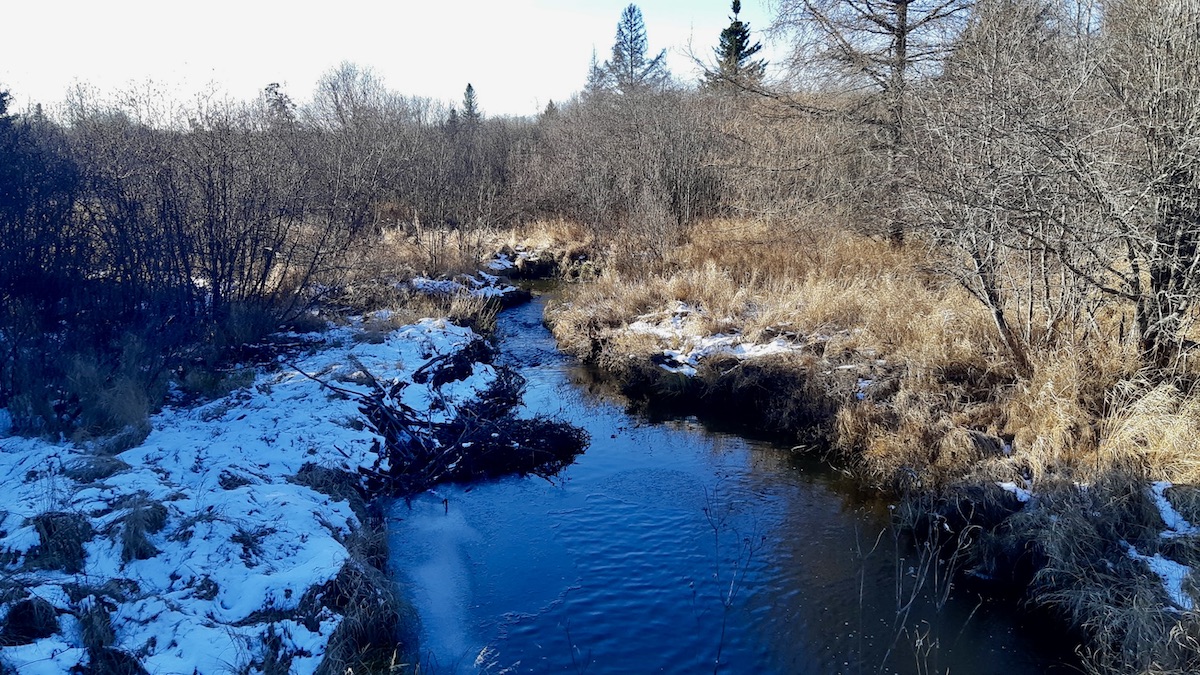
For those of us in Dyment and Borups Corners, this isn’t just a technical document—it’s about our hunting grounds, our quiet nights, and the safety of our well water. When the Impact Assessment talks about ‘aesthetic impacts’ like noise and light, they are talking about the potential end of the silence we value in the boreal forest. We need to ensure that ‘Environmental Integrity’ isn’t just a phrase, but a guarantee that our way of life in Northwestern Ontario remains intact for our grandkids.
Have Your Say
This affects our future. Submit your feedback on this specific issue via our Engage page to ensure the Impact Assessment Agency hears from our community.
The Melgund Integrated Nuclear Impact Assessment Project
The Impact Assessment Agency of Canada (IAAC) is reviewing the Nuclear Waste Management Organization’s (NWMO) proposed Deep Geological Repository (DGR) at the Revell Site, located near Ignace and Wabigoon Lake Ojibway Nation in Northwestern Ontario.
This major nuclear infrastructure project is undergoing a joint federal review by the IAAC and the Canadian Nuclear Safety Commission (CNSC) to evaluate environmental, health, social, and Indigenous rights impacts over its projected 160-year lifecycle.
Public Feedback Open: Comments on the Initial Project Description are accepted until February 4, 2026. Submissions help shape the formal impact assessment guidelines.
This short article and summary is based on an initial analysis of a proponent’s initial project description. It does not represent, any community the NWMO or the Government of Canada. Learn more at the Melgund Integrated Nuclear Impact Assessment Project project page.