

Executive Summary
The Nuclear Waste Management Organization (NWMO) has presented a narrative of procedural finality and technical certainty regarding the Revell Site Deep Geological Repository (DGR). However, forensic analysis of the Initial Project Description (IPD) and associated public registry reveals significant issues that have not been effectively communicated to the public or the Impact Assessment Agency of Canada (IAAC). These gaps primarily center on the strategic exclusion of off-site transportation risks, the systematic marginalization of unorganized territories such as Melgund Township, and a reliance on incomplete or outdated baseline data. The proponent’s use of the As Low As Reasonably Achievable (ALARA) principle is identified as a potential economic loophole that prioritizes project feasibility over absolute environmental containment [Analysis: Executive Summary – Safety and Environmental Protection].
Detailed Analysis
1. Project Splitting and Transportation Risks
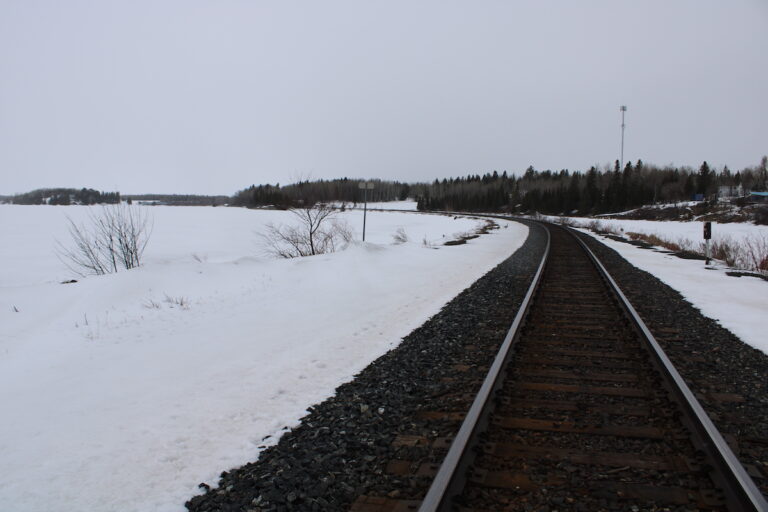
A primary concern raised by both technical analysts and the public is the proponent’s attempt to decouple the transportation of used nuclear fuel from the repository assessment. The NWMO asserts that transportation beyond the project site is regulated separately by the Canadian Nuclear Safety Commission (CNSC) and therefore remains outside the scope of the Impact Assessment [Analysis: Executive Summary – Description of the Project]. This “salami-slicing” approach prevents a holistic evaluation of the risks associated with moving 5.9 million fuel bundles over 1,700 km of public infrastructure, specifically the Trans-Canada Highway (Highway 17) [Comment Ref: 242]. Public feedback highlights that Highway 17 is a notoriously dangerous two-lane corridor prone to severe winter accidents and wildlife collisions, yet these factors are excluded from the proponent’s risk screening [Comment Ref: 219, 255].
2. Marginalization of Unorganized Territories
The proponent utilizes a geographic framing strategy that emphasizes distant municipal centers like Ignace while treating the immediate neighbors in Melgund Township (Dyment and Borups Corners) as secondary stakeholders [Analysis: C. LOCATION INFORMATION AND CONTEXT]. Despite being located less than 10 km from the project centroid, Melgund is an unorganized territory lacking the municipal infrastructure and administrative resources to negotiate the same “Hosting Agreements” afforded to Ignace [Analysis: 15.7 Infrastructure and Services: Unincorporated Communities]. This creates a “stigma shadow” where residents bear the highest burden of proximity—including potential property devaluation and social fragmentation—without equivalent compensatory frameworks [Analysis: 15.6 Community and Culture: Local Services Board of Melgund].
3. Jurisdictional and Indigenous Law Conflicts
There is a profound lack of communication regarding the reconciliation of the Impact Assessment Act (IAA) with Indigenous traditional laws, specifically Manito Aki Inaakonigewin (MAI) [Comment Ref: 705]. Grand Council Treaty #3 has asserted that the project ignores the Crown’s constitutional duties and fails to harmonize with the Nation’s inherent authority [Comment Ref: 660]. Furthermore, the confidentiality of the Hosting Agreement with the Wabigoon Lake Ojibway Nation (WLON) creates a transparency barrier, preventing neighboring communities from verifying the environmental and social safeguards supposedly in place [Analysis: 4. BUILDING RELATIONSHIPS].
Evidence from Public Registry
- Highway 17 Vulnerability: Commenters describe the route as the “Highway of Fears,” citing daily accidents and the lack of emergency response capacity in remote sections [Comment Ref: 258, 280].
- Watershed Integrity: Grave concerns exist regarding the repository’s location at the headwaters of the Wabigoon and Rainy/Turtle River watersheds, which drain into Lake Winnipeg [Comment Ref: 392, 82].
- Intergenerational Equity: The public challenges the 160-year management plan for waste that remains toxic for one million years, characterizing the “bury and abandon” approach as ethically unsound [Comment Ref: 496, 573].
- Economic Coercion: Allegations have been raised that financial incentives offered to economically vulnerable communities amount to “bribery” rather than genuine consent [Comment Ref: 251, 604].
Technical Deficiencies & Gaps
1. Hydrogeological Data Scarcity
The proponent’s claim of a stable hydrogeological environment is based on a statistically insufficient dataset. Only six deep boreholes have been drilled to characterize a 40 km by 15 km rock unit, and only five instances of deep groundwater flow were sufficient for sampling [Analysis: 14.6 Groundwater and Surface Water]. This lack of granular data undermines the safety case for long-term radionuclide isolation.
2. Outdated and Unverified Baselines
The socio-economic and health baselines rely heavily on 2021 Census data and regional studies from 2014-2016, which do not reflect current post-pandemic conditions or site-specific vulnerabilities [Analysis: 15.4 Traditional Foods and Medicines]. The NWMO admits that Indigenous data is not yet fully represented, rendering conclusions about “low risk” to these populations premature [Analysis: Acknowledgment of Truths].
3. Emergency Response Gaps
The IPD relies on conceptual emergency planning rather than evidence-based analysis of actual capacity. In unorganized territories like Melgund, there is zero local fire, police, or ambulance presence, yet the proponent has not demonstrated 100% on-site self-sufficiency for industrial or radiological incidents [Analysis: 15.7 Infrastructure and Services].
Recommendations & Mandates
We strongly recommend that the IAAC mandate the inclusion of the entire transportation corridor, specifically Highway 17, within the formal scope of the Impact Assessment. This must include a quantitative risk assessment of accident probabilities and emergency response times in remote, unorganized areas. Furthermore, we strongly recommend that the proponent be required to demonstrate 100% self-sufficiency for all emergency services (fire, medical, and security) at the Revell site and for its associated workforce, explicitly prohibiting reliance on the limited resources of neighboring unorganized townships.
We strongly recommend the immediate installation of permanent, real-time air quality and acoustic monitoring stations within Melgund Township to establish a pre-construction baseline that is not dependent on distant regional data. Additionally, the proponent should be mandated to release a non-confidential summary of all environmental and safety commitments contained within the WLON Hosting Agreement to restore regional transparency. Finally, we strongly recommend that a Stage 2 Archaeological Assessment (field survey) be conducted across the entire 342-hectare project footprint, as the current reliance on desktop screening is insufficient to protect undocumented Indigenous cultural heritage.
Conclusion
The Revell Site DGR project faces a significant “social license” deficit driven by a lack of transparent communication regarding transportation risks and the exclusion of immediate neighbors from the decision-making framework. The technical gaps in hydrogeological modeling and the reliance on outdated baseline data suggest that the proponent’s “confidence in safety” is premature. Moving forward, the regulatory process must prioritize the protection of unorganized territories and the integration of Indigenous law to ensure that this multi-generational hazard does not become a permanent environmental and social liability for Northwestern Ontario.
About the Deep Geological Repository (DGR) for Canada’s Used Nuclear Fuel Project
The Nuclear Waste Management Organization (the NWMO) is proposing a new underground deep geological repository system designed to safely contain and isolate used nuclear fuel. Wabigoon Lake Ojibway Nation (WLON) and the Township of Ignace have been selected as the host communities for the proposed project, which is located 21 kilometres southeast of the WLON and 43 kilometres northwest of the Town of Ignace, Ontario along Highway 17. As proposed, the Deep Geological Repository (DGR) for Canada’s Used Nuclear Fuel Project would provide permanent storage for approximately 5.9 million bundles of used nuclear fuel. The project is expected to span approximately 160 years, encompassing site preparation, construction, operation and closure monitoring. The project assessment is being conducted in collaboration with the Canadian Nuclear Safety Commission.
Learn more about the Integrated Impact Assessment process which is led by the Impact Assessment Agency of Canada and Canadian Nuclear Safety Commission.
- Read the Summary of Issues (February 16, 2026)
- Read the Summary of the Initial Project Description (January 5, 2026)
- Read the Initial Project Description (January 5, 2026)
- Learn More about the Melgund Integrated Nuclear Impact Assessment (MINIA) Project
- Learn More about the Nuclear Waste Management Organization (NWMO)
About the Author