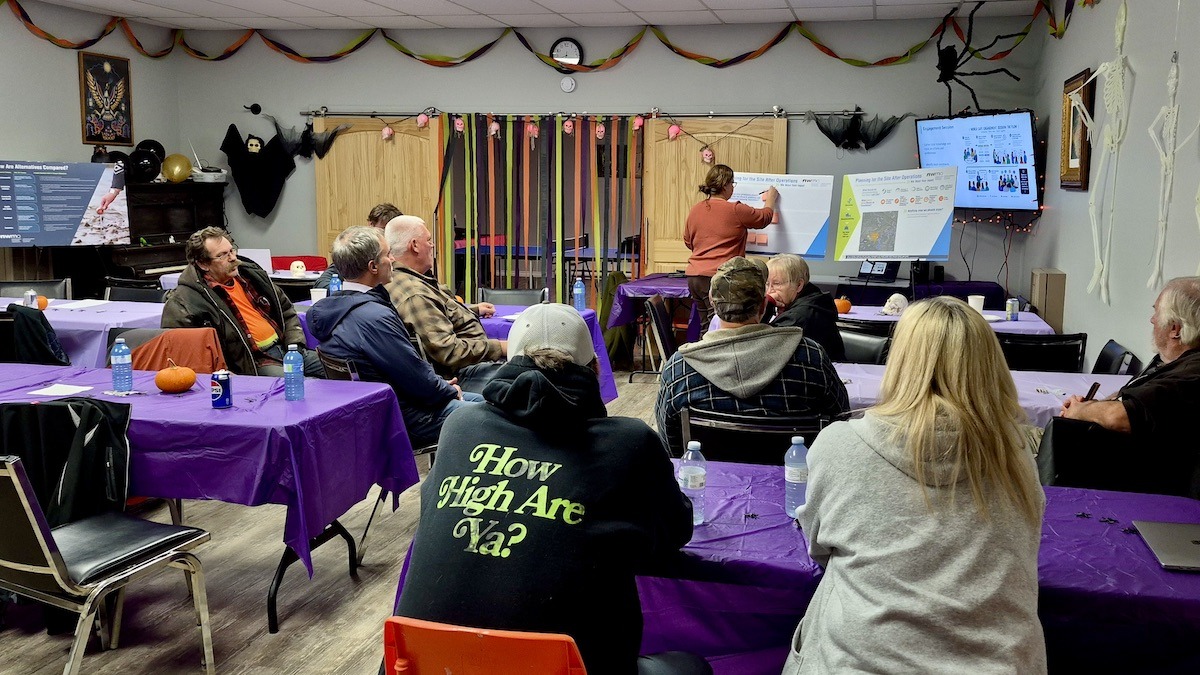
Residents gathered at Dyment Hall to discuss four major studies connected to the proposed Deep Geological Repository.
What happens when a major nuclear infrastructure project comes into the neighbourhood? There are plenty of questions to ask, and on October 28, residents of Melgund had an opportunity to bring some of them straight to the table.
The Dyment Recreation Hall hosted an evening of workshops with the Nuclear Waste Management Organization (NWMO), bringing community members together to talk about Canada’s proposed Deep Geological Repository (DGR) for used nuclear fuel project and some of the studies now underway as part of its federal impact assessment.
It was an active event, with conversations taking place across the hall and people gathering in different rooms to work through the topics. The lower-level art space became another workshop area, adding to the sense that the whole building was being put to good use. Most importantly, local residents had an opportunity to share what they think, ask questions and bring community perspectives into discussions about the proposed project.
Four studies, plenty to talk about
The workshops covered four Impact Statement studies being prepared under the federal Impact Assessment Act. These studies look at different ways the project and its supporting infrastructure might be developed. They are part of the process of comparing alternatives and identifying potential options.
For the Local Services Board of Melgund and surrounding communities, the workshops were also an opportunity to identify which study areas deserve particular attention and where local feedback could make a difference.
Here is a look at what was on the table.
- Connecting the project: Utility Corridor and Alignment Options: How would the proposed site connect to existing infrastructure? This study will look at possible routes for utility and transportation corridors, examining different alignments between the project site and existing connections.
- Managing water: Water Source and Discharge Options: Water is another important part of planning a project of this scale. The study will compare potential water intake and discharge locations and consider different approaches to managing water.
- Where people would stay: Accommodation Camp Options: The proposed project would require accommodation facilities for workers. This study will examine potential locations for an accommodation camp within the proposed site footprint.
- Planning for materials: Waste Management: This study will consider where two major supporting facilities could be located: the Excavated Rock Management Area and the Organics Management Area.
- Although each study has its own focus, they all contribute to the bigger picture of how the proposed project could be laid out and supported.
Making space for community conversations
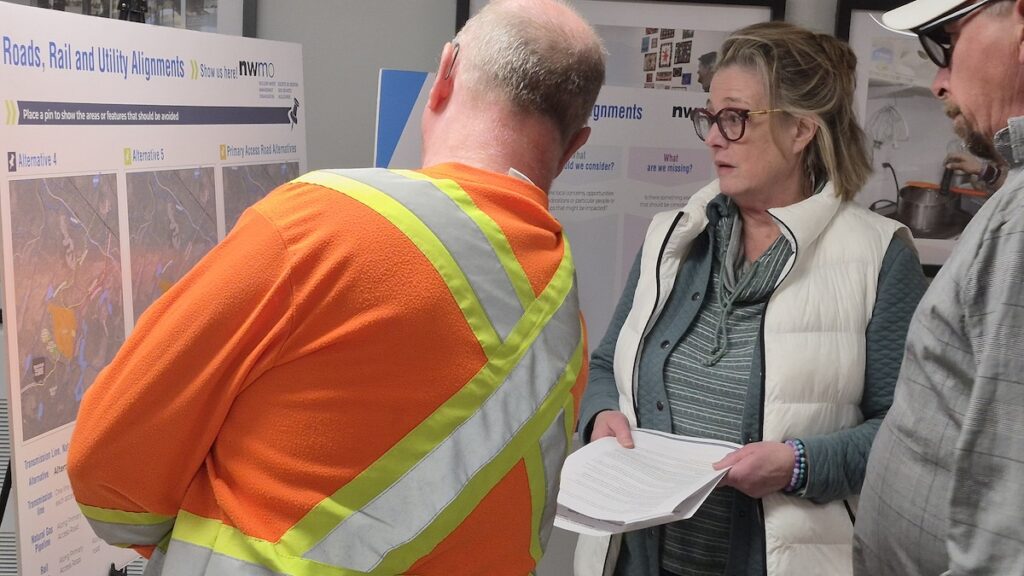
A community workshop is about more than presentations and information. It is also about having a place where people can get together, compare notes, ask the questions that matter to them and hear different perspectives. That was very much the feeling at Dyment Hall. Workshop groups were spread throughout the building, conversations carried on in different spaces, and residents had opportunities to engage with the subjects being discussed.
We were particularly pleased to see the lower-level art space and other parts of the hall being used. Having the entire building active and welcoming people into different spaces was a great sight. For Melgund, these discussions are part of an ongoing opportunity to bring local experiences and priorities into the assessment of a proposed project taking place so close to home.
Thank you to the NWMO for facilitating the workshops, and to the Local Services Board of Melgund, Melgund Recreation, Arts and Culture, and Art Borups Corners for their involvement in setting things up. And a special thanks to all the community members and area residents who took the time to attend, contribute and make the day what it was.
A project with a very long timeline
The NWMO is proposing an underground Deep Geological Repository to contain and isolate Canada’s used nuclear fuel. The proposed facility is intended to accommodate approximately 5.9 million bundles of used nuclear fuel. Its development and operation are expected to unfold over approximately 160 years, beginning with site preparation and construction, followed by operation and closure monitoring. The period after closure could extend for up to one million years.
Melgund Township and its two unorganized communities, Dyment and Borups Corners, are the closest and most impacted local area in relation to the proposed development. The project’s assessment is being carried out by the Impact Assessment Agency of Canada in collaboration with the Canadian Nuclear Safety Commission under the federal Impact Assessment Act.
There is a lot to consider when a project has a timeline stretching across generations. For now, opportunities for local people to ask questions, share their experiences and participate in the discussions remain an important part of the work taking place in our community.