
Echoes of the Campfire, A Symphony of Flavors
Step back in time with this Smoked Bannock, a tribute to the ancient practice of cooking over an open fire. This recipe combines the hearty simplicity of traditional bannock with the complex, aromatic notes of wood smoke, punctuated by the sweet-tart burst of wild berries and the subtle, earthy perfume of fresh sage. Baking it in a Dutch oven or a covered grill imparts that irreplaceable smoky essence, connecting you to the land and the culinary traditions of generations past. The result is a bread that tells a story, a rustic masterpiece of flavor and texture.
Prep Time
20 minutes
Cook Time
45-60 minutes
Servings
6-8
Cuisine: Indigenous American | Diet: Vegetarian | Skill Level: Intermediate | Cost: Affordable
Ingredients
- 3 cups all-purpose flour
- 1/2 cup cornmeal (for texture and a slight nutty flavor)
- 2 tablespoons baking powder
- 1 teaspoon salt
- 1/4 cup sugar (or to taste, depending on berry sweetness)
- 1/2 cup fresh or frozen mixed berries (blueberries, saskatoons, or huckleberries work well)
- 1 tablespoon fresh sage, finely chopped
- 1 1/2 cups milk (or water, or a mix)
- 1/4 cup melted butter or vegetable oil
- Wood chips for smoking (apple, cherry, or alder are great)
👨🍳 Chef’s Tips
- Don’t overmix the dough: A light hand is crucial for tender bannock.
- Monitor smoke: Aim for thin, blue smoke, not thick white smoke, which can make food bitter.
- Berry choice: Use local wild berries if possible for authentic flavor, or any frozen mixed berries.
- Dutch oven versatility: This can also be baked in a preheated Dutch oven over a campfire with coals on top and bottom.
- Salt balance: Adjust sugar based on berry tartness; more tart berries might need slightly more sugar.
Preparation
- Prepare your smoker or grill for indirect heat, aiming for a temperature of around 350°F (175°C). Soak a handful of wood chips (apple, cherry, or alder work well for a subtle, fruity smoke) in water for at least 30 minutes. This prevents them from igniting too quickly and helps them smolder, creating a steady stream of smoke. You’ll want a consistent, thin blue smoke.
- In a large mixing bowl, whisk together the all-purpose flour, cornmeal, baking powder, salt, and sugar. The cornmeal adds a pleasant grittiness and a touch of golden color to the bannock. Thoroughly mixing ensures even distribution of all leavening agents.
- Gently fold in the fresh or frozen mixed berries and the finely chopped fresh sage into the dry ingredients. Be careful not to mash the berries if they are fresh. The berries will add bursts of sweetness and tartness, while the sage will impart an earthy, aromatic undertone that complements the smoke beautifully. You’ll notice the delicate, herbaceous scent of the sage as it mingles with the flour.
- In a separate bowl, combine the milk and melted butter or vegetable oil. Whisk them together until fully incorporated.
- Pour the wet ingredients into the dry ingredients. Mix with a spoon or your hands until just combined, forming a shaggy dough. Avoid overmixing, as this can develop the gluten too much, leading to a tough bannock. The dough should be moist but not overly sticky. You’ll observe the vibrant colors of the berries peeking through the dough.
- Lightly grease a cast-iron skillet (8-10 inches) or a Dutch oven that can be used in your smoker/grill. Transfer the dough into the prepared skillet, gently pressing it down to form an even round loaf. The dough will have a rustic, natural appearance, ready for its smoky transformation.
Cooking
- Once your smoker/grill is at 350°F (175°C) and producing a steady, thin blue smoke, add the soaked wood chips to the hot coals or smoker box. Place the skillet with the bannock dough into the smoker/grill, ensuring it’s over indirect heat.
- Close the lid and smoke/bake for 45-60 minutes. The bannock is done when the top is golden brown, and a wooden skewer inserted into the center comes out clean. During cooking, the outside will start to crisp, and a wonderful, complex aroma of warm bread, sweet berries, earthy sage, and subtle wood smoke will emanate from your cooker. The smoke will infuse deeply into the bread, giving it a unique character.
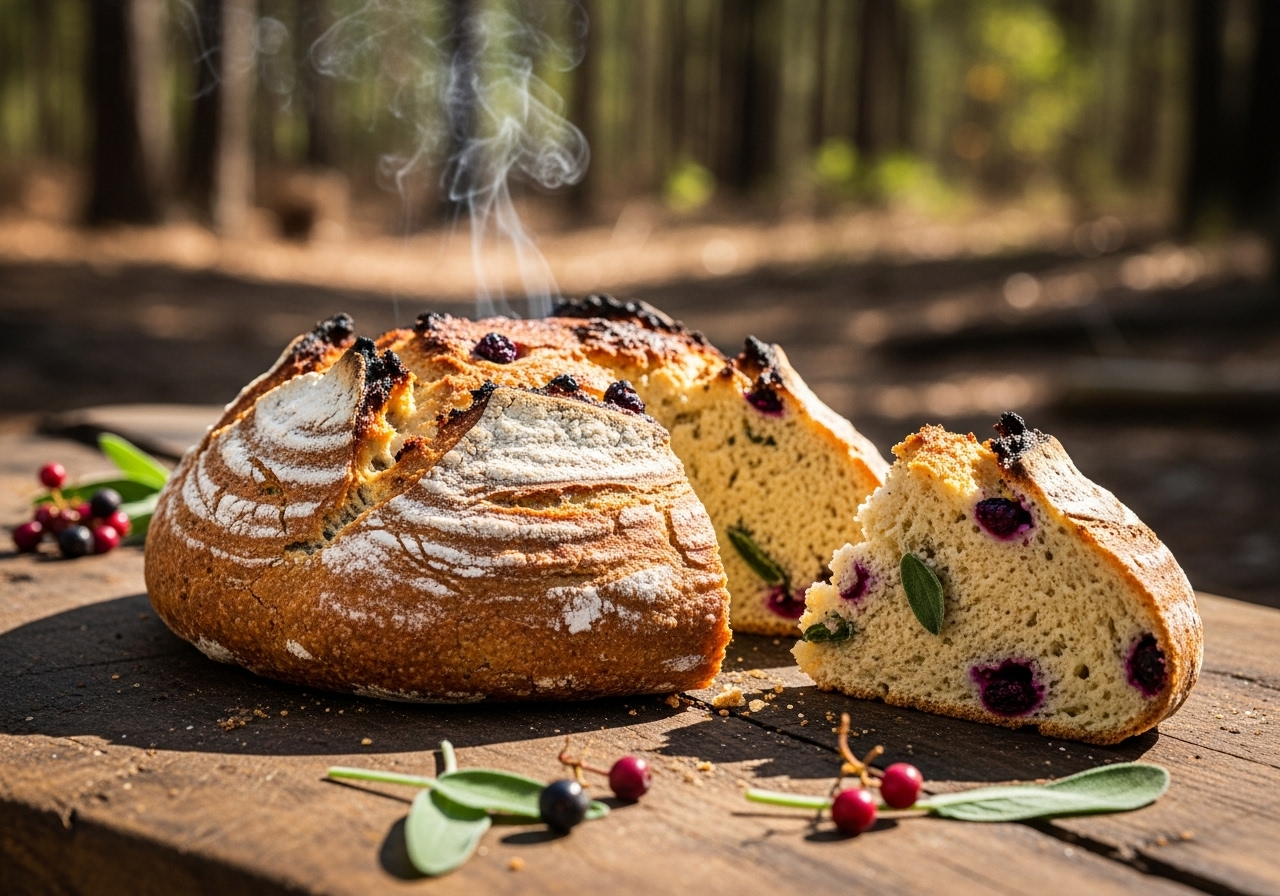
- The exterior will develop a beautiful, slightly burnished crust, while the interior will be moist and tender, dotted with colorful berries and green sage. The smoky essence will be present in every bite, adding depth beyond what a conventional oven can offer.
- Carefully remove the bannock from the smoker/grill and let it rest in the skillet for 10 minutes before transferring it to a wire rack. This allows the internal structure to set and makes it easier to slice.
Serving
Serve the Berry & Sage Smoked Bannock warm, sliced into wedges. It is excellent on its own, with a dollop of fresh whipped cream, a smear of butter, or a drizzle of extra maple syrup. Its unique smoky flavor makes it a conversation starter.
Storage
Store leftover bannock in an airtight container at room temperature for up to 2-3 days. It can also be frozen, wrapped tightly, for up to 2 months. Reheat gently in an oven or toaster to revive its texture and warmth.
| Nutrient | Amount |
|---|---|
| Calories | 320 kcal |
| Protein | 8g |
| Carbohydrates | 55g |
| Fat | 9g |
A Culinary Journey Through Nature
This Berry & Sage Smoked Bannock is more than just bread; it’s an edible connection to nature and heritage. The gentle kiss of smoke, the burst of wild berries, and the subtle earthiness of sage create a symphony of flavors that evoke ancient wisdom and forest paths. It’s a powerful reminder of how simple ingredients, combined with traditional techniques, can create something truly extraordinary and deeply satisfying, nourishing both body and soul.
Tags: smoked bannock, campfire bread, berry sage, traditional bread, wilderness food
Hungry for more?
For more delicious northern recipes, check out our Melgund: Come Eat With Me Cookbook! Serving the communities of Dyment and Borups Corners in Melgund Township, Northwestern Ontario. This digital literacy and food security program is supported by Art Borups Corners and Melgund Recreation, Arts and Culture.
About the Author