

A Busy Backyard: Understanding the Revell Site Operations
As we look out over the landscape of Northwestern Ontario, many of us in Melgund Township, Borups Corners, and Dyment are asking the same question: what will actually happen at the Revell Site day-to-day? The Nuclear Waste Management Organization (NWMO) recently released details in their Impact Assessment documents, and it is time we take a closer look at the Deep Geological Repository (DGR) through a local lens.
What We Are Learning
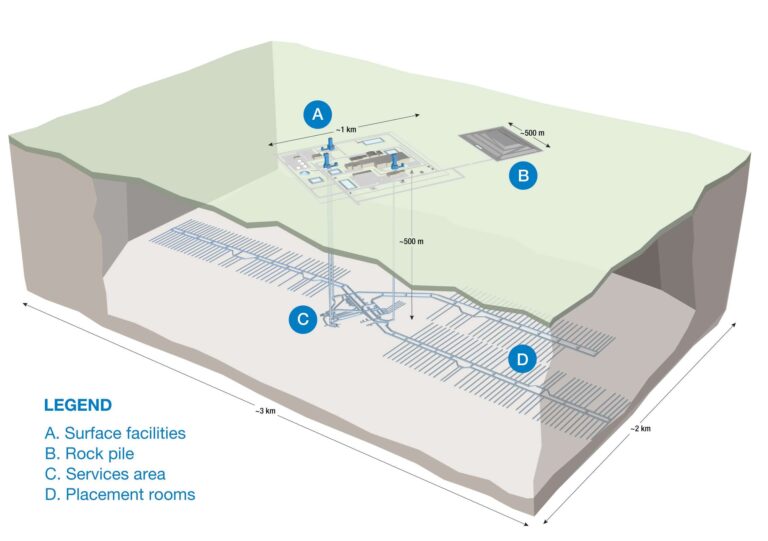
The NWMO describes a high-intensity industrial hub. At the heart of it is the Used Fuel Packaging Plant, where they plan to handle about 120,000 fuel bundles every year. These bundles would be repackaged into 2,500 heavy-duty containers and moved underground. Interestingly, they plan to keep digging new rooms while they are already storing waste in others—a bit like finishing the basement while the upstairs is already full.
The Reality Check
What is being promised: A controlled environment where radiological hazards are isolated and water is treated before being released back into the environment.
What we need to verify: The documents mention “suitable receiving waterbodies” for treated water but do not name them. For those of us who rely on local wells and enjoy fishing in our nearby lakes, “suitable” is not quite specific enough. We also need to know how they will safely manage heavy construction and nuclear transport in the same tunnels at the same time.
The Path Forward
The report noted that plans for adding Low-Level Waste (LLW) to the site are still vague; therefore, we are calling for a full impact analysis of all waste types now, not years down the road. We also found that the current plan lacks a specific safety strategy for simultaneous digging and waste storage. The solution is a detailed, integrated logistics plan that ensures construction dust and vibrations do not interfere with the sealed waste rooms. Finally, we need a water monitoring program that starts now and includes our local voices to ensure our watershed stays pristine.
Why It Matters Here
Our way of life in Northwestern Ontario is tied to the land. Whether it is the silence of the bush during a hunt or the clarity of the water where we fish, these operations represent a massive shift. The potential industrial noise and the constant presence of nuclear transport could change the character of Borups Corners and Dyment forever. We need to ensure that “safety” is not just a corporate buzzword, but a lived reality for every neighbor.
Have Your Say
This affects our future. Submit your feedback on this specific issue via our Engage page to ensure the Impact Assessment Agency hears from our community.
The Melgund Integrated Nuclear Impact Assessment Project
The Impact Assessment Agency of Canada (IAAC) is reviewing the Nuclear Waste Management Organization’s (NWMO) proposed Deep Geological Repository (DGR) at the Revell Site, located near Ignace and Wabigoon Lake Ojibway Nation in Northwestern Ontario.
This major nuclear infrastructure project is undergoing a joint federal review by the IAAC and the Canadian Nuclear Safety Commission (CNSC) to evaluate environmental, health, social, and Indigenous rights impacts over its projected 160-year lifecycle.
Public Feedback Open: Comments on the Initial Project Description are accepted until February 4, 2026. Submissions help shape the formal impact assessment guidelines.
This short article and summary is based on an initial analysis of a proponent’s initial project description. It does not represent, any community the NWMO or the Government of Canada. Learn more at the Melgund Integrated Nuclear Impact Assessment Project project page.
About the Author