
Understanding the Relationships Shaping the Revell Site
Living here in Northwestern Ontario, we’re used to knowing our neighbors. But as the Nuclear Waste Management Organization (NWMO) moves closer to building the Deep Geological Repository at the Revell Site, the ‘neighborhood’ is getting a lot more complex. For those of us in Melgund Township, Borups Corners, and Dyment, the latest Impact Assessment documents highlight a major focus on building ties with Indigenous communities, particularly the Wabigoon Lake Ojibway Nation (WLON).
What We Are Learning
The NWMO is describing its work as a ‘Reconciliation Journey.’ They’ve spent over 20 years talking with Indigenous groups and have recently signed a ‘Hosting Agreement’ with WLON. This agreement is a big deal—it’s the green light from the most proximate First Nation to move into the next phase of the project. The NWMO says they are committed to using Indigenous Knowledge alongside Western science to protect the water and the land, guided by a Council of Elders and Youth.
The Reality Check
While the NWMO speaks of transparency and ‘grassroots willingness,’ there are some details that we, as neighbors, need to look at more closely:
- What is being promised: A transparent and open process for selecting a site with ‘informed and willing’ hosts.
- What we need to verify: The actual Hosting Agreement with WLON is confidential. This makes it hard for folks in Borups Corners or Dyment to know what specific environmental protections or community benefits are actually on paper.
- What is being promised: Continuous dialogue with all regional Indigenous groups.
- What we need to verify: Many ‘Learn More Agreements’ with other regional First Nations expired at the end of 2024. Without these, it’s unclear if those communities have the funding they need to keep participating in the studies.
The Path Forward
The report noted that several regional nations haven’t responded to recent letters regarding the project, and many formal agreements have lapsed; therefore, we are calling for the NWMO to renew these formal frameworks immediately. It isn’t enough to send a letter; the project needs active, funded participation from all our neighbors to be truly safe. We also need a non-confidential summary of the hosting terms. If we are all sharing the same water and the same stretch of the Trans-Canada Highway, we should all understand the rules of the game.
Why It Matters Here
In Melgund, our lifestyle is tied to the land. Whether it’s hunting, fishing, or just enjoying the silence of the bush, a project of this scale changes things. The NWMO’s focus on ‘regional’ and ‘national’ groups sometimes misses the folks living less than 10 kilometers from the site boundary. When we talk about the ‘agency of water’ or ‘social safety,’ we aren’t talking about abstract concepts—we’re talking about our wells, our property values, and the safety of our families as heavy industrial traffic increases on our local roads.
Have Your Say
This affects our future. Submit your feedback on this specific issue via our Engage page to ensure the Impact Assessment Agency hears from our community.
The Melgund Integrated Nuclear Impact Assessment Project
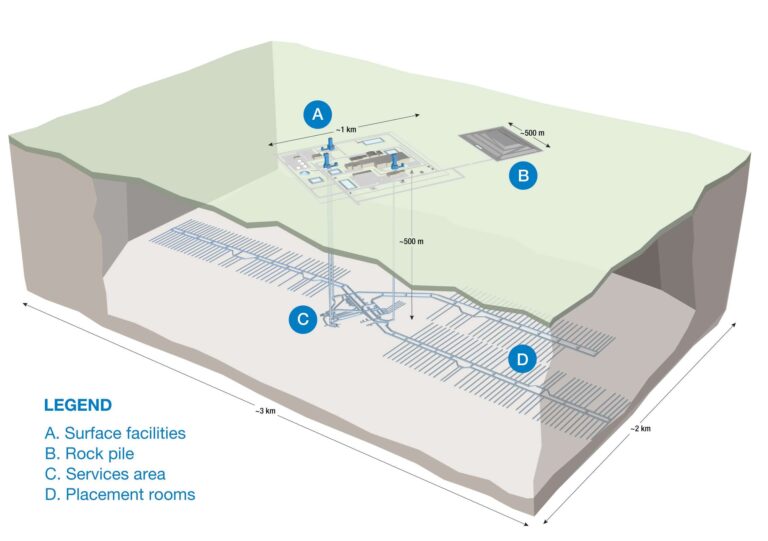
The Impact Assessment Agency of Canada (IAAC) is reviewing the Nuclear Waste Management Organization’s (NWMO) proposed Deep Geological Repository (DGR) at the Revell Site, located near Ignace and Wabigoon Lake Ojibway Nation in Northwestern Ontario.
This major nuclear infrastructure project is undergoing a joint federal review by the IAAC and the Canadian Nuclear Safety Commission (CNSC) to evaluate environmental, health, social, and Indigenous rights impacts over its projected 160-year lifecycle.
Public Feedback Open: Comments on the Initial Project Description are accepted until February 4, 2026. Submissions help shape the formal impact assessment guidelines.
This short article and summary is based on an initial analysis of a proponent’s initial project description. It does not represent, any community the NWMO or the Government of Canada. Learn more at the Melgund Integrated Nuclear Impact Assessment Project project page.
About the Author