
Executive Summary
Indigenous Nations and organizations have identified profound deficiencies regarding the protection of Indigenous rights, compliance with the United Nations Declaration on the Rights of Indigenous Peoples (UNDRIP), and the fulfillment of the Crown’s Duty to Consult in relation to the Revell Site Deep Geological Repository (DGR). The primary concerns center on the perceived disregard for traditional Anishinaabe laws, specifically Manito Aki Inaakonigewin (MAI), and the failure to secure Free, Prior, and Informed Consent (FPIC) from all impacted Nations [Comment Ref: 705, 660]. Indigenous groups argue that the Nuclear Waste Management Organization (NWMO) and the Impact Assessment Agency of Canada (IAAC) have adopted a narrow, municipal-centric approach that marginalizes Indigenous jurisdiction and ignores the long-term spiritual and practical implications of storing high-level nuclear waste on Treaty #3 territory [Comment Ref: 660, 485].
Detailed Analysis
Jurisdictional Authority and Manito Aki Inaakonigewin (MAI)
A central issue raised by Grand Council Treaty #3 (GCT3) is the project’s non-compliance with Manito Aki Inaakonigewin, the traditional Anishinaabe law governing land and resource development. GCT3 asserts that the current regulatory process fails to harmonize federal frameworks with these inherent laws, representing a breach of the Crown’s commitment to collaborative governance [Comment Ref: 705]. The Nation emphasizes that the project site is located within Treaty #3 territory, an unorganized territory where the Township of Ignace—frequently cited as the “host community”—lacks municipal jurisdiction or regulatory authority [Comment Ref: 660, 705]. The exclusion of traditional protocols and the Nibi (Water) Declaration is viewed as a fundamental disrespect for the Nation’s inherent authority [Comment Ref: 660].
UNDRIP and Free, Prior, and Informed Consent (FPIC)
Multiple Indigenous organizations, including the Mississaugas of Scugog Island First Nation (MSIFN) and the Nishnawbe Aski Nation (NAN), have identified the failure to obtain FPIC as a critical legal and ethical red flag [Comment Ref: 627, 485]. Commenters argue that the proponent treats FPIC as a procedural checkbox rather than a mandatory decision-making standard [Comment Ref: 627]. The exclusion of Eagle Lake First Nation (ELFN) from the site selection process is cited as a primary example of bad faith engagement that violates UNDRIP Article 29.2 regarding the storage of hazardous materials on Indigenous lands [Comment Ref: 605, 596]. Furthermore, the Passamaquoddy Recognition Group (PRGI) asserts that the pattern of exclusion continues a history of “environmental racism” where Indigenous communities bear disproportionate risks without meaningful decision-making power [Comment Ref: 655].
The Crown’s Duty to Consult and the Role of the NWMO
Indigenous groups have raised significant objections to the NWMO, a non-Crown entity, taking positions regarding Section 35 constitutional rights, which they argue is entirely outside the NWMO’s authority [Comment Ref: 705]. The Manitoba Métis Federation (MMF) explicitly rejects the “pan-Indigenous” approach to consultation, demanding distinction-based engagement that recognizes the specific governmental status of the Red River Métis [Comment Ref: 517]. There is a pervasive concern that the Crown has delegated its non-delegable duty to consult to a private organization, leading to a process that lacks transparency and fails to address the “honour of the Crown” [Comment Ref: 705, 624].
Evidence from Public Registry
- Grand Council Treaty #3: Expresses profound dissatisfaction with the IAAC Summary of Issues, claiming it fails to incorporate specific legal and jurisdictional concerns [Comment Ref: 705].
- Eagle Lake First Nation: Maintains that the project is moving forward without their consent and has initiated legal action against the site selection process [Comment Ref: 28].
- Manitoba Métis Federation: Asserts that the current process relies on incomplete Indigenous baseline information and fails to identify impacts on constitutionally protected rights [Comment Ref: 517].
- Nishnawbe Aski Nation: Argues that the exclusion of the 50-year transportation phase prevents impacted Nations from fully understanding the risks within their territories [Comment Ref: 485].
- Iskatewizaagegan No. 39 Independent First Nation: Declares that the ongoing, unregulated “taking up” of land threatens the existence of Indigenous peoples and lacks standards to safeguard inherent rights [Comment Ref: 624].
Technical Deficiencies & Gaps
Internal analysis of the proponent’s submissions reveals a significant “transparency barrier” regarding Indigenous data. The NWMO admits that the data in the Initial Project Description (IPD) is not a full representation of Indigenous identity or on-reserve communities [Analysis: Acknowledgment of Truths]. This admission undermines the claim that host communities are “informed,” as the baseline understanding of the people living in the immediate vicinity is admittedly incomplete [Analysis: Acknowledgment of Truths].
Furthermore, the proponent’s reliance on a “westernized” and “artificially narrow” approach to defining affected watersheds ignores Indigenous Knowledge regarding the interconnectedness of water systems [Comment Ref: 485]. The technical studies often categorize Indigenous concerns as “perceptions of risk” rather than quantifiable physical hazards, which pathologizes legitimate technical anxieties regarding groundwater integrity and long-term stability [Analysis: Acknowledgment of Truths]. There is also a critical lack of baseline data regarding the health, social, and economic conditions of Treaty #3 First Nations, rendering conclusions about “low environmental risk” premature [Comment Ref: 660].
Recommendations & Mandates
To address these fundamental issues of jurisdiction, law, and safety, the following actions are necessary:
- Strongly recommend the establishment of a transparent, legally binding framework that defines how Anishinaabe Values and Manito Aki Inaakonigewin will be integrated into the technical safety case, moving beyond aspirational language to a “Two-Eyed Seeing” approach [Analysis: Acknowledgment of Truths].
- Strongly recommend that the NWMO and the Crown formalize a “Jurisdictional Harmonization Agreement” that explicitly defines how the findings of Indigenous-led assessments (such as WLON’s RAAP) will be integrated into the federal Impact Assessment Act framework [Analysis: Wabigoon Lake Ojibway Nation Story].
- Strongly recommend the immediate funding of community-led socio-economic and health baseline studies for all potentially affected First Nations and Métis groups, ensuring these studies are owned and controlled by the communities themselves [Analysis: Acknowledgment of Truths, 15.9.3].
- Strongly recommend the implementation of a mandatory, third-party audited Social Management Plan to action MMIWG Call for Justice 13, including specific measures for managing transient workforces and preventing gender-based violence [Analysis: Acknowledgment of Truths].
- Strongly recommend that the project scope be expanded to include the full transportation corridor as a core Valued Component, ensuring that the rights and concerns of “corridor communities” are integrated into the assessment [Analysis: 4.5, Comment Ref: 485].
Conclusion
The Revell Site DGR project faces a significant crisis of social license and legal legitimacy among Indigenous Nations. The current regulatory process is viewed as a continuation of colonial imposition that prioritizes administrative efficiency over the substantive protection of Section 35 rights and the fulfillment of UNDRIP standards. Without a fundamental shift toward co-management, the harmonization of traditional laws, and the securing of broad territorial consent, the project remains vulnerable to sustained legal challenges and social fragmentation. The path forward requires the Crown to reclaim its role in consultation and for the proponent to provide the technical transparency and resources necessary for Indigenous Nations to exercise their inherent sovereignty.
About the Deep Geological Repository (DGR) for Canada’s Used Nuclear Fuel Project
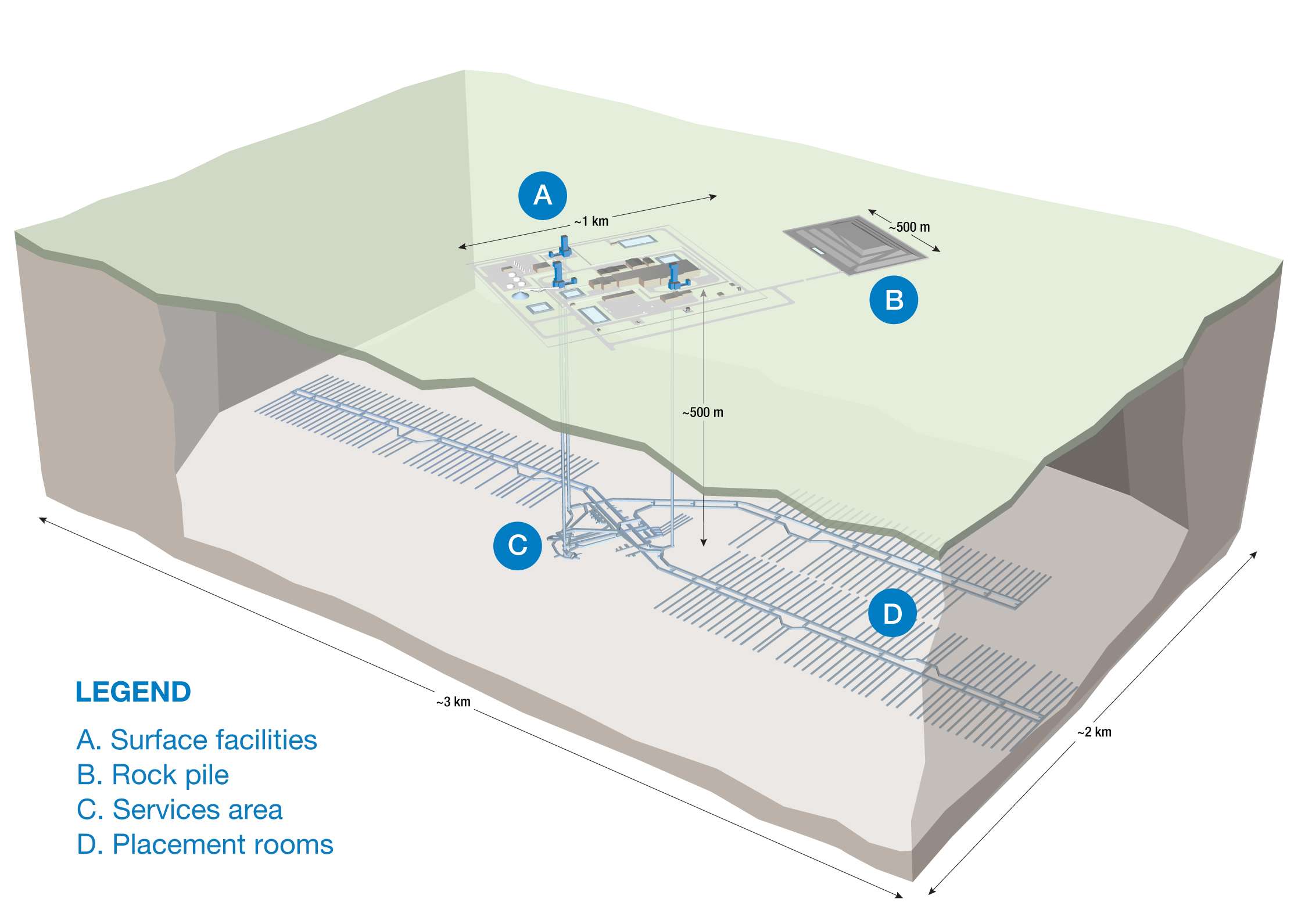
The Nuclear Waste Management Organization (the NWMO) is proposing a new underground deep geological repository system designed to safely contain and isolate used nuclear fuel. Wabigoon Lake Ojibway Nation (WLON) and the Township of Ignace have been selected as the host communities for the proposed project, which is located 21 kilometres southeast of the WLON and 43 kilometres northwest of the Town of Ignace, Ontario along Highway 17. As proposed, the Deep Geological Repository (DGR) for Canada’s Used Nuclear Fuel Project would provide permanent storage for approximately 5.9 million bundles of used nuclear fuel. The project is expected to span approximately 160 years, encompassing site preparation, construction, operation and closure monitoring. The project assessment is being conducted in collaboration with the Canadian Nuclear Safety Commission.
Learn more about the Integrated Impact Assessment process which is led by the Impact Assessment Agency of Canada and Canadian Nuclear Safety Commission.
- Read the Summary of Issues (February 16, 2026)
- Read the Summary of the Initial Project Description (January 5, 2026)
- Read the Initial Project Description (January 5, 2026)
- Learn More about the Melgund Integrated Nuclear Impact Assessment (MINIA) Project
- Learn More about the Nuclear Waste Management Organization (NWMO)
About the Author