
Fishing for Truth in Our Local Waters
For those of us living in Northwestern Ontario, the health of our lakes and streams isn’t just a talking point—it is a way of life. Whether you are casting a line near Borups Corners or checking minnow traps in Dyment, water connects us all. Recently, the Nuclear Waste Management Organization (NWMO) released technical documents regarding the proposed Revell Site for a Deep Geological Repository (DGR). Specifically, we are looking at the Impact Assessment regarding fish and fish habitat. The report covers the creeks and wetlands right in our backyard in Melgund Township, and there are some interesting findings—and gaps—that we need to discuss as a community.
What We Are Learning
The NWMO’s latest report summarizes data collected in 2021 and 2022. They used a mix of “desktop reviews” (looking at existing government maps) and a modern technology called eDNA (testing water samples for traces of fish DNA). They identified 55 fish species in the wider region, including our local staples like Walleye, Northern Pike, and White Sucker. However, within the immediate project site, they claim they haven’t yet found “important fish habitat”—areas critical for spawning or overwintering—though they did note potential spawning sites nearby, such as the outlet of Revell Lake.
The Reality Check
- What is being promised: The proponent claims that although more data is needed for final permits, the current studies are “sufficiently comprehensive” to form early conclusions about the risks to our water.
- What we need to verify: The reliance on eDNA is a concern. While it tells us fish might be there, it doesn’t tell us how many or how healthy they are. Furthermore, the report admits that no overwintering or rearing habitat has been identified in local watercourses yet. As locals know, just because you don’t see fish in a creek in July doesn’t mean it isn’t vital during the spring thaw or the dead of winter.
The Path Forward
The report noted a significant gap: 26 of the species identified were found only via eDNA traces without physical confirmation, and there is a lack of data on winter habitat use in the small streams surrounding the site. Therefore, we are calling for a robust “ground-truthing” program. The solution is to move beyond computer models and water samples; we need physical netting and electrofishing surveys to confirm exactly what lives in these waters. Additionally, the proponent must conduct multi-season field studies, specifically targeting the winter months and spring freshet, to ensure no critical spawning grounds are destroyed during construction simply because they were empty in the summer.
Why It Matters Here
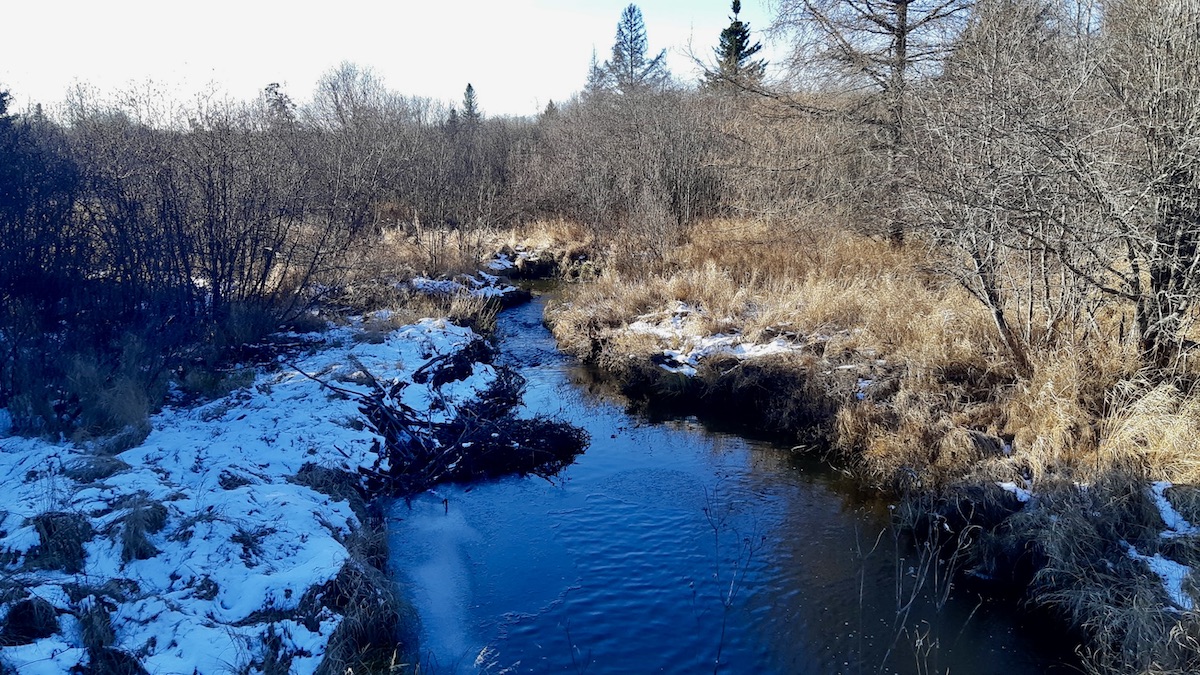
In Melgund Township, we know that the small unnamed creeks feed the big lakes. If a “minor” wetland is filled in because a desktop study said it wasn’t important, it could cut off the nursery grounds for the Walleye we catch in Dinorwic or Wabigoon Lake. This isn’t just about biology; it’s about our silence, our suppers, and the legacy we leave for our grandkids. Furthermore, the current assessment lacks the integration of Traditional Ecological Knowledge. Our Indigenous neighbours and long-time residents know these waters better than any database, and that knowledge needs to be formally included.
Have Your Say
This affects our future. Submit your feedback on this specific issue via our Engage page to ensure the Impact Assessment Agency hears from our community.
The Melgund Integrated Nuclear Impact Assessment Project
The Impact Assessment Agency of Canada (IAAC) is reviewing the Nuclear Waste Management Organization’s (NWMO) proposed Deep Geological Repository (DGR) at the Revell Site, located near Ignace and Wabigoon Lake Ojibway Nation in Northwestern Ontario.
This major nuclear infrastructure project is undergoing a joint federal review by the IAAC and the Canadian Nuclear Safety Commission (CNSC) to evaluate environmental, health, social, and Indigenous rights impacts over its projected 160-year lifecycle.
Public Feedback Open: Comments on the Initial Project Description are accepted until February 4, 2026. Submissions help shape the formal impact assessment guidelines.
This short article and summary is based on an initial analysis of a proponent’s initial project description. It does not represent, any community the NWMO or the Government of Canada. Learn more at the Melgund Integrated Nuclear Impact Assessment Project project page.
About the Author