Will We Have a Say or Just a Seat?
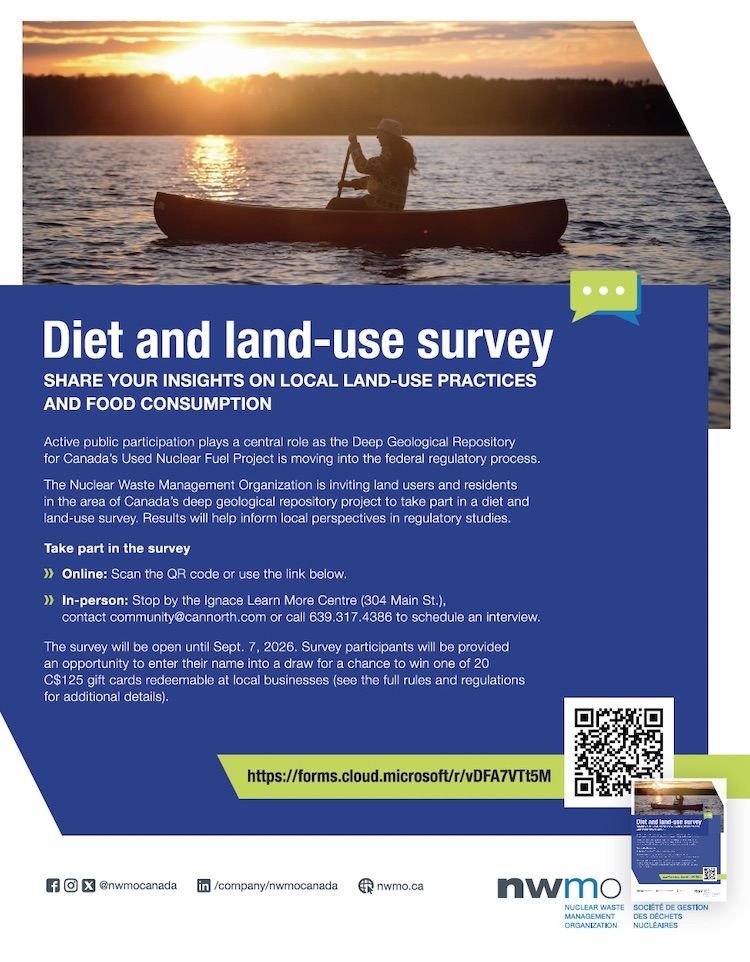
As we look out over our beautiful stretch of Northwestern Ontario, many of us in Melgund Township, Borups Corners, and Dyment are watching the Revell Site closely. The Nuclear Waste Management Organization (NWMO) recently shared how they plan to talk with us as the Deep Geological Repository project moves forward. While they promise to keep things transparent, we’re taking a closer look at what that actually means for our backyards.
What We Are Learning
The latest update from the proponent suggests a two-tiered approach to communication. They’ve created an ‘Involve’ category for the Township of Ignace, which includes direct collaboration and sharing local knowledge. For the rest of us in the surrounding areas, we’ve been placed in the ‘Inform’ category. This means we can expect plenty of plain-language fact sheets, online updates, and public meetings to keep us posted on their progress and the ongoing Impact Assessment.
The Reality Check
What is being promised: The NWMO says they will provide accessible, plain-language materials and host sessions to discuss potential effects and how they’ll fix them.
What we need to verify: We need to know why communities like Borups Corners and Dyment—which are just a stone’s throw from the Revell Site—are only being ‘informed’ rather than ‘involved.’ There is a risk that ‘plain language’ might simplify the technical data we need to understand the real risks to our water and land.
The Path Forward
The report noted a hierarchical distinction that leaves nearby communities on the sidelines; therefore, we are calling for the NWMO to move Melgund Township from a passive ‘Inform’ status to an active ‘Consult’ or ‘Involve’ status. Because we live along the transport corridors and share the same watershed, our safety is just as tied to this project as anyone else’s. We also need a clear ‘Feedback-to-Action’ framework. It isn’t enough to just ‘hear’ our concerns; we need to see exactly how our input changes the project design to keep our families safe.
Why It Matters Here
In Northwestern Ontario, our lifestyle is defined by the land. Whether it’s hunting, fishing, or the quiet peace of our rural properties, a project of this scale changes things. If we are only ‘informed’ after decisions are made, we lose the chance to protect the specific spots we love. We deserve more than a marketing-driven outreach; we need scientific rigor and a seat at the planning table.
Have Your Say
This affects our future. Submit your feedback on this specific issue via our Engage page to ensure the Impact Assessment Agency hears from our community.
The Melgund Integrated Nuclear Impact Assessment Project
The Impact Assessment Agency of Canada (IAAC) is reviewing the Nuclear Waste Management Organization’s (NWMO) proposed Deep Geological Repository (DGR) at the Revell Site, located near Ignace and Wabigoon Lake Ojibway Nation in Northwestern Ontario.
This major nuclear infrastructure project is undergoing a joint federal review by the IAAC and the Canadian Nuclear Safety Commission (CNSC) to evaluate environmental, health, social, and Indigenous rights impacts over its projected 160-year lifecycle.
Public Feedback Open: Comments on the Initial Project Description are accepted until February 4, 2026. Submissions help shape the formal impact assessment guidelines.
This short article and summary is based on an initial analysis of a proponent’s initial project description. It does not represent, any community the NWMO or the Government of Canada. Learn more at the Melgund Integrated Nuclear Impact Assessment Project project page.