
Understanding Climate Shifts and Radiation Baselines in Our Backyard
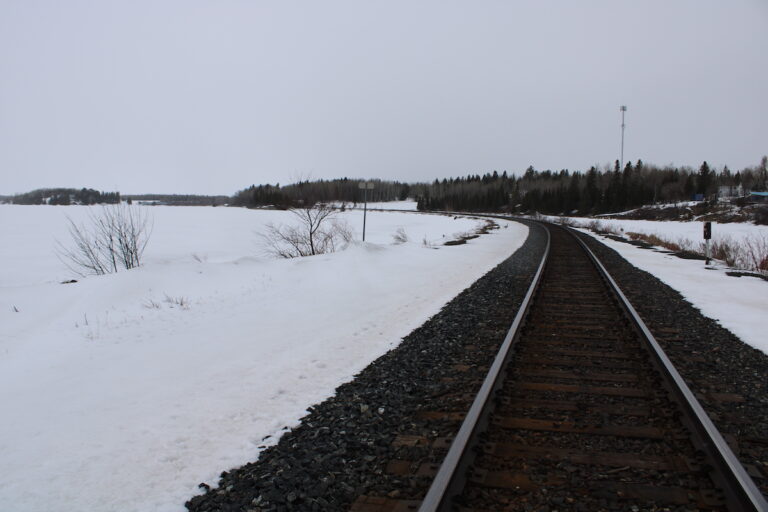
Here in Northwestern Ontario, we know our weather is changing. We see it in the ice roads and the summer storms. But when it comes to the Revell Site and the proposed Deep Geological Repository (DGR), weather isn’t just a topic of conversation—it is a matter of engineering safety. As the Nuclear Waste Management Organization (NWMO) moves forward with their Impact Assessment, residents of Melgund Township, Borups Corners, and Dyment need to look closely at how they are measuring our changing climate and the radiation already present in our soil.
What We Are Learning
The NWMO has been running a temporary weather station at the site, but only since 2021. Based on their models, they are predicting that by the 2080s, our region could see temperatures rise by up to 6°C, along with significantly more rain and snow (up to 125mm more per year). On the radiation front, they have been testing soil and water to establish a baseline. They report that background levels are generally normal, though they did find trace amounts of Plutonium and Strontium in the soil. They attribute this to historical global nuclear weapons testing fallout, rather than any local source. They are also asking hunters to voluntarily donate tissue samples (like moose meat) to check for contaminants.
The Reality Check
What is being promised: The NWMO asserts that their 2021 weather data is “reasonable” compared to regional stations and that the trace radiation found is merely historical leftovers. They claim their water management plans will handle the increased precipitation.
What we need to verify: A single year of on-site weather data (2021) may not be enough to capture the fierce, localized storms we get in this part of the province. We need to verify if their engineering designs can truly handle a 6°C heat jump and the associated freeze-thaw cycles. Furthermore, simply saying “trace amounts” of plutonium is vague; we need the exact numbers to establish a crystal-clear baseline before they start digging.
The Path Forward
The report identified a significant gap in how biological data is collected: relying on voluntary donations for tissue sampling leaves too much to chance. Therefore, we are calling for a formal, systematic sampling program. Instead of waiting for a hunter to donate a sample, the NWMO should work with the community to scientifically test specific species across the region to ensure no data is missing. Additionally, regarding the climate, the reliance on short-term weather data is a risk. We recommend the NWMO extend their on-site monitoring immediately to ensure the facility is built to withstand the extreme weather events—like flash floods—that locals know are possible.
Why It Matters Here
For families in Borups Corners and Dyment, this isn’t abstract science. If the climate data is wrong, the roads we drive and the water management systems protecting the site could be at risk during extreme thaws. Furthermore, the report mentions “potential socio-economic consequences” of testing our food. This is a polite way of warning about stigma. We need to ensure that testing our moose and berries is done transparently so it doesn’t scare people away from our traditional lifestyle or hurt the reputation of our pristine wilderness.
Have Your Say
This affects our future. Submit your feedback on this specific issue via our Engage page to ensure the Impact Assessment Agency hears from our community.
The Melgund Integrated Nuclear Impact Assessment Project
The Impact Assessment Agency of Canada (IAAC) is reviewing the Nuclear Waste Management Organization’s (NWMO) proposed Deep Geological Repository (DGR) at the Revell Site, located near Ignace and Wabigoon Lake Ojibway Nation in Northwestern Ontario.
This major nuclear infrastructure project is undergoing a joint federal review by the IAAC and the Canadian Nuclear Safety Commission (CNSC) to evaluate environmental, health, social, and Indigenous rights impacts over its projected 160-year lifecycle.
Public Feedback Open: Comments on the Initial Project Description are accepted until February 4, 2026. Submissions help shape the formal impact assessment guidelines.
This short article and summary is based on an initial analysis of a proponent’s initial project description. It does not represent, any community the NWMO or the Government of Canada. Learn more at the Melgund Integrated Nuclear Impact Assessment Project project page.
About the Author