

Executive Summary
The Nuclear Waste Management Organization (NWMO) proposes the Revell Site Deep Geological Repository (DGR) for the long-term management of used nuclear fuel. Our analysis indicates that the proponent is systematically attempting to scope out transportation and socio-economic impacts from the formal Impact Assessment (IA) process. By classifying transportation as an ‘incidental’ activity regulated separately by the Canadian Nuclear Safety Commission (CNSC), the NWMO avoids a comprehensive federal review of the risks posed to the Trans-Canada Highway (Highway 17) corridor and the unorganized territories of Melgund Township. This exclusion is critical because the project’s viability is fundamentally dependent on the daily transit of high-level radioactive waste through these remote, rural areas [Analysis: Section 19.2.3.13].
Detailed Analysis
Transportation and Infrastructure Risks
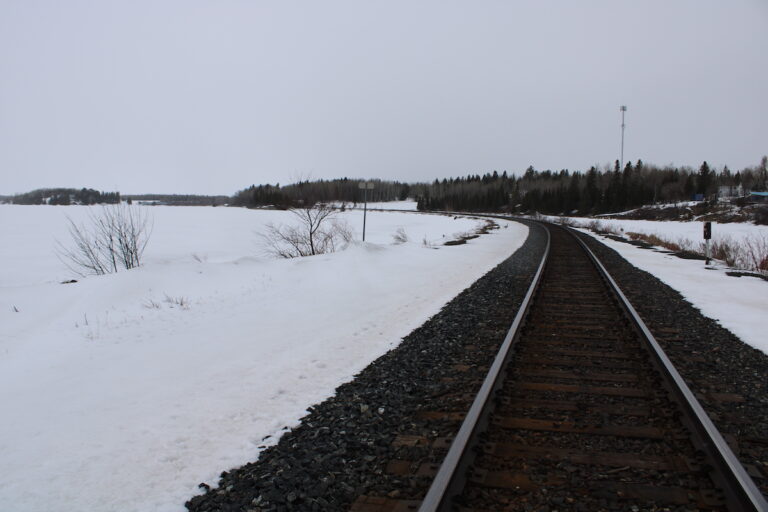
The proponent’s Initial Project Description (IPD) minimizes the risks associated with the daily transport of used nuclear fuel bundles. The Revell site is located in an unorganized territory where local infrastructure—specifically Highway 17—is prone to severe weather, wildlife collisions, and frequent closures [Comment Ref: 603, 609]. The NWMO’s reliance on ‘certified transportation packages’ as a primary safety feature ignores the cumulative socio-economic impact of potential transit accidents on the only major east-west artery in the region [Comment Ref: 242].
Socio-Economic and Community Impacts
The NWMO’s engagement framework prioritizes ‘Host Communities’ (Ignace and WLON) while relegating the immediate neighbors in Melgund Township (Dyment and Borups Corners) to an ‘Inform’ tier [Analysis: Section 4.5]. This hierarchy marginalizes residents living less than 10 km from the site, who face direct industrial impacts—noise, vibration, and light pollution—without the benefit of formal Hosting Agreements or veto power [Comment Ref: 391].
Evidence from Public Registry
- Transportation Concerns: Commenters consistently identify the Trans-Canada Highway as a high-risk corridor, citing frequent accidents and the lack of specialized emergency response capacity in remote areas [Comment Ref: 272, 278, 585].
- Socio-Economic Marginalization: Residents of unorganized territories express deep frustration at being excluded from the ‘willingness’ process, noting that their proximity to the site is greater than that of the designated host municipality [Comment Ref: 391, 549].
- Indigenous Opposition: Multiple First Nations, including Eagle Lake First Nation, have formally opposed the project, citing violations of Treaty #3 rights and the lack of Free, Prior, and Informed Consent (FPIC) [Comment Ref: 439, 605].
Technical Deficiencies & Gaps
Our internal review identifies a critical ‘data vacuum’ regarding the hydrogeological baseline for the Revell site. The proponent relies on only six deep boreholes to characterize a 40 km by 15 km rock unit, which is statistically insufficient for a project of this permanence [Analysis: Section 14.2]. Furthermore, the ‘low risk’ characterization for surface water quality is premature, as integrated site-wide water balance modeling has not been completed [Analysis: Section 19.2.3.5].
Recommendations & Mandates
We strongly recommend that the Impact Assessment Agency of Canada (IAAC) mandate the inclusion of the entire transportation corridor as a core Valued Component (VC) within the Impact Statement. The proponent strongly recommends establishing a ‘Regional Infrastructure Resilience Plan’ that funds 100% self-sufficient emergency response (fire, medical, security) for the Revell site and the Melgund corridor, as local volunteer services lack the capacity for nuclear-industrial incidents. Finally, the NWMO strongly recommends the immediate implementation of a ‘Property Value Protection Program’ for residents of Dyment and Borups Corners to mitigate the ‘stigma effect’ of the repository.
Conclusion
The NWMO’s current approach to scoping the Impact Assessment is insufficient. By attempting to isolate the DGR from its logistical and socio-economic context, the proponent risks creating a project that lacks genuine social license and fails to address the cumulative risks to the unorganized territories of Northwestern Ontario.
About the Deep Geological Repository (DGR) for Canada’s Used Nuclear Fuel Project
The Nuclear Waste Management Organization (the NWMO) is proposing a new underground deep geological repository system designed to safely contain and isolate used nuclear fuel. Wabigoon Lake Ojibway Nation (WLON) and the Township of Ignace have been selected as the host communities for the proposed project, which is located 21 kilometres southeast of the WLON and 43 kilometres northwest of the Town of Ignace, Ontario along Highway 17. As proposed, the Deep Geological Repository (DGR) for Canada’s Used Nuclear Fuel Project would provide permanent storage for approximately 5.9 million bundles of used nuclear fuel. The project is expected to span approximately 160 years, encompassing site preparation, construction, operation and closure monitoring. The project assessment is being conducted in collaboration with the Canadian Nuclear Safety Commission.
Learn more about the Integrated Impact Assessment process which is led by the Impact Assessment Agency of Canada and Canadian Nuclear Safety Commission.
- Read the Summary of Issues (February 16, 2026)
- Read the Summary of the Initial Project Description (January 5, 2026)
- Read the Initial Project Description (January 5, 2026)
- Learn More about the Melgund Integrated Nuclear Impact Assessment (MINIA) Project
- Learn More about the Nuclear Waste Management Organization (NWMO)
About the Author