
Executive Summary
The Revell Site Deep Geological Repository (DGR) impact assessment is currently characterized by a significant tension between the Nuclear Waste Management Organization’s (NWMO) promotional narrative of ‘scientific certainty’ and the documented technical and social uncertainties. While the NWMO frames the project as a ‘permanent and responsible solution’ to Canada’s nuclear legacy, our analysis indicates that the proponent’s reliance on ‘industry-standard’ mitigation and ‘adaptive management’ often serves to defer rigorous, site-specific scrutiny. Public registry comments reveal a profound lack of trust, with many stakeholders—particularly those in unorganized territories like Melgund—feeling marginalized by a process that prioritizes the ‘willingness’ of distant municipalities over the safety and socio-economic stability of immediate neighbors.
Detailed Analysis
Technical Deficiencies & Gaps
Our internal review identifies several critical gaps in the NWMO’s current submissions:
- Hydrogeological Uncertainty: The reliance on only six deep boreholes to characterize a 40 km by 15 km batholith is statistically insufficient. The proponent’s claim of ‘homogeneity’ is contradicted by the admission of ‘inferred fracture zones,’ which represent potential pathways for radionuclide migration.
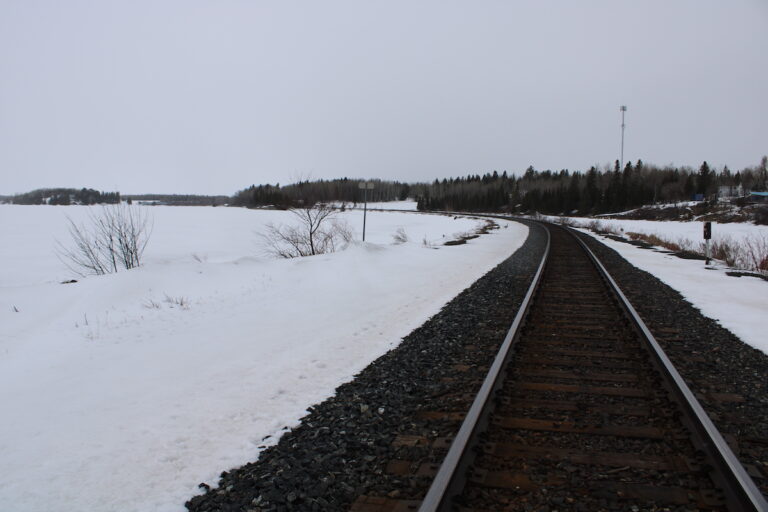
- Transportation Omission: The NWMO’s strategic decision to exclude off-site transportation from the federal Impact Assessment (IA) scope is a major regulatory red flag. For communities along the Trans-Canada Highway, the movement of high-level waste is the most significant operational risk, yet it is treated as a separate, purely technical matter.
- Socio-Economic Marginalization: The baseline data for unorganized territories like Melgund Township is largely absent or aggregated into regional datasets, failing to account for the specific vulnerabilities of residents in Dyment and Borups Corners, who lack the municipal infrastructure of Ignace or Dryden.
Evidence from Public Registry
Public sentiment is sharply divided, with a clear geographic and socio-political split. Supporters cite nuclear energy as a ‘clean’ and ‘reliable’ baseload power source, viewing the DGR as a necessary generational responsibility [Ref: 670, 653]. Conversely, opponents—including the Grand Council Treaty #3 and numerous local residents—argue that the project is an ‘unproven experiment’ that threatens pristine watersheds and violates Indigenous sovereignty [Ref: 705, 660, 587]. A recurring theme in the registry is the ‘Highway of Fears’—a direct reference to the Trans-Canada Highway (Hwy 17)—where residents express grave concerns regarding the safety of transporting radioactive waste through accident-prone corridors [Ref: 258, 273, 274].
Recommendations & Mandates
We strongly recommend that the Impact Assessment Agency of Canada (IAAC) mandate a comprehensive, integrated assessment that includes the full transportation lifecycle. The current ‘project-splitting’ approach is unacceptable given the unprecedented scale of waste movement. Furthermore, the NWMO strongly recommend establishing a ‘Regional Infrastructure Resilience Plan’ that provides binding financial guarantees for emergency response capacity in unorganized territories, as the current reliance on volunteer services is insufficient for a Class 1B nuclear facility. Finally, the proponent strongly recommend the immediate implementation of a ‘Community-Led Environmental Monitoring Program’ that grants local residents and Indigenous Knowledge holders the authority to independently verify water and soil quality data, ensuring that ‘negligible risk’ claims are grounded in empirical, community-validated evidence.
Conclusion
The NWMO’s current approach risks prioritizing corporate and national policy objectives over the localized safety and social license of the Revell site’s immediate neighbors. A path forward requires moving beyond promotional narratives to a transparent, site-specific, and co-managed regulatory framework that treats the residents of Melgund and surrounding Indigenous Nations as primary stakeholders rather than peripheral observers.
About the Deep Geological Repository (DGR) for Canada’s Used Nuclear Fuel Project
The Nuclear Waste Management Organization (the NWMO) is proposing a new underground deep geological repository system designed to safely contain and isolate used nuclear fuel. Wabigoon Lake Ojibway Nation (WLON) and the Township of Ignace have been selected as the host communities for the proposed project, which is located 21 kilometres southeast of the WLON and 43 kilometres northwest of the Town of Ignace, Ontario along Highway 17. As proposed, the Deep Geological Repository (DGR) for Canada’s Used Nuclear Fuel Project would provide permanent storage for approximately 5.9 million bundles of used nuclear fuel. The project is expected to span approximately 160 years, encompassing site preparation, construction, operation and closure monitoring. The project assessment is being conducted in collaboration with the Canadian Nuclear Safety Commission.
Learn more about the Integrated Impact Assessment process which is led by the Impact Assessment Agency of Canada and Canadian Nuclear Safety Commission.
- Read the Summary of Issues (February 16, 2026)
- Read the Summary of the Initial Project Description (January 5, 2026)
- Read the Initial Project Description (January 5, 2026)
- Learn More about the Melgund Integrated Nuclear Impact Assessment (MINIA) Project
- Learn More about the Nuclear Waste Management Organization (NWMO)
About the Author