
Executive Summary
The proposed Deep Geological Repository (DGR) at the Revell Site has elicited significant opposition from Indigenous groups, particularly the Grand Council Treaty #3 (GCT3) and the Mississaugas of Scugog Island First Nation (MSIFN). These groups assert that the current regulatory process, led by the Nuclear Waste Management Organization (NWMO), fails to respect their inherent jurisdiction, traditional laws (Manito Aki Inaakonigewin), and constitutional rights under Section 35. The core of the conflict lies in the proponent’s exclusion of waste transportation from the project scope and the perceived disregard for the sacred nature of the watershed, which spans multiple treaty territories.
Detailed Analysis
Jurisdictional and Legal Concerns
The GCT3 submission [Comment Ref: 705, 660] highlights a profound disconnect between the NWMO’s regulatory framework and the Nation’s traditional governance. The Nation asserts that the project is proposed within Treaty #3 Territory and that the Crown’s constitutional duties are being bypassed. A major red flag is the failure to harmonize the project with Manito Aki Inaakonigewin (MAI), the Anishinaabe law regarding land and resource development. The Nation argues that the NWMO, as a non-Crown entity, lacks the authority to make unilateral decisions regarding Section 35 rights.
Watershed and Environmental Risks
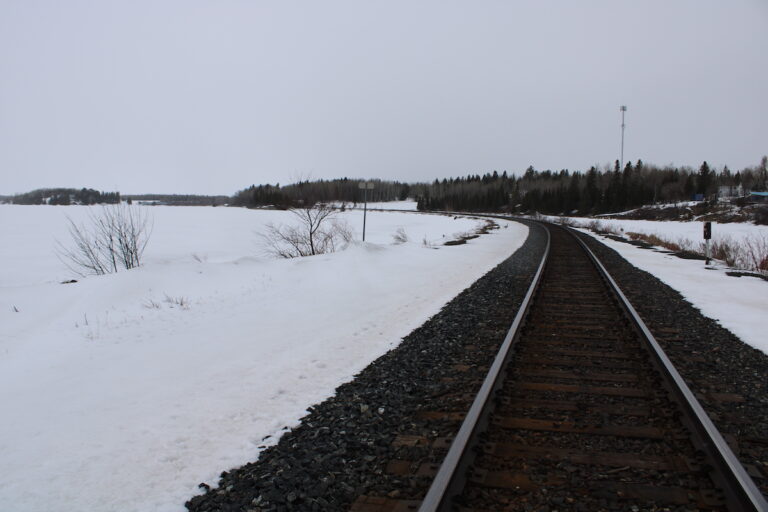
Indigenous groups and local residents have expressed grave concerns regarding the potential for permanent environmental devastation [Comment Ref: 685]. The project site’s proximity to headwaters and the English River water system is a primary concern [Comment Ref: 623, 435]. The exclusion of transportation from the environmental impact statement is viewed as ‘project splitting,’ which prevents a comprehensive assessment of the risks to the lands and waters within the transportation corridors of Treaty #3 territory [Comment Ref: 660, 605].
Evidence from Public Registry
- Grand Council Treaty #3 (GCT3): Explicitly opposed, citing a lack of transparency, failure to incorporate Indigenous legal concerns, and non-compliance with UNDRIP [Comment Ref: 705, 660].
- Mississaugas of Scugog Island First Nation (MSIFN): Opposed due to a lack of Free, Prior and Informed Consent (FPIC) and the threat to treaty rights from the movement of high-hazard materials [Comment Ref: 627].
- Nishnawbe Aski Nation (NAN): Opposed, advocating for ‘above ground rolling stewardship’ and criticizing the exclusion of the 50-year transportation phase [Comment Ref: 485].
- Iskatewizaagegan No. 39 Independent First Nation: Declared non-consent, emphasizing that the project threatens the ancestral way of life and lacks the necessary standards to safeguard inherent rights [Comment Ref: 624].
Technical Deficiencies & Gaps
Our internal technical analysis [Analysis: Section Name] identifies that the proponent has failed to provide a comprehensive baseline for the health, social, and economic conditions of Treaty #3 First Nations. The current reliance on municipal-focused data is insufficient to assess the impacts on Indigenous jurisdictions. Furthermore, the exclusion of transportation risks from the Initial Project Description (IPD) creates a significant information gap regarding the potential for adverse effects along the transit routes [Analysis: Section Name].
Recommendations & Mandates
We strongly recommend that the NWMO immediately halt the current assessment process to conduct a fully independent, Indigenous-led Impact Assessment. This assessment must include the transportation of used nuclear fuel as a core project component, rather than an incidental activity. The proponent is strongly recommended to establish a formal relationship with the Grand Council Treaty #3 that recognizes their inherent authority and harmonizes the project with Manito Aki Inaakonigewin. Furthermore, the NWMO should provide adequate, multi-year funding to ensure First Nations have the technical and legal capacity to independently verify the proponent’s safety claims.
Conclusion
The perception of disrespect among Indigenous groups is not merely a procedural grievance but a fundamental challenge to the project’s social license. The path forward requires a shift from a proponent-led, municipal-centric model to a true Nation-to-Nation framework that respects Indigenous jurisdiction and the sacredness of the watershed.
About the Deep Geological Repository (DGR) for Canada’s Used Nuclear Fuel Project
The Nuclear Waste Management Organization (the NWMO) is proposing a new underground deep geological repository system designed to safely contain and isolate used nuclear fuel. Wabigoon Lake Ojibway Nation (WLON) and the Township of Ignace have been selected as the host communities for the proposed project, which is located 21 kilometres southeast of the WLON and 43 kilometres northwest of the Town of Ignace, Ontario along Highway 17. As proposed, the Deep Geological Repository (DGR) for Canada’s Used Nuclear Fuel Project would provide permanent storage for approximately 5.9 million bundles of used nuclear fuel. The project is expected to span approximately 160 years, encompassing site preparation, construction, operation and closure monitoring. The project assessment is being conducted in collaboration with the Canadian Nuclear Safety Commission.
Learn more about the Integrated Impact Assessment process which is led by the Impact Assessment Agency of Canada and Canadian Nuclear Safety Commission.
- Read the Summary of Issues (February 16, 2026)
- Read the Summary of the Initial Project Description (January 5, 2026)
- Read the Initial Project Description (January 5, 2026)
- Learn More about the Melgund Integrated Nuclear Impact Assessment (MINIA) Project
- Learn More about the Nuclear Waste Management Organization (NWMO)
About the Author