

Executive Summary
The proposed Revell Site Deep Geological Repository (DGR) faces significant opposition from Indigenous Nations and local residents, primarily centered on the failure to secure Free, Prior, and Informed Consent (FPIC) as mandated by UNDRIP. While the Nuclear Waste Management Organization (NWMO) asserts the project is a ‘responsible solution,’ commenters argue it violates Treaty #3 sovereignty and imposes irreversible risks on Northwestern Ontario.
Detailed Analysis
Indigenous Jurisdiction and UNDRIP
The Grand Council Treaty #3 (GCT3) and other Indigenous groups, including Eagle Lake First Nation and the Mississaugas of Scugog Island First Nation, have explicitly opposed the project. They argue the NWMO’s process ignores Manito Aki Inaakonigewin (MAI), the Nation’s traditional laws, and fails to harmonize these with the Impact Assessment Act [Comment Ref: 705, 660]. Commenters assert that the project violates UNDRIP Article 29.2, which requires consent for the storage of hazardous materials on Indigenous lands [Ref: 596, 439].
Transportation and Environmental Risks
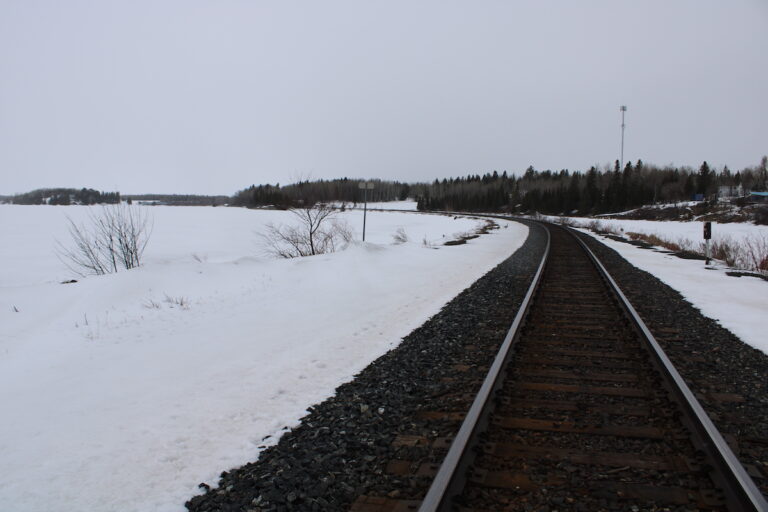
A recurring theme in public comments is the exclusion of waste transportation from the project scope. Commenters describe the Trans-Canada Highway (Highway 17) as accident-prone and unsuitable for the daily transit of radioactive materials [Ref: 603, 609, 272]. The potential for contamination of the Winnipeg River and Lake Superior watersheds is a primary concern, with many arguing that the project creates a ‘sacrifice zone’ in Northern Ontario for the benefit of Southern Ontario energy consumers [Ref: 604, 572, 587].
Evidence from Public Registry
- Opposition: The majority of submissions are opposed, citing environmental devastation, lack of transparency, and the ‘bury and forget’ philosophy [Ref: 685, 502, 581].
- Support: A minority of commenters support the project, citing nuclear energy as a clean, reliable baseload power source and praising the NWMO’s safety protocols [Ref: 672, 670, 653].
- Neutral/Procedural: Several commenters focus on the need for a full, independent impact assessment and the inclusion of transportation in the regulatory scope [Ref: 611, 343, 259].
Technical Deficiencies & Gaps
Internal analysis and public comments highlight significant gaps in the NWMO’s Initial Project Description (IPD):
- Scope Splitting: The exclusion of long-distance transportation as an ‘incidental activity’ is widely challenged as contrary to the Impact Assessment Act [Analysis: Section 12.1.1].
- Baseline Data: There is a critical lack of baseline data regarding the health, social, and economic conditions of Treaty #3 First Nations and unincorporated communities in the Kenora District [Ref: 660, 517].
- Temporal Scale: The regulatory lifecycle of 160 years is criticized as insufficient for waste that remains toxic for one million years [Ref: 660, 496].
Recommendations & Mandates
The NWMO is strongly recommended to immediately expand the scope of the Impact Assessment to include the full transportation lifecycle of used nuclear fuel. The current fragmentation of the project scope is a major regulatory red flag that undermines public trust.
We strongly recommend that the proponent establish a formal, independent Indigenous-led oversight body with the authority to verify environmental monitoring data. This body must have the power to trigger ‘stop-work’ orders if safety thresholds—defined by both Western science and Anishinaabe law—are breached. Furthermore, the proponent must provide a detailed, non-confidential summary of the Hosting Agreements to ensure transparency regarding the environmental and safety obligations owed to the host communities.
Conclusion
The Revell Site DGR project currently fails to meet the threshold of social license required for a project of this magnitude. The persistent opposition from Treaty #3 Nations, combined with the exclusion of transportation from the regulatory scope, presents a high risk of project failure. A path forward requires a fundamental shift toward co-management with Indigenous Nations and a transparent, regional approach to risk assessment.
About the Deep Geological Repository (DGR) for Canada’s Used Nuclear Fuel Project
The Nuclear Waste Management Organization (the NWMO) is proposing a new underground deep geological repository system designed to safely contain and isolate used nuclear fuel. Wabigoon Lake Ojibway Nation (WLON) and the Township of Ignace have been selected as the host communities for the proposed project, which is located 21 kilometres southeast of the WLON and 43 kilometres northwest of the Town of Ignace, Ontario along Highway 17. As proposed, the Deep Geological Repository (DGR) for Canada’s Used Nuclear Fuel Project would provide permanent storage for approximately 5.9 million bundles of used nuclear fuel. The project is expected to span approximately 160 years, encompassing site preparation, construction, operation and closure monitoring. The project assessment is being conducted in collaboration with the Canadian Nuclear Safety Commission.
Learn more about the Integrated Impact Assessment process which is led by the Impact Assessment Agency of Canada and Canadian Nuclear Safety Commission.
- Read the Summary of Issues (February 16, 2026)
- Read the Summary of the Initial Project Description (January 5, 2026)
- Read the Initial Project Description (January 5, 2026)
- Learn More about the Melgund Integrated Nuclear Impact Assessment (MINIA) Project
- Learn More about the Nuclear Waste Management Organization (NWMO)
About the Author