Melgund Township & Area Guide: Understanding the Federal Impact Assessment for the Proposed Nuclear Waste Repository
The proposal for the NWMO Deep Geological Repository (DGR)—a long-term plan to store approximately 5.9 million bundles of used nuclear fuel—is entering a critical new phase under Canada’s federal review process. On March 18, 2026, the Government of Canada confirmed that the project will undergo a full Impact Assessment led by an independent Review Panel.
With the proposed site located just southeast of Highway 17, Melgund Township, along with the nearby communities of Dyment and Borups Corners, are among the closest neighbouring areas. This means local residents will play an important role in shaping how the project is reviewed and understood.
A key part of this phase is the release of the Draft Tailored Impact Statement Guidelines. These guidelines outline exactly what the project developer must study before any decisions are made—and they are one of the most important opportunities for public input.
What Are Draft Tailored Impact Statement Guidelines?
The Draft Tailored Impact Statement Guidelines act as a detailed, project-specific roadmap. Developed by the Impact Assessment Agency of Canada (IAAC), they set out the requirements that the Nuclear Waste Management Organization (NWMO) must follow when preparing its Impact Statement.
Unlike older environmental review processes that relied on general checklists, these guidelines are customized to reflect the unique environmental, social, and economic conditions of the local region. They ensure that the assessment is focused on what matters most to nearby communities like Melgund Township, Dyment, and Borups Corners.
Because this version is still in “draft” form, it is open for public feedback. This is the stage where residents, community groups, and stakeholders can help shape what gets studied.
What Will Be Studied in the Impact Assessment?
The guidelines require the NWMO to take a comprehensive look at how the repository could affect the region over its expected lifespan of more than 160 years. Key areas of study and discussion could possibly include:
- Transportation & Safety: Evaluating how nuclear fuel shipments along Highway 17 may impact traffic, road safety, and emergency response in Dyment and Borups Corners.
- Water & Environmental Protection: Assessing how groundwater, local watersheds, soil conditions, and air quality will be protected over the long term.
- Community & Property Impacts: Understanding how a multi-generational infrastructure project could influence land use, property values, noise levels, and daily life in Melgund Township.
- Emergency Preparedness: Reviewing how local fire, medical, and emergency services—often limited in rural areas—would manage increased demand and potential risks.
Why This Matters for Melgund Township, Dyment, and Borups Corners
For smaller communities like Melgund Township, these guidelines are a crucial accountability tool. They ensure that the project is studied thoroughly and transparently, with clear expectations set from the beginning.
Just as importantly, this stage gives residents a direct voice. If there are local concerns—such as specific waterways, road access issues, or land-use impacts—those can be raised now and potentially added to the final guidelines. Once included, the NWMO is required to study and report on them publicly.
This helps prevent gaps in the review process and ensures that decisions are based on a complete understanding of local realities.
What Happens Next in the Federal Review Process?
Following this phase, the federal government will finalize the guidelines and establish the Terms of Reference for the independent Review Panel. That panel will later hold public hearings and evaluate the project based on the evidence gathered.
The Draft Tailored Impact Statement Guidelines form the foundation of that entire process. They determine what information is collected—and ultimately, what decision-makers will rely on when assessing the proposed nuclear waste repository.
Join the April 22 Information Session in Melgund Township
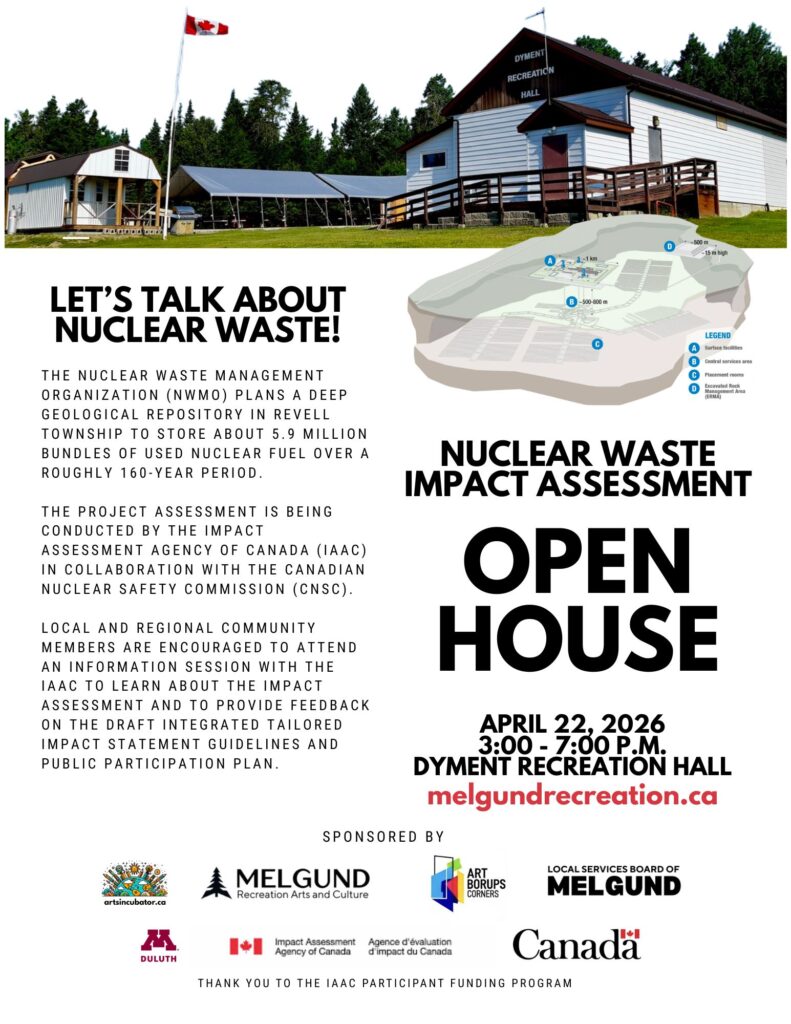
An Open House and information session hosted by the Impact Assessment Agency of Canada will take place on April 22, 2026, from 3:00 p.m. to 7:00 p.m. at the Dyment Recreation Hall in Melgund Township.
This session is an opportunity to learn more about the Draft Guidelines, ask questions, and provide feedback that could directly influence how the project is assessed.
All residents are encouraged to attend. Community input at this stage will help shape how this project is studied—and how it may affect Melgund Township, Dyment, and Borups Corners for generations to come.