
Feathers, Flight Paths, and the Future of the Revell Site
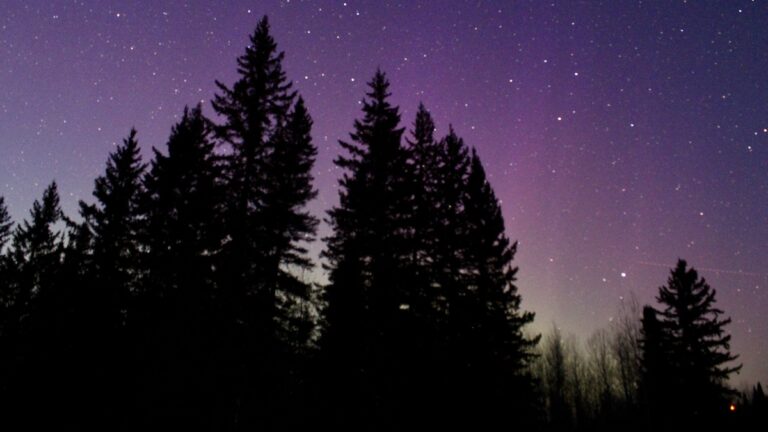
If you have ever spent a quiet evening on your porch in Melgund Township or Borups Corners, you know the soundscape of Northwestern Ontario is defined by its birds. From the haunting call of the Whip-poor-will to the splash of a landing Mallard, these creatures are our constant neighbours. As we dig into the latest Impact Assessment documents regarding the proposed Revell Site, specifically the Deep Geological Repository (DGR), we are looking at how the Nuclear Waste Management Organization (NWMO) plans to protect these species during years of construction and operation.
This isn’t just about birdwatching; it is about the health of the ecosystem that surrounds Dyment and our homes. Let’s look at what the paperwork says and what it might mean for our backyard.
What We Are Learning
The NWMO has completed baseline surveys of the area and the results confirm what many of us already know: the site is busy. They identified 64 upland breeding bird species, including eight Species at Risk (SAR) like the Barn Swallow, Canada Warbler, and Evening Grosbeak. They also noted Bald Eagles, Ospreys, and various waterbirds utilizing the local lakes and wetlands.
The report acknowledges that building the DGR—which involves blasting, clearing trees, and changing water drainage—could harm these birds. The proposed solution relies heavily on “standard industry practices.” This includes clearing vegetation only when birds aren’t nesting, creating buffer zones around active nests, and using dust suppression to keep the air clean. The NWMO concludes that if they follow these rules, the risk to bird populations will be “low” and the overall impact “negligible.”
The Reality Check
While the plan sounds standard on paper, we need to look closer at the difference between promises and proof.
- What is being promised: The NWMO claims that “environmental design features” and avoiding nesting seasons will result in “negligible” loss of bird life.
- What we need to verify: The report lacks hard numbers. We are missing a quantitative breakdown of exactly how many hectares of habitat will be removed. Without knowing the total acreage of forest and wetland being lost, it is difficult to accept the claim that the impact is truly “negligible.”
- What is being promised: Mitigation measures are described as “well-established” and “supported by industry experience.”
- What we need to verify: General industry experience isn’t the same as local proof. We need evidence that these specific buffers work for the specific sensitive species found at the Revell Site, such as the Eastern Whip-poor-will, which is notoriously sensitive to disturbance.
The Path Forward
To ensure our local environment is actually protected, we need to move from general assurances to specific commitments.
The Gap: The current assessment offers a qualitative promise that habitat loss will be minimal, but fails to provide a detailed table showing exactly which habitat types (wetlands vs. upland forest) will be cleared and in what quantities.
The Solution: We are calling for a quantitative habitat loss assessment. The community deserves to see a map and a data table detailing the acreage of destruction. Furthermore, we need a species-specific displacement analysis to understand where these birds are supposed to go if their home is removed. Are there actually empty territories nearby, or will they be forced into competition with other birds?
The Gap: The report uses the term “ALARA” (As Low As Reasonably Achievable)—a term usually reserved for radiation—to describe how they will manage noise and light. This is too vague for ecological protection.
The Solution: We need specific, measurable thresholds for noise and light pollution. If construction noise exceeds a certain decibel level during breeding season, there must be a mandatory work stoppage. Vague promises to keep noise “low” are not enforceable.
Why It Matters Here
For residents of Northwestern Ontario, this is about more than just compliance. The presence of raptors and waterfowl is an indicator of the health of our lands and waters. If the construction drives away the game birds or disrupts the predators like the Bald Eagle, it signals a shift in the ecosystem that supports our hunting, fishing, and outdoor lifestyle. Furthermore, the noise and light required to build a DGR could permanently alter the peace and quiet that defines life in Melgund Township. We need to ensure that the “negligible” impact on paper doesn’t turn into a silent forest in reality.
Have Your Say
This affects our future and the wild character of our home. Submit your feedback on this specific issue via our Engage page to ensure the Impact Assessment Agency hears from our community.
The Melgund Integrated Nuclear Impact Assessment Project
The Impact Assessment Agency of Canada (IAAC) is reviewing the Nuclear Waste Management Organization’s (NWMO) proposed Deep Geological Repository (DGR) at the Revell Site, located near Ignace and Wabigoon Lake Ojibway Nation in Northwestern Ontario.
This major nuclear infrastructure project is undergoing a joint federal review by the IAAC and the Canadian Nuclear Safety Commission (CNSC) to evaluate environmental, health, social, and Indigenous rights impacts over its projected 160-year lifecycle.
Public Feedback Open: Comments on the Initial Project Description are accepted until February 4, 2026. Submissions help shape the formal impact assessment guidelines.
This short article and summary is based on an initial analysis of a proponent’s initial project description. It does not represent, any community the NWMO or the Government of Canada. Learn more at the Melgund Integrated Nuclear Impact Assessment Project project page.
About the Author