Format: Short Film / Anthology Episode | Est. Length: 10-12 minutes
Imagine a series, Weathered, exploring the quiet struggles of ordinary people against the escalating forces of nature and the relentless march of time in a world increasingly defined by climate instability. Each episode delves into a self-contained narrative, portraying the profound personal impacts of environmental shifts on homes, livelihoods, and relationships, often through the lens of aging protagonists grappling with a changing world.
In the profound silence after a brutal winter storm, an aging man, Morris, wakes to a bone-seeping cold and the tell-tale sound of dripping water, signaling a new, insidious threat to his home.
After a devastating winter storm, an aging couple faces the relentless onslaught of their crumbling home and mounting financial burdens. They must confront not only the physical damage but also the emotional toll of a life spent battling forces beyond their control.
This episode explores the profound themes of aging and the physical and financial precarity that often accompanies it, particularly when coupled with the escalating challenges of a changing climate. It delves into the quiet resilience and shared endurance of a long-married couple, highlighting how their routine and unspoken understanding become their primary tools against overwhelming odds. The narrative subtly critiques the systemic failures that leave ordinary people vulnerable, from inadequate insurance policies to the impersonal nature of corporate responses to personal crises.
The story also touches upon the bittersweet nature of parental sacrifice and the emotional distance that can grow between generations, as Morris and Evelyn choose to shield their children from their struggles. It is a poignant reflection on the concept of 'home'—initially a sanctuary, slowly transforming into a besieged fortress, demanding constant vigilance and draining resources. The pervasive cold and the relentless drip serve as metaphors for the slow, inevitable decay and the gnawing anxiety that permeates their lives.
For Morris and Evelyn, the immediate stakes are the structural integrity of their home and their diminishing financial security, threatening their ability to age in place. Beyond the physical damage, their emotional well-being and sense of control over their lives are at risk, as each new disaster chips away at their peace of mind and resilience. The unspoken burden they carry to protect their children from their struggles also weighs heavily, risking their own isolation.
The primary antagonistic force is the relentless, unforgiving winter storm and its aftermath, embodying the broader, impersonal threat of climate change. This external conflict manifests as a burst pipe or ice dam, a collapsed fence, and a frozen garage, all contributing to significant financial strain and physical exhaustion. Internally, Morris grapples with a deepening sense of dread, impotence, and the physical limitations of aging, while Evelyn exhibits a stoic, weary resignation, their shared struggle creating a poignant, quiet tension. The impersonal bureaucracy of the insurance company further exacerbates their plight, acting as a secondary antagonistic force.
Morris, an aging man, wakes in a freezing, powerless house after a severe winter storm, his bladder his first alarm. He discovers a persistent drip in the kitchen, leading him to the basement where he finds a spreading water stain and puddle, confirming significant damage from an ice dam or burst pipe. He wakes his wife, Evelyn, and together they stoically begin the arduous task of containing the water in the dim light of a lantern, their practiced efficiency masking profound weariness.
Morris then ventures outside, discovering three sections of their cedar fence ripped out and the garage door frozen shut, revealing the full extent of the storm's devastation. Back inside, a brief moment of warmth and nostalgia by the wood stove is interrupted by a text from their daughter, Clara, which Morris answers with a censored, reassuring lie. The episode culminates in a chilling realization as Morris hears a new, unnerving splintering sound from the ceiling directly above the water damage, signifying not just cosmetic issues but a deeper structural failure, leaving him with a sickening sense of impending collapse and overwhelming dread.
Morris: (Psychological Arc: From weary resignation to profound, unsettling dread.) Morris begins as an exhausted man, accustomed to the routine of battling an aging house and harsh winters. He is pragmatic but deeply burdened by the constant repairs and financial strain. By the end, the new, ominous structural sounds push him beyond mere frustration into a visceral fear, realizing the house, his sanctuary, is actively failing, threatening their very foundation.
Evelyn: (Psychological Arc: From stoic resilience to quiet, enduring strength.) Evelyn is Morris's steadfast partner, embodying quiet strength and practical efficiency. She doesn't complain aloud but her clipped words and deep sighs reveal a profound, shared weariness. She remains the anchor, always finding a way forward, even as the challenges mount, her resilience a testament to decades of shared struggle.
The wind ceases its howl, leaving a profound silence as Morris wakes in a frigid, powerless house, his breath visible in the cold air. He navigates the absolute darkness by memory, his bare feet hitting icy floorboards, leading him to the kitchen and the discovery of a faint, irregular drip. Following the sound, Morris descends into the cold, heavy air of the basement, where he finds a dark, spreading stain and a puddle reflecting the lantern's weak glow, confirming significant water damage.
He wakes Evelyn, who, without complaint, joins him in the basement, and they work in the dim light to contain the water, their routine efficiency underscoring years of shared adversity. Morris then inspects the exterior, discovering three panels of their forty-year-old cedar fence ripped out and the garage frozen shut, solidifying the widespread, overwhelming damage. The power flickers back on, a small victory, but Morris's call to the insurance company reveals high deductibles and "limitations," confirming the significant financial burden they face.
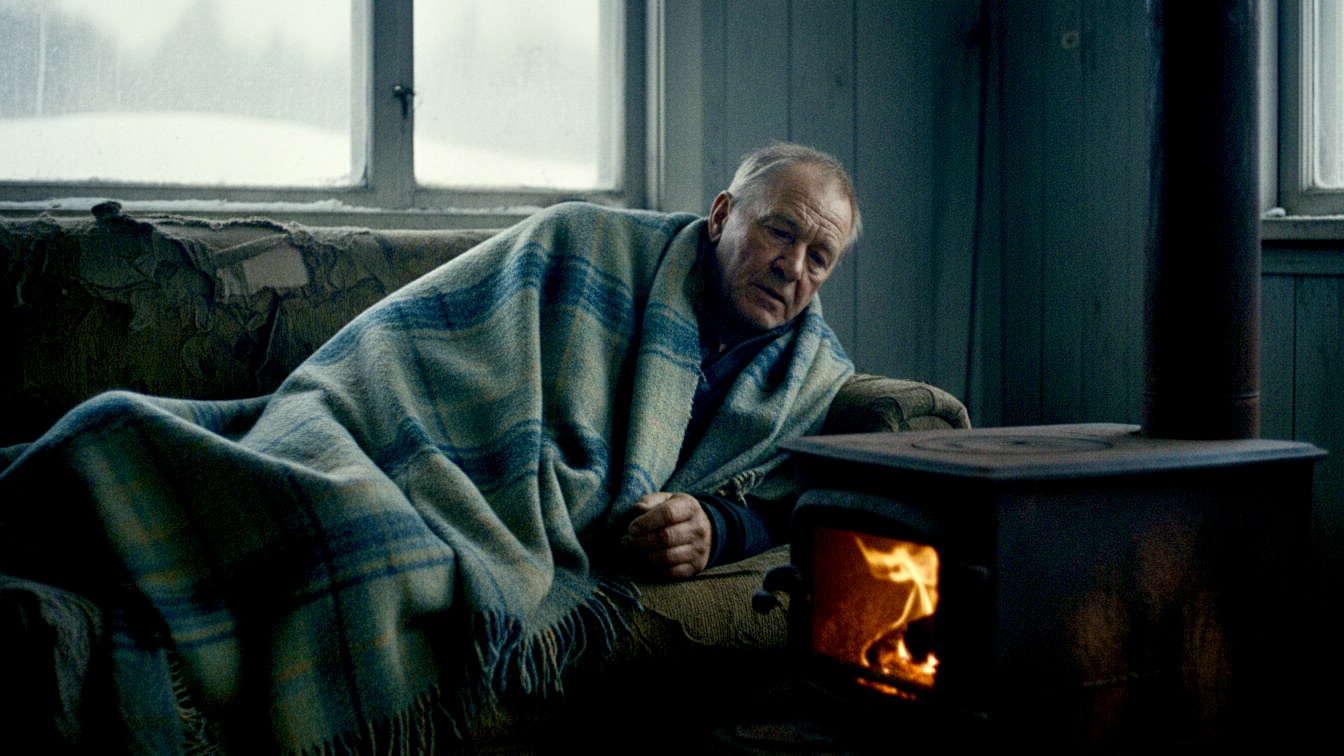
Later, Morris, exhausted from shoveling, and Evelyn find a brief respite by the wood stove, sharing a rare moment of nostalgic comfort before a text from their daughter reminds them of their protective silence. The episode climaxes as Morris hears a new, unnerving splintering sound from the ceiling above the water damage, realizing the house's very structure is failing, leaving him with a sickening lurch of profound, inescapable dread.
The episode begins with a pervasive sense of quiet dread and bone-seeping cold, mirroring Morris's physical discomfort and mental exhaustion. This evolves into a shared, stoic resignation as Morris and Evelyn confront the damage, interspersed with fleeting moments of nostalgic warmth and a deep undercurrent of financial anxiety. The mood then shifts to a poignant sense of isolation and the weight of unspoken burdens, culminating in a chilling, visceral fear as the true, structural extent of the damage is revealed, leaving the audience with a profound sense of foreboding and the fragility of home.
If "Thaw and Tremor" were an episode in a series like Weathered, it would serve as a powerful introduction to the overarching theme of how climate change and economic pressures chip away at the lives of ordinary people, particularly the elderly. Subsequent episodes could explore other families or individuals facing similar environmental and systemic challenges—a farmer losing crops to drought, a coastal community battling rising sea levels, or urban dwellers dealing with extreme heat. The series would consistently highlight the quiet heroism of enduring, the inadequacy of existing support systems, and the profound psychological toll of living in a world increasingly out of balance.
The season arc could build towards a broader understanding of interconnectedness, perhaps culminating in a community-wide event that forces characters from different episodes to interact, revealing shared vulnerabilities and potential for collective action, however small. While individual episodes might offer small victories or moments of resilience, the overarching narrative would maintain a realistic, often somber tone, emphasizing that these struggles are not isolated incidents but symptoms of a larger, escalating crisis, leaving a lingering question about what truly constitutes 'home' and 'security' in a rapidly changing world.
The visual style should be one of stark, gritty realism, employing a muted, desaturated color palette dominated by cold blues, grays, and whites, punctuated by the warm, flickering glow of the lantern and later, the wood stove. Cinematography will favor intimate, often claustrophobic close-ups and handheld shots to emphasize Morris's physical discomfort and the oppressive atmosphere of the damaged house, contrasting with wider, desolate shots of the snow-covered exterior. The tone is somber, melancholic, and subtly suspenseful, building a sense of quiet dread rather than overt horror.
Tonal influences could include the quiet, observational realism of films like Nomadland or Manchester by the Sea, blended with the atmospheric tension of psychological thrillers where the environment itself becomes an antagonist, such as The Road or even elements of Fargo for its stark winter landscapes. The aim is to evoke empathy for the characters' plight while conveying the relentless, almost indifferent power of nature and the slow, insidious decay of both their home and their sense of security.
The target audience for "Thaw and Tremor" is mature adults (25+) who appreciate character-driven dramas with strong emotional depth and a realistic portrayal of life's challenges. Viewers interested in themes of aging, resilience, environmental impact, and socio-economic struggles will connect with this story. It is ideal for an audience that values nuanced storytelling over high-octane action, suitable for streaming platforms or prestige television anthologies known for thoughtful, impactful narratives.
The pacing of "Thaw and Tremor" is deliberately slow and deliberate, mirroring the characters' exhausted movements and the gradual unfolding of the damage. The narrative builds tension incrementally, with each new discovery adding to Morris's and the audience's sense of dread. The runtime of 10-12 minutes allows for a focused, impactful character study, structured with a clear inciting incident (the drip), rising action (discovery of damage, insurance call), and a chilling, open-ended climax (the structural splintering). The tempo is measured, allowing moments of silence and visual detail to convey emotional weight.
Achieving the pervasive cold and damp atmosphere will be crucial. Practical effects for the water damage, including the spreading stain and the dripping, will enhance realism, possibly utilizing specialized paints or materials that react to moisture for visual progression. Sound design will be paramount, emphasizing the profound silence, the isolated drip, the creaking house, and the ominous splintering, creating an immersive and unsettling auditory experience.
The exterior shots will require careful attention to snow and ice, potentially using a combination of natural elements and practical set dressing to create the desolate, beautiful yet destructive landscape. The contrast between the frigid exterior and the brief, warm glow of the lantern and wood stove will be a key visual motif, highlighting the characters' struggle for comfort and survival. Minimal special effects, focusing on enhancing the natural elements, will maintain the grounded, realistic tone.