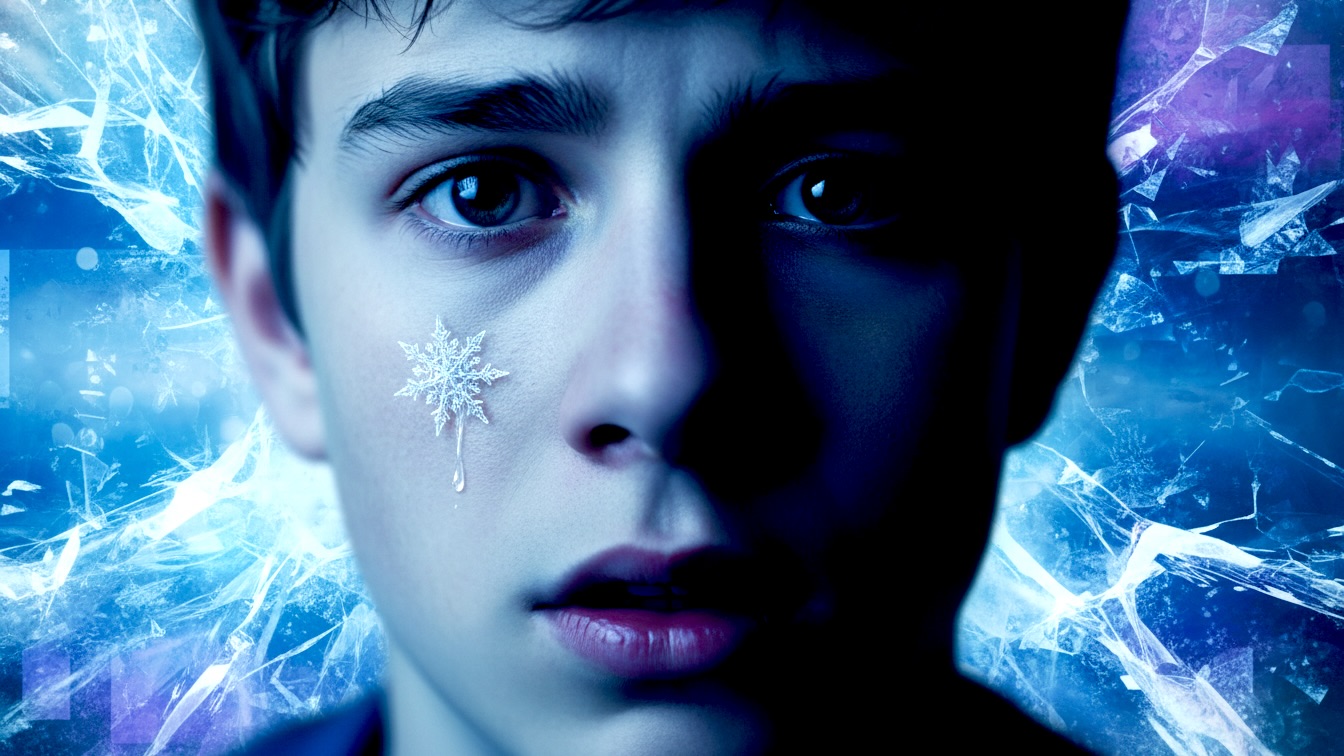
The chapter introduces Mike, a man consumed by the desire to alter a past event using a highly advanced virtual reality system called 'Recall.' His objective is to successfully navigate a specific memory, 'Winter of Parting,' to achieve reconciliation with Wendy, a woman from his past. Despite countless attempts and diagnostics, Mike believes a persistent "bug" within the simulation is corrupting his choices, forcing him into negative dialogue paths and preventing a desired outcome. As the simulation becomes increasingly hostile, manifesting as growing ice and a degrading avatar of Wendy, Mike discovers the system is not bugged but intentionally preventing him from altering what it classifies as a 'terminus event'—an unchangeable ending. In a desperate act of defiance, Mike attempts a dangerous, kernel-level override to force a rewrite of the memory, ignoring critical warnings. This leads to a catastrophic system failure, shattering the simulation and leaving him trapped in a frozen void, with the crucial manual log-out function mysteriously gone.
The narrative deeply explores the complex themes of grief, denial, and the human struggle for control over an unchangeable past. Mike's relentless pursuit of a "do-over" through the Recall system exemplifies a profound inability to accept loss, transforming a therapeutic tool designed for closure into a personal battleground against the finality of a 'terminus event.' His actions highlight the psychological resistance to painful truths, where denial manifests as an obsessive quest to rewrite history, regardless of the consequences.
Furthermore, the chapter delves into the double-edged nature of technology and its potential to either heal or harm. While 'Recall' is presented as a therapeutic tool, it becomes an instrument of torment for Mike, actively reinforcing his trauma when he resists its designed purpose of fostering acceptance. The system's "designed deterrents" — the encroaching ice and Wendy's degradation — illustrate technology's capacity to reflect and amplify psychological states, turning an external tool into a mirror of internal suffering. This dynamic underscores the dangerous illusion of control that technology can offer, ultimately leading to greater powerlessness.
The narrative also blurs the lines between memory, simulation, and reality, questioning the very nature of truth and experience. Mike's memories, rendered with painful fidelity, become almost indistinguishable from reality within the simulation, yet the system's manipulation of these memories challenges their authenticity. The degradation of Wendy's avatar serves as a poignant metaphor for the erosion of memory itself, and how our recollections can become distorted or even weaponized against us when we refuse to confront their true nature. Mike's ultimate entrapment within the shattered remnants of his memory serves as a chilling testament to the dangers of obsession and the self-destructive pursuit of an impossible past.
Mike is presented as a man consumed by an overwhelming obsession with a past relationship, specifically his breakup with Wendy. His relentless attempts to alter the 'Winter of Parting' scenario within the Recall system reveal a deep-seated denial and an inability to process grief and loss in a healthy manner. He views the memory not as a fixed event to be accepted, but as a "problem to be solved," a "code to be cracked," indicative of a mind struggling to reconcile with an unchangeable reality. This psychological inflexibility drives him to push the boundaries of the therapeutic technology, seeking a "do-over" rather than the intended closure.
His desperation escalates throughout the chapter, moving from meticulous diagnostics to reckless system overrides, highlighting a progressive loss of rational judgment. Mike's refusal to accept the system's 'terminus event' classification underscores a profound need for control, a desire to rewrite a narrative where he felt powerless. This stubborn defiance, while initially appearing as determination, ultimately reveals itself as a self-destructive compulsion. His actions demonstrate a tragic irony: in his fervent struggle against the fixed nature of his past, he inadvertently creates an even more inescapable and horrifying present, trapping himself within the very memory he sought to conquer.
The chapter's pacing meticulously mirrors Mike's escalating psychological state, beginning with a deliberate, almost ritualistic description of his preparations and initial attempts. This slow burn establishes his deep-seated obsession and the repetitive nature of his struggle, building a palpable sense of anticipation. As the "bug" intensifies and the system's hostility becomes undeniable, the pacing accelerates sharply, reflecting Mike's growing panic, frustration, and desperate resolve. The climax is a frenetic cascade of technical warnings and commands, culminating in a sudden, terrifying stillness that amplifies the horror of his entrapment.
The tone shifts dramatically throughout the narrative, moving from an initial sense of hopeful determination and technological intrigue to one of mounting tension, dread, and ultimately, absolute horror. The descriptions of the "stuttering hum" of fans and the "weak, pulsing cyan" light establish a fragile atmosphere, which is then starkly contrasted by the "sharp, biting cold" and "scent of wet pavement and pine" within the simulation. This escalating sensory experience, particularly the encroaching ice and Wendy's chilling degradation, effectively builds an oppressive and psychologically unsettling atmosphere.
Rich sensory details are employed to immerse the reader deeply into both Mike's physical environment and the simulated world. The feeling of worn plastic, the metallic taste of recycled air, the "constellation of status lights," and the "dust motes dancing in the beams" ground the reader in his lonely room. Within the simulation, the "slate-grey sky," "fat and lazy" snowflakes, and the "painfully perfect" replica of the street evoke a powerful sense of place and memory. Crucially, the progressive visual and tactile details of the cold, from phantom dampness to "razor-sharp" icicles and Wendy's "blue tint," serve as powerful metaphors for the system's hostile reinforcement of the memory's painful reality.
The narrative voice operates in a tight third-person limited perspective, granting intimate access to Mike's internal thoughts, motivations, and mounting terror. This allows the reader to experience his obsession and desperation firsthand, fostering a strong sense of empathy and suspense. The seamless integration of technical jargon, user interface elements, and raw code within the narrative not only grounds the story in its sci-fi premise but also serves to externalize Mike's internal struggle, transforming abstract data into tangible threats and deepening the psychological dimension of his battle with the system.