
Understanding the Commitments to Our Indigenous Neighbours
As we look out our windows here in Northwestern Ontario, specifically towards the proposed Revell Site, it is impossible to separate the land from the people who have stewarded it for generations. For us in Melgund Township, Borups Corners, and Dyment, understanding the relationship between the Nuclear Waste Management Organization (NWMO) and our neighbours at Wabigoon Lake Ojibway Nation (WLON) is critical to understanding the future of our region.
We have been reading through the latest Impact Assessment documents to see exactly how the project proposes to interact with Indigenous rights, culture, and land use. Here is what we are finding.
What We Are Learning
The NWMO has officially identified WLON as the primary host community, stating that the project cannot proceed unless the community is an "informed and willing host." The documents outline a plan to study how the Deep Geological Repository might affect traditional ways of life—everything from harvesting wild rice and blueberries to hunting moose and fishing. They acknowledge that the project will change how land is accessed due to safety and security zones. They also mention a confidential "Hosting Agreement" that promises economic benefits, though the specifics of those benefits remain private.
The Reality Check
While the language sounds promising, we need to look closer at the details to separate the marketing from the mechanics.
- What is being promised: The NWMO claims the project will have a positive economic impact on the region and Indigenous communities.
- What we need to verify: Because the Hosting Agreement is confidential, there is currently no public evidence to back this up. Without a non-confidential summary of the benefit categories, it is difficult for the broader community to assess the true socio-economic trade-offs.
- What is being promised: A commitment to safety and protecting the "health and well-being" of Indigenous peoples.
- What we need to verify: The documents admit that "perceptions of risk" regarding nuclear waste might stop people from using the land, even if the science says it is safe. Technical safety does not always equal cultural safety; if fear prevents a grandfather from teaching his grandson to fish near the site, the impact is real, regardless of what a sensor says.
The Path Forward
We have identified a significant gap in the current assessment. The report notes that the "Valued Components"—the specific things that matter most, like water quality or spiritual sites—are still "to be defined." This means we are being asked to trust a process that hasn’t fully decided what it is measuring yet.
The Solution: We are calling for the NWMO to publish a clear, time-bound framework for how these metrics will be defined. We need to see that the "informed" part of "informed and willing" is based on hard data, not just preliminary assumptions. Furthermore, the assessment admits that current data doesn’t fully capture the diversity of on-reserve populations. We need independent, community-led baseline studies to ensure no one is invisible in this data.
Why It Matters Here
You might ask, "I live in Melgund Township, why does this specific section matter to me?" It matters because we all share this backyard. If access to the bush is restricted for "security purposes," or if the moose and blueberry populations are disrupted by construction, that affects every hunter, angler, and nature lover in Northwestern Ontario. The silence of the woods and the health of the watershed are shared resources. If the assessment fails to protect traditional land use, it fails to protect the lifestyle that keeps us all living up North.
Have Your Say
This affects our future. Submit your feedback on this specific issue via our Engage page to ensure the Impact Assessment Agency hears from our community.
The Melgund Integrated Nuclear Impact Assessment Project
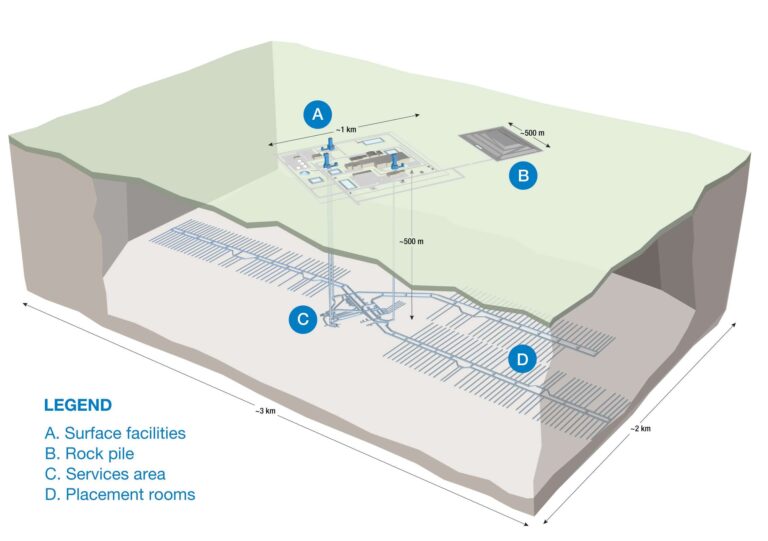
The Impact Assessment Agency of Canada (IAAC) is reviewing the Nuclear Waste Management Organization’s (NWMO) proposed Deep Geological Repository (DGR) at the Revell Site, located near Ignace and Wabigoon Lake Ojibway Nation in Northwestern Ontario.
This major nuclear infrastructure project is undergoing a joint federal review by the IAAC and the Canadian Nuclear Safety Commission (CNSC) to evaluate environmental, health, social, and Indigenous rights impacts over its projected 160-year lifecycle.
Public Feedback Open: Comments on the Initial Project Description are accepted until February 4, 2026. Submissions help shape the formal impact assessment guidelines.
This short article and summary is based on an initial analysis of a proponent’s initial project description. It does not represent, any community the NWMO or the Government of Canada. Learn more at the Melgund Integrated Nuclear Impact Assessment Project project page.
About the Author