Format: Short Film / Anthology Episode | Est. Length: 10-12 minutes
Imagine a world identical to our own, but haunted by unseen predators. The Blizzard Memory serves as a standalone episode in a horror anthology series, The Hollows, which explores the existence of parasitic, non-corporeal entities that feed on the very fabric of human experience: our emotions, our memories, our connections. Each episode introduces new characters facing a unique manifestation of this threat, slowly building a chilling mosaic of a world where the greatest dangers are the ones that consume us from the inside out, leaving behind nothing but an empty shell.
Two survivors, Penny and Tom, fight their way through a blinding, supernaturally hostile blizzard. They are not just running from the cold; they are running from a silent, hunting presence that rides the wind, a presence that steals warmth and hope.
Trapped by a monstrous blizzard, two survivors find shelter in a remote cabin, only to realize it's a feeding ground for an entity that consumes happy memories. They must choose between freezing to death in silence or feeding the creature pieces of their soul to survive the night.
This story is a tense exploration of memory as the cornerstone of identity. It posits that we are not just a collection of facts and experiences, but of the feelings attached to them. By threatening to strip away the emotional resonance of the characters' most cherished moments, the narrative questions what remains of a person when their joy, love, and warmth are gone. It is a story about sacrifice, forcing its protagonist to decide if a future is worth living if it means erasing the most beautiful parts of her past. Thematically, it blends supernatural horror with deep psychological dread, focusing on the intimate terror of being hollowed out from within.
The genre is primarily psychological and existential horror, using the supernatural entity as a catalyst for internal conflict. The isolation and survival elements provide a constant, tangible threat that grounds the more abstract horror. The core emotional undercurrent is one of tragic loss—the loss of life, the loss of warmth, and ultimately, the loss of self.
The stakes are brutally twofold: physical and existential. On a physical level, Penny and Tom face imminent death from hypothermia, a tangible threat posed by the relentless blizzard and the supernatural cold of the entity. However, the far greater stake is the loss of their souls. The entity doesn't just kill; it erases. They risk having their core memories—the moments of joy, love, and connection that define who they are—metabolized into empty data, leaving them as living husks, unable to feel the warmth of their own past. For Penny, the ultimate stake is the potential desecration of the last, perfect memory of her deceased brother, an act of self-mutilation she must consider to survive.
The primary antagonistic force is the unseen entity—a silent, cold, and ancient predator that uses the cabin as a trap. Its power is subtle and absolute, turning the characters' own minds and memories against them. This is compounded by the external conflict of the blizzard, a brutal, physically draining force that drives them into the entity's lair. The central internal conflict resides within Penny, who must battle her own instincts for comfort and connection. She is forced to police her own thoughts, fighting against the very human need to recall happiness, culminating in the agonizing decision to weaponize her most profound memory, sacrificing a part of herself to save what's left.
Fleeing a relentless blizzard that feels unnervingly deliberate, Penny and Tom stumble upon an isolated, derelict cabin. Their relief at finding shelter is immediate but short-lived. After starting a fire, a moment of shared warmth and laughter is met with a sudden, unnatural plunge in temperature, and they realize they are not alone. A silent, invisible entity lurks in the cabin's shadows, a parasite that grows stronger by feeding on their positive emotions, leaving their cherished memories as cold, factual husks.
Trapped between the physical cold that will kill them and the entity that will hollow them out, they descend into a tense, paranoid silence, trying to suppress any spark of joy. After the creature violently consumes a powerful memory from Penny, she devises a desperate, terrifying plan. To save Tom and herself, she must offer the entity a feast it cannot ignore: her single most potent and joyful memory, a perfect day with her late brother. In a climactic act of emotional self-immolation, she summons the memory in all its vividness, distracting the ravenous entity long enough for them to escape back into the storm, alive but irrevocably broken.
PENNY: Witty, resilient, and deeply feeling, Penny uses sarcastic banter as a shield against a world that has already dealt her significant loss. Her Psychological Arc is one of devastating transformation. She begins the story fighting to preserve herself and the warmth of her past; she ends it by making the calculated choice to sacrifice the most vital part of that past to secure a future. She survives not by outrunning the monster, but by feeding it a piece of her own soul, leaving her alive but haunted by a cold, empty space where her most cherished love used to reside.
TOM: Pragmatic, fiercely loyal, and the anchor for Penny's spiraling anxiety, Tom matches her wit but possesses a more grounded fear. His Psychological Arc is that of a protector rendered powerless. He starts as an equal partner in survival, using humor and physical effort to fight their circumstances. He ends as a horrified witness to Penny's psychic self-destruction, forced to accept a sacrifice he cannot stop, and burdened with the knowledge of what she lost to save him. He survives physically intact, but is now the sole keeper of a warmth she can no longer feel.
BEAT 1: THE WHITE HELL. Penny and Tom battle through a disorienting blizzard, the wind a physical bully. Their banter is a desperate, failing shield against an unnatural, hunting silence that seems to ride the storm. They are at the absolute end of their endurance, on the verge of collapse.
BEAT 2: FALSE SANCTUARY. A derelict cabin emerges from the whiteout like a ghost ship, offering a sliver of hope. They force their way inside, shutting out the storm's roar, and with trembling hands, manage to build a small, life-giving fire. For a brief moment, huddled in the flickering warmth, they believe they are safe.
BEAT 3: THE FIRST FEEDING (MIDPOINT). Tom and Penny share a warm, funny memory, and their laughter is cut short by a sudden, bone-deep chill that has nothing to do with the outside temperature. They realize with dawning horror that the memory now feels flat and distant, its emotion gone. The entity has fed, and they now understand the horrifying nature of their prison.
BEAT 4: THE LISTENING SILENCE. The rules become clear: any emotional warmth is bait. They retreat into a tense, paranoid silence, policing their own thoughts and memories. The quiet in the cabin becomes more terrifying than the storm outside, an oppressive void where the unseen predator waits patiently for them to feel.
BEAT 5: THE SACRIFICE (CLIMAX). After an accidental memory is ripped from her, Penny makes a terrible choice. She tells Tom to be ready to run, then deliberately summons her most powerful, joyful, and painful memory: a perfect day with her late brother, Leo. She offers this emotional supernova as a feast, a lure to focus the entity's entire being on her.
BEAT 6: THE ESCAPE. The entity descends in a violent, psychic assault, the cabin plunging into absolute cold and darkness as it rips the memory from Penny. As she collapses, emotionally flayed and empty, Tom grabs her and drags her out the door and back into the blizzard. They have escaped the cabin, but Penny is left shivering in the snow, unable to remember the brother she just gave up everything to save.
The audience experience begins with the visceral, high-stakes tension of a survival thriller. This transitions into a brief, fragile moment of relief and hope upon finding the cabin, allowing the audience to invest in the characters' potential salvation. The mood then plummets sharply into claustrophobic, psychological horror as the true nature of the threat is revealed. The central act is a slow-burn of oppressive dread and paranoia, forcing the audience into the characters' internal struggle. The climax is a spike of intense, empathetic agony during Penny's sacrifice, followed by a bleak, somber, and deeply tragic resolution, leaving the viewer with a lingering sense of profound loss.
If expanded, The Blizzard Memory could be the inciting incident for a larger narrative. A second episode might feature a different character in a different part of the world—a musician who finds his ability to feel passion for his art being drained away by a "silent patron." Subsequent episodes could introduce other manifestations of these emotional parasites, establishing patterns and rules. A recurring character, perhaps a folklorist or a traumatized survivor like Tom, could begin to connect these disparate events, realizing humanity is being "farmed."
The season's arc would shift from isolated horror stories to a developing conspiracy thriller, as the protagonists search for the origin of, and a defense against, these soul-eaters. The central conflict would escalate from individual survival to a secret war for the soul of humanity itself. Penny's story would serve as a grim foundational myth, a cautionary tale of the price of fighting back and the terrible sacrifices required.
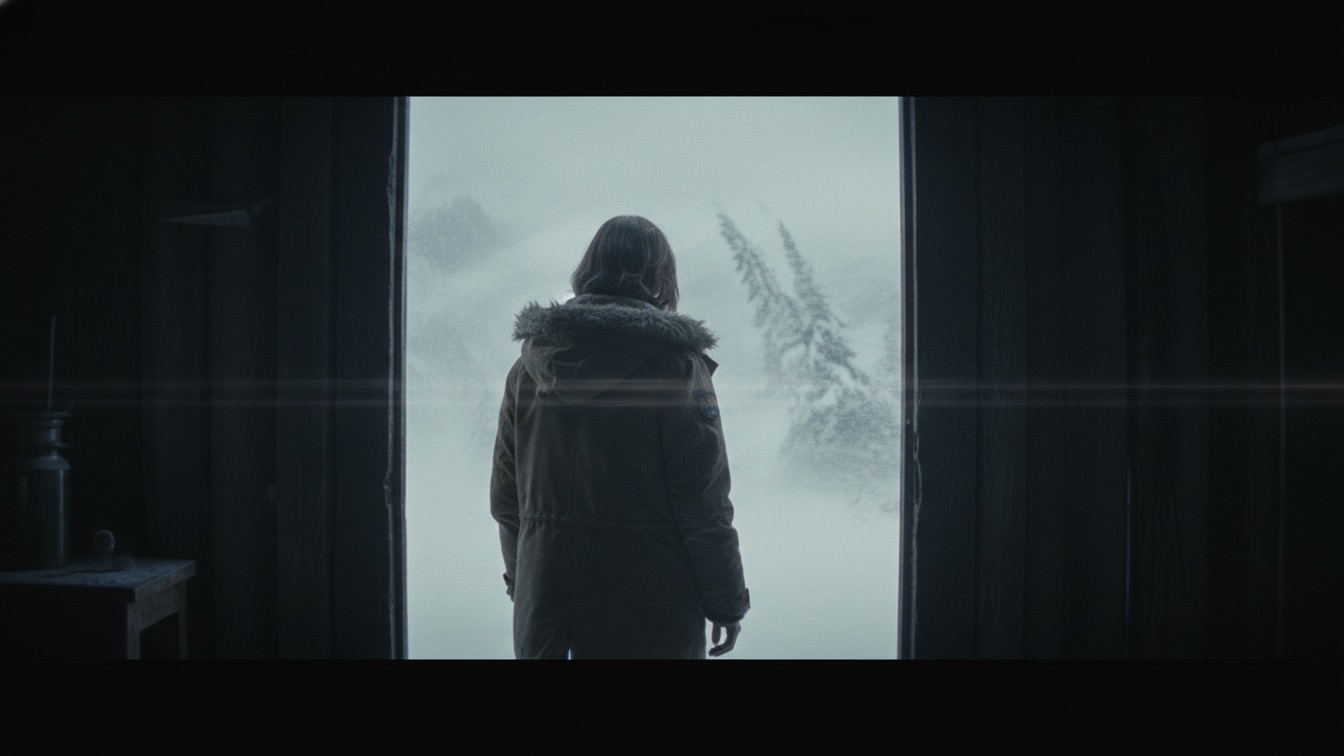
The visual style will be one of sharp, claustrophobic contrast. Outside, the blizzard will be a disorienting, overexposed maelstrom of white and gray, shot with a handheld, unstable feel to convey the characters' physical struggle. Sound design here is key, with the howling wind acting as a constant, oppressive character. Inside the cabin, the aesthetic becomes dark, intimate, and menacing, lit almost exclusively by the single, flickering flame of the fire. Deep shadows will writhe and dance in the corners of the frame, suggesting a presence without ever showing it. The camera will use slow, creeping movements, enhancing the feeling of being watched.
The tone is one of pervasive, existential dread, prioritizing atmosphere over jump scares. The horror is intimate and psychological, drawing from the quiet, contained terror of films like The Lodge or It Comes at Night. The color palette will be desaturated and cold, with the fire providing the only source of warm color—a warmth that is both a source of life and a beacon for the predator.
The target audience is mature viewers (18-49) of psychological and supernatural horror. This episode is for fans of intelligent, slow-burn genre storytelling who appreciate character-driven narratives and high-concept threats, such as viewers of Black Mirror, Channel Zero, and The Haunting of Hill House. It will appeal to an audience that enjoys being unsettled and left with lingering questions, rather than one seeking conventional action or jump-scare horror.
For a 10-12 minute runtime, the pacing must be tight and deliberate. Act One (The Storm) will be frantic and brief, quickly establishing the stakes and forcing the characters into the cabin. Act Two (The Cabin) will comprise the bulk of the runtime, adopting a much slower, more suspenseful pace to allow the dread and the rules of the entity to sink in. The climax will be a rapid and brutal crescendo of emotional intensity and action, followed by a short, haunting denouement that allows the full weight of Penny's sacrifice to land.
The primary production challenge will be creating a convincing yet contained blizzard. This can be achieved on a soundstage with a cabin set, using a combination of practical effects (high-powered fans, biodegradable snow, fog machines) and VFX enhancement for shots looking outside. This controlled environment will also allow for precise lighting control, which is crucial for the fire-lit interior scenes.
The entity's presence must be conveyed entirely through environmental effects and performance. The visual language for its "feeding" will be key: a visible puff of condensation as the temperature drops, frost patterns blooming unnaturally fast across the window, and the fire's flame physically shrinking and turning a sickly blue. Sound design will be paramount, contrasting the roaring external storm with the terrifying, listening silence inside the cabin, broken only by the crackle of the fire and the characters' strained breathing. The success of the horror hinges on what is not seen, relying on the actors' performances to sell the terror of the unseen threat.