The story opens amidst the charred ruins of a family home, where David attempts to salvage a single nail from the wreckage. He and his wife, Anna, along with their son, have been displaced by a fire and are living in a crowded community gymnasium. Their situation is dire, marked by the physical pain of the cold and the psychological weight of relying on charity. While David clings to his pride and refuses small handouts, the couple is approached by Mr. Sterling, a wealthy and manipulative local businessman. Sterling publicly offers to rebuild their home at no cost, framing it as a benevolent investment in the community.
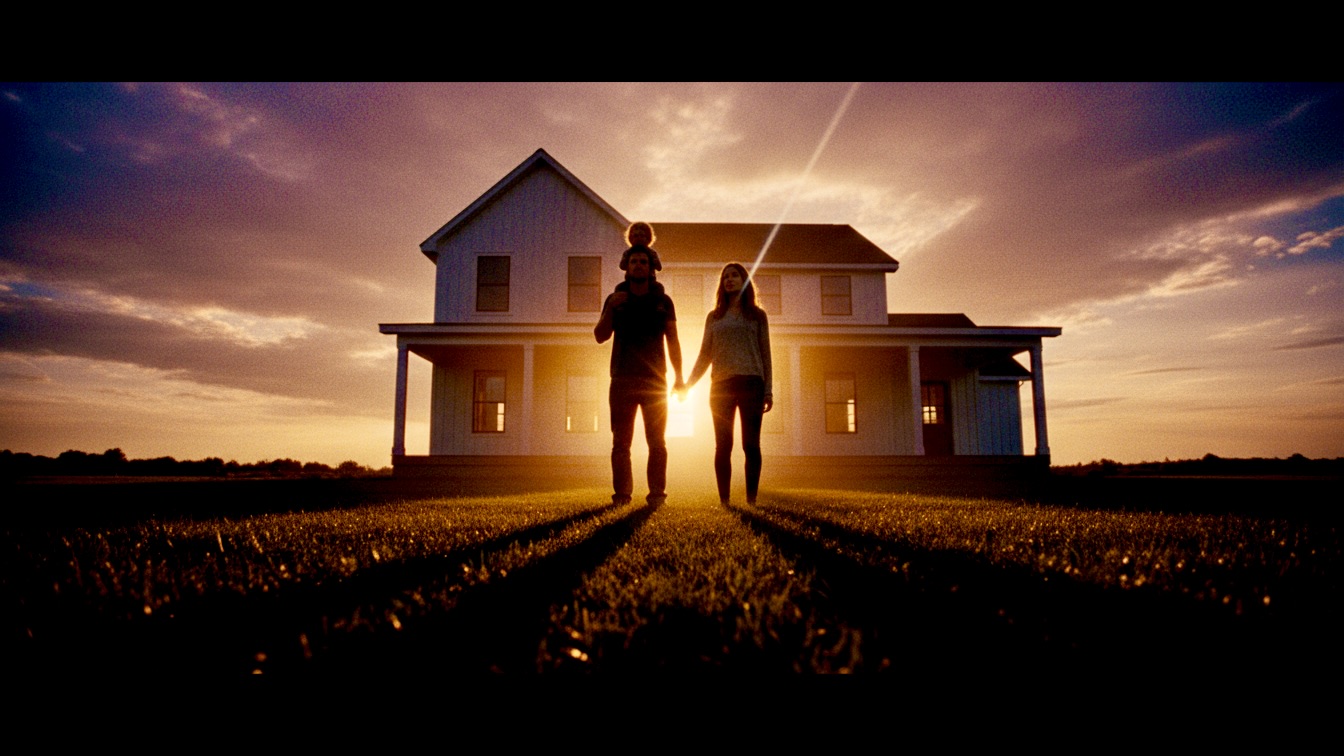
Caught between his pride and his wife’s desperate plea for stability, David succumbs to the pressure. He signs a complex legal agreement without fully understanding the terms, driven by the immediate need to provide for his family. The house is constructed with remarkable speed, resulting in a residence far grander than their original home. However, the family feels a sense of impostor syndrome within the pristine walls. The narrative concludes with a visit from Sterling, who reveals the true nature of the contract. David has not been given a home but a lifetime lease contingent on his servitude. He is forced into dangerous labor in Sterling’s mine and coerced into becoming a political puppet, realizing too late that he has traded his freedom for a gilded cage.
The central theme of the narrative is the corrosive nature of the Faustian bargain, modernized through the lens of economic desperation. The story explores how vulnerability is commodified by those in power. David’s initial resistance to charity is not merely stubbornness; it is an intuitive defense mechanism against indebtedness. However, the narrative demonstrates how extreme poverty erodes the capacity for choice. The "gift" offered by Sterling is exposed as a predatory calculation, illustrating that in a transactional worldview, altruism is often a mask for acquisition.
Closely linked to this is the theme of the erosion of masculinity and the provider archetype. David defines his self-worth through his ability to build, protect, and provide. The fire strips him of this agency, leaving him psychologically castrated. When he accepts Sterling’s offer, he believes he is reclaiming his role as a provider. Tragically, the ending reveals that he has permanently surrendered this role. He is no longer the head of his household but a vassal to a feudal lord, highlighting the psychological devastation that occurs when an individual’s autonomy is usurped by economic forces.
Furthermore, the story critiques the superficiality of the "American Dream" when divorced from ownership and labor. The new house is described in aesthetic terms that evoke a magazine spread rather than a lived-in home. It is sterile, cold, and ultimately alien to the family. This juxtaposition serves to deconstruct the idea that material comfort equates to security. The house acts as a symbol of their entrapment, a physical manifestation of the debt that now controls their lives. The "gilded cage" is not just a metaphor but a literal structure that separates them from their freedom while providing a deceptive veneer of safety.
David serves as the tragic protagonist, a man defined by a rigid, traditionalist moral code that is ultimately used against him. Psychologically, he exhibits signs of acute stress and a deep-seated fear of inadequacy. His fixation on the stubborn nail in the opening scene is a projection of his own internal state; he is trying to hold onto a fragment of his former life and identity. He views the acceptance of help not as relief, but as a submission, which creates a cognitive dissonance that plagues him throughout the narrative.
His decision-making process is clouded by the conflicting drives of pride and protective instinct. When he signs the contract, he enters a state of denial, willfully ignoring the red flags represented by the legal jargon. This is a psychological defense mechanism; to acknowledge the danger would be to condemn his family to the cold gymnasium. By the end of the story, his transformation is physical as well as psychological. His hands, once calloused and capable, have become soft, symbolizing his loss of agency. He realizes that in trying to save his family from the cold, he has exposed them to a more insidious form of freezing—the stasis of servitude.
Anna functions as the emotional anchor and the catalyst for the narrative's turning point. Unlike David, whose distress is tied to abstract concepts of honor, Anna’s trauma is sensory and immediate. Her hallucination of hearing the floorboards creak indicates a psyche struggling to process the sudden loss of her sanctuary. She represents the visceral reality of survival, prioritizing the physical well-being of her son over social posturing.
Her pressure on David to accept the offer is not born of greed but of maternal desperation. She sees the tangible suffering of their child and cannot afford the luxury of pride. However, her silence in the final scene is telling. When she realizes the trap they have walked into, her shock mirrors David’s. She becomes a silent witness to the consequences of their desperation, her initial hope curding into a shared, suffocating horror.
Mr. Sterling is the embodiment of the "Dark Triad" of personality traits: narcissism, Machiavellianism, and psychopathy. He lacks genuine empathy, viewing other human beings solely as assets or liabilities to be managed. His entrance into the gymnasium is theatrical, designed to maximize his social capital while minimizing the recipients' ability to refuse. He understands the psychology of public obligation perfectly, weaponizing the community’s gaze to force David’s hand.
Sterling’s benevolence is a carefully constructed mask. He derives pleasure not just from wealth, but from the exercise of power and control over others. The way he enters the new house without knocking, pours his own drink, and dictates David’s future employment reveals a man who believes he owns people. He does not see himself as a villain, but as a benevolent patriarch who is entitled to a return on his investment, making his cruelty all the more chilling because it is rationalized as simple business.
The narrative employs a shift in sensory details to mirror the protagonist's descent into entrapment. The opening scenes are dominated by raw, organic sensations: the biting cold, the smell of charred wood, and the physical resistance of the rusted nail. These details ground the reader in the harsh but honest reality of David’s loss. The writing here is jagged and tactile, reflecting the pain of the fire.
As the story progresses to the construction of the new house, the imagery becomes smoother but increasingly artificial. The text focuses on "thick carpet," "polished mahogany," and the smell of "fresh paint." These descriptions are designed to feel unsettlingly perfect. The sensory shift from the smell of burning to the "chemical" smell of the new house subtly signals the transition from a natural tragedy to a manufactured one. The pacing also reflects this; the slow, agonizing time in the gym gives way to the rapid, blur-like construction of the house, mimicking the speed at which David loses control of his life.
The author utilizes a third-person limited perspective, closely adhering to David’s consciousness. This creates a sense of claustrophobia that intensifies as the plot advances. We only know what David knows, and we feel his growing anxiety as a physical weight. The dialogue is sparse but laden with subtext, particularly in the interactions with Sterling. The final image of the snow falling "perfectly" outside the window serves as a chilling ironic counterpoint to the internal devastation, reinforcing the theme that appearances are deceptive and that the most beautiful cages are often the hardest to escape.