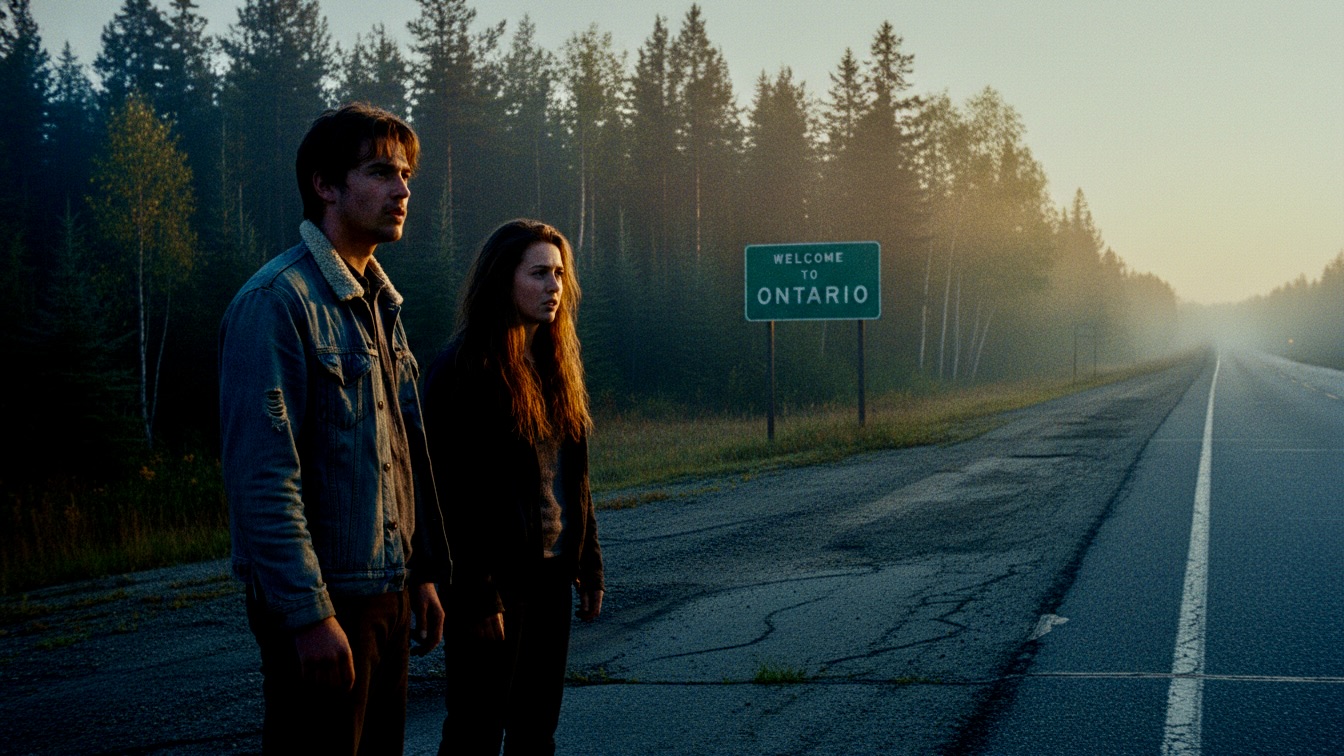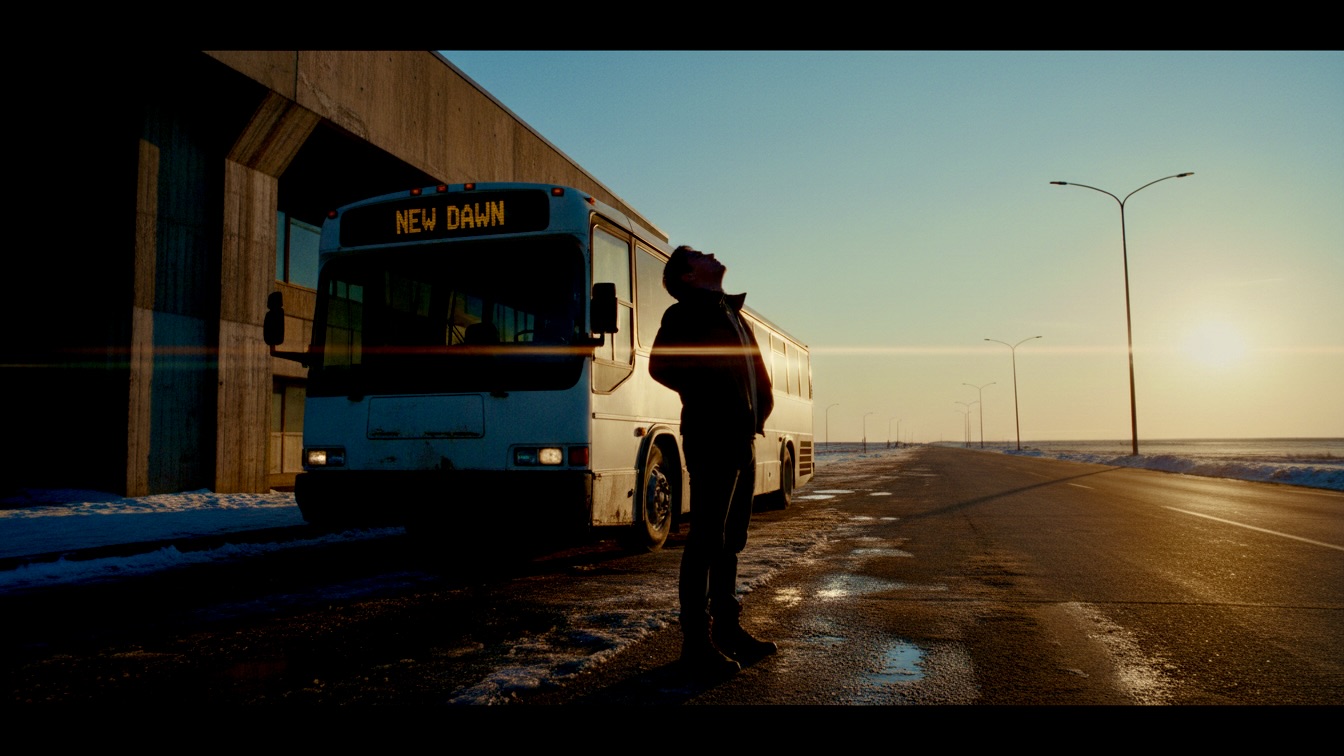
Tyler waits for a late bus in Winnipeg, realizing that leaving home is harder than just buying a ticket.
The fluorescent lights in the Winnipeg terminal don't just illuminate; they vibrate. It’s a low-frequency hum that gets inside your teeth. I sat on a plastic chair that had been bolted to the floor since 1994, watching a bead of condensation drip down the side of my lukewarm Red Bull. The bus to Dryden was forty minutes late. In Greyhound time, that’s basically early, but the company isn’t Greyhound anymore. It’s some new outfit with a logo that looks like a tech startup and drivers who look like they haven't slept since the provincial elections.
I checked my phone. 3:14 AM. My battery was at 12%. I had a charger in my bag, but the only working outlet in the terminal was currently being guarded by a guy wearing three parkas and talking to a discarded coffee cup. I wasn't going to fight him for it. I didn't have the energy for a confrontation, or even a polite request. I just wanted to be on the 17 East, watching the flat Manitoba horizon turn into the jagged rocks of the Shield.
My lungs felt tight. It wasn't asthma; it was the city. Winnipeg in March is a scab that won’t heal. The snow turns into this gray, gritty slush that coats everything. It’s the color of a depressed person’s internal monologue. I’d been here for three years, trying to make the university thing work, trying to make the 'me' that lived here work. But the 'me' that lived here was a ghost. He owed two months' rent to a guy named Gary who smelled like menthols and sadness. He had a GPA that looked like a temperature reading in January. He was done.
Then it happened. The mysterious part.
A man in a charcoal suit—the kind that costs more than my entire semester’s tuition—sat down two seats away from me. He didn't have luggage. He just had a small, leather-bound notebook. He looked at the clock, then at me. He didn't look like he belonged in a bus station at three in the morning. He looked like he belonged in a boardroom or a high-end funeral. He leaned over, his movement stiff, and slid a plastic transit card across the empty seat between us.
'You're going east,' he said. It wasn't a question.
'Dryden,' I muttered, my voice sounding like gravel.
'Take this,' he said. 'Don't use it until you cross the border. Kenora. Not before.'
He didn't wait for a thank you. He stood up and walked toward the men's room, leaving the card sitting on the blue plastic. I picked it up. It was a standard Peggo card, used for Winnipeg transit, but someone had scraped a word into the magnetic strip with a needle. RUN.
My heart hammered against my ribs. I looked toward the bathroom, but the door was swinging shut. The guy was gone. I tucked the card into the deepest pocket of my jeans. My hands were shaking. Why would a guy in a suit give a runner a bus pass for a city he was leaving? And why did it feel like a warning instead of a gift?
I stood up. I couldn't sit in that hum anymore. I walked toward the sliding glass doors, the ones that led to the loading bays. As soon as I stepped outside, the air hit me.
It was the Sudden Oxygen.
The temperature was hovering right at freezing, but the wind had died down. The smell of diesel was there, sure, but beneath it was the scent of wet earth and melting ice. Spring. It was the first time in months I felt like I could actually draw a full breath. The claustrophobia of my apartment, of the unpaid bills, of the failed exams—it stayed behind the glass. Out here, under the orange glow of the streetlights, the world felt massive. Empty. Possible.
I took a deep breath, feeling the cold air burn my throat. It was the cleanest thing I’d felt in years. I wasn't Tyler the Failure anymore. I was just a body moving through space. A passenger. There’s a certain kind of freedom in being a passenger. You aren't responsible for the navigation. You just have to sit there and let the world happen to you.
'Bus 402, boarding for Kenora, Dryden, and Thunder Bay,' a voice crackled over the outdoor speaker.
A battered white coach pulled into the bay, hissing as the air brakes released. The driver climbed out, looking like he’d been carved out of old wood. He didn't look at the line of five people waiting. He just opened the luggage compartment with a violent metal clang.
I threw my duffel bag into the dark maw of the bus. It contained everything I owned: three pairs of jeans, some hoodies, a laptop with a cracked screen, and a book of poetry I’d never finished reading. It felt light. Too light for twenty-two years of life. But that was the point, right? To travel light. To shed the skin.
I handed my digital ticket to the driver. He scanned it with a device that looked like it was from the early 2000s. It beeped, a sharp, ugly sound.
'Seat’s unassigned. Don't sit in the front row. That's for my legs,' the driver said.
I climbed the steps. The interior of the bus smelled like upholstery cleaner and stale pretzels. I found a seat near the back, right over the wheel well. I pressed my forehead against the glass. It was freezing, vibrating with the idle of the engine.
I thought about the man in the suit. I reached into my pocket and touched the transit card. The word RUN felt like a brand against my thumb. Who was he? Was he waiting for me? Or was he the reason I was leaving, and I just didn't know it yet?
I looked back at the terminal. Through the glass, I saw the man. He wasn't in the bathroom. He was standing by the glass doors, watching the bus. He wasn't moving. He just stood there, a dark pillar in the fluorescent haze. He raised a hand—not a wave, but a gesture, like he was pointing at the road ahead.
As the bus began to roll, the lights of Winnipeg started to blur. We passed the closed-up car dealerships, the 24-hour diners with their lonely patrons, the piles of dirty snow stacked high in the parking lots. We were hitting the perimeter highway. The city was letting go.
I felt a strange sense of clarity. The weight in my chest, that heavy stone I’d been carrying since I dropped out, was gone. I was moving. Speed is a great antidepressant. If you go fast enough, the problems can't catch up. Or so I told myself.
I pulled my phone out. 4%. I turned it off to save the last bit for when I hit Dryden. I didn't want to see the texts from Gary. I didn't want to see the missed calls from my mom. I wanted the silence of the highway.
The bus tilted as we merged onto the Trans-Canada. The engine groaned, shifting gears, finding its rhythm. Outside, the trees started to appear—stunted, leafless things that looked like skeletal hands reaching out of the ditches. This was the gap. The long stretch of nothing between where I was and where I needed to be.
I closed my eyes, trying to sleep, but the vibration of the bus kept me wired. Every time I drifted, I saw the man in the suit. I saw the word RUN.
About an hour in, the girl in the seat across from me stirred. she’d been huddled under a denim jacket since we boarded. She looked about my age, maybe a bit older. She had dark circles under her eyes and a tattoo of a small bird on her wrist.
'You got a light?' she asked.
'No smoking on the bus,' I said.
She laughed, a dry, hollow sound. 'I know that. I mean for when we stop. Kenora’s a long way off.'
'I don't smoke,' I said.
'Lucky you.' She looked out the window. 'You going all the way?'
'Dryden,' I said.
'Dryden. Right. The town that pulp built.' She leaned her head back. 'I’m going to Montreal. Eventually. If this tin can doesn't fall apart first.'
'Is it always this late?' I asked.
'The bus? Yeah. It’s a feature, not a bug. Gives you more time to regret your life choices in the terminal.'
I didn't respond. I didn't want to talk. I wanted to sink into the dark. But the subtext was there, thick as the exhaust. She was running, too. You don't take the 3 AM bus to Northern Ontario in March because your life is going great. You take it because the bridges behind you are currently on fire.
'I'm Sarah,' she said, though I hadn't asked.
'Tyler.'
'Nice to meet you, Tyler. Try to get some sleep. The Shield gets weird at night. The rocks start looking like people.'
She pulled her jacket over her head and went back to sleep. I stayed awake. I watched the mile markers go by. 50km. 100km. The flat prairie was dead and buried. Now it was all rock and pine. The transition was physical. The air inside the bus felt different—thinner, colder.
I reached into my pocket again. I pulled out the Peggo card. In the dim light of the overhead reading lamps, the word RUN looked deeper than I’d realized. It wasn't just scratched; it was carved.
I wondered if the man was still standing there. I wondered if he was watching every bus, or just mine.
Suddenly, the bus braked hard. I jerked forward, my seatbelt locking against my chest. Sarah woke up with a gasp. Outside, the headlights illuminated a wall of white. Fog. Thick, heavy fog that seemed to swallow the road whole.
The driver slowed to a crawl. The rhythmic thrum of the engine changed to a stressed whine. We were moving through a cloud, the world reduced to the ten feet of pavement directly in front of us.
'What's happening?' Sarah whispered.
'Fog,' I said.
'No,' she said, her voice trembling. 'Look at the trees.'
I looked. Through the mist, the pines weren't swaying. They were perfectly still, despite the wind I could hear whistling against the bus frame. And they weren't green or brown. They were white. Covered in a frost so thick they looked like salt pillars.
The driver's radio crackled. A voice came through, but it wasn't a dispatcher. It was just static—a jagged, rhythmic sound that pulsed in time with the lights of the bus.
'Driver?' Sarah called out. 'Hey, what's that sound?'
The driver didn't answer. He didn't even turn his head. He just stared straight ahead into the white, his hands gripped so tight on the wheel his knuckles were the color of the fog.
I felt the oxygen leave the room again. The clarity I’d felt at the station evaporated. Something was wrong. This wasn't just a spring thaw. This wasn't just a bus ride.
I looked at my phone. It was dead. Completely black.
I looked at Sarah. She was staring at the back of the driver's head. 'Tyler,' she said, her voice barely a breath. 'The driver. Look at his ears.'
I leaned into the aisle. The driver’s ears were bleeding. Small, dark trickles ran down his neck, staining the collar of his uniform. He didn't seem to notice. He just kept driving into the heart of the white.
I reached for the emergency cord, but my hand stopped halfway. The transit card in my pocket was vibrating. It was a physical sensation, a high-frequency buzz that made my leg go numb.
I pulled it out. The plastic was glowing. Not bright, but a dull, sickly green. The word RUN was no longer just a scratch. It was a light.
'We need to get off,' I said.
'In the middle of the woods?' Sarah asked. 'We'll freeze.'
'We need to get off now,' I repeated.
The bus began to pick up speed. The whine of the engine rose to a scream. We weren't slowing down for the fog; we were charging into it. The static on the radio got louder, turning into a series of sharp, rhythmic clicks. It sounded like a Geiger counter in a hot zone.
I stood up, bracing myself against the seats. 'Hey! Stop the bus!'
The driver didn't move.
I grabbed the shoulder of his jacket. It felt cold. Not 'just came in from the snow' cold, but 'deep freezer' cold. He didn't turn. He didn't react.
I looked at the speedometer. 110. 120. 130. On a two-lane highway in a soup-thick fog.
'Tyler!' Sarah screamed.
I looked out the front windshield. The fog parted for a split second. In the middle of the road, standing perfectly still, was the man in the charcoal suit. He wasn't back in Winnipeg. He was here. On the Trans-Canada. A hundred miles from where I’d left him.
He didn't move. He didn't flinch as the bus hurtled toward him.
The driver slammed on the gas.
I felt a sudden, sickening drop in my stomach, the kind you get on a roller coaster right before the first plunge. The bus didn't hit the man. It went through him. Or he went through us.
A wave of absolute cold washed through the cabin. The lights flickered and died. The engine cut out. For a second, there was total silence, save for the sound of the wind.
Then, the bus began to shake.
It wasn't a mechanical shake. It was the whole world vibrating, like we were being held by a giant hand. I fell into the aisle, my head hitting the metal floor. The glow from the transit card was the only thing I could see.
'RUN,' the card whispered.
I didn't know if I heard it or felt it, but the word echoed in my skull.
The bus suddenly lurched to the right. We hit the shoulder. I felt the wheels leave the pavement. We were tipping. Grinding. The sound of metal tearing against rock filled the air.
I grabbed Sarah's hand. She was screaming, but I couldn't hear her over the roar of the crash.
We hit something hard. My world turned upside down. Glass shattered, a million tiny diamonds spraying through the dark. I felt the impact in my spine, a sharp, blinding pain that turned everything white.
Then, stillness.
The bus was on its side. The engine was dead. The only sound was the 'tick-tick-tick' of cooling metal and the distant howl of the wind.
I opened my eyes. I was pinned against the luggage rack. Sarah was somewhere beneath me, moaning. I could smell gasoline. A lot of it.
I kicked at the window above me. It was already cracked. It gave way with a dull thud. I hauled myself out, the jagged glass tearing at my palms. I didn't care. I needed to be out.
I reached back in and grabbed Sarah’s arm. 'Come on! Get out!'
I pulled her up. She was limp, her face covered in blood, but she was moving. We scrambled out of the wreckage and onto the frozen ground.
The fog was gone.
The sky was perfectly clear, filled with more stars than I’d ever seen in my life. The air was silent. No traffic. No birds. No wind.
We were in the middle of a forest of white trees. They looked like they’d been dipped in wax.
I looked back at the bus. It was a wreck, twisted and broken against a massive granite outcrop. But there was no driver. The driver’s seat was empty. No body, no blood on the wheel. Just an empty seat and a radio that was still clicking.
Sarah slumped against a rock, clutching her side. 'Where are we?'
'Ontario,' I said, though I didn't believe it. 'We must be near Kenora.'
I looked down at the transit card in my hand. The glow was fading, but the word RUN was still there, etched in black.
I looked down the road. In the distance, a single pair of headlights appeared. They weren't moving. They were just sitting there, miles away, watching us.
I felt a chill that had nothing to do with the temperature. The oxygen was here, but it felt heavy now. It felt like a trap.
I looked at the white trees, then at the distant lights.
'We can't stay here,' I said.
'We can't walk,' Sarah sobbed. 'It’s too far.'
'We have to.'
I helped her up. We started walking toward the lights. Behind us, the bus hissed one last time, a gout of steam rising into the cold, still air.
I checked my pocket for my phone, but it was gone. Probably lost in the wreckage. All I had was the card.
As we walked, I noticed something. The trees weren't just white. They were changing. As the light from the distant car hit them, they started to turn. Not back to green. They were turning a deep, bruised purple.
And then I heard it.
A phone rang.
It wasn't my phone. It was coming from the woods. A sharp, modern ringtone, cutting through the silence of the Shield.
We stopped.
The ringing continued. It was coming from a pile of snow about ten feet off the road.
I walked toward it, my boots crunching on the frozen crust. I reached into the snow and pulled out a phone. It was a brand new model, the screen glowing bright.
There was one notification on the screen.
UNKNOWN SENDER: You’re late.
I looked at Sarah. She was staring at the phone, her face pale.
'Don't answer it,' she whispered.
The phone stopped ringing. Then it vibrated. A new message.
UNKNOWN SENDER: He’s right behind you.
I didn't turn around. I couldn't. My muscles were frozen. The sense of a burden being lifted was gone, replaced by a weight so heavy I thought my knees would snap.
I felt a hand on my shoulder.
It wasn't Sarah’s hand. It was too large. Too cold. It felt like a block of ice pressing through my hoodie.
'Tyler,' a voice whispered. It was the man from the station. But he wasn't speaking into my ear. The voice was coming from the phone in my hand.
'You forgot your luggage.'
I turned slowly. The man in the suit was standing there. But he didn't have a face. Where his eyes and mouth should have been, there was only smooth, gray skin, like a pebble worn down by the river.
He held out a duffel bag. My duffel bag. The one I’d thrown into the bus in Winnipeg.
'The price of the ticket has changed,' the man said, the voice still vibrating from the phone's speaker.
I backed away, pulling Sarah with me. We ran. We didn't look back. We ran toward the distant headlights, our breath coming in ragged gasps that turned to ice in the air.
But the headlights weren't getting closer. No matter how fast we ran, they stayed the same distance away, two mocking eyes in the dark.
And the clicking from the bus radio? It was getting louder, following us into the trees.
I looked down at the transit card one last time. The word RUN had changed.
It now said TOO LATE.
“I looked down at the transit card one last time; the word RUN had changed to TOO LATE.”