2026 Spring Short Stories
Unsubscribing from the Physical World - Analysis
by Leaf Richards | Analysis
by Leaf Richards | Analysis
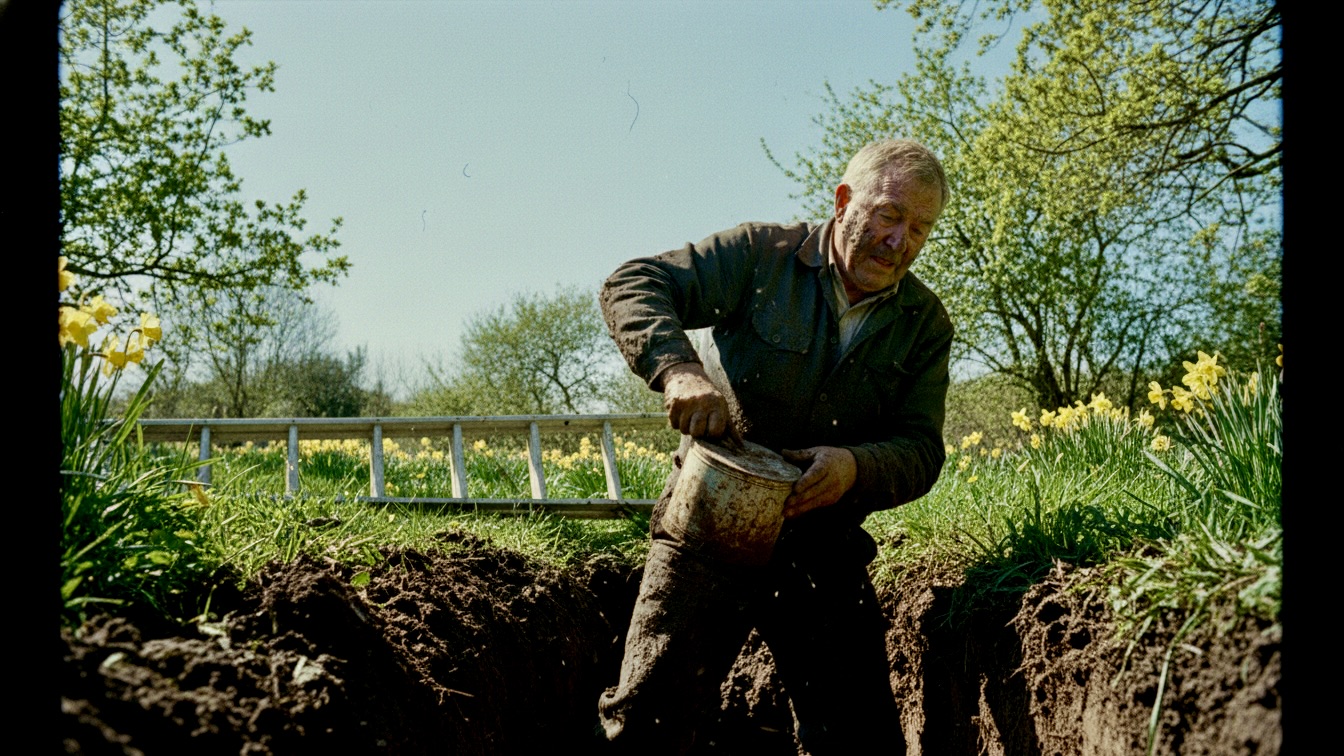
The story follows Armand, a seventy-two-year-old widower, as he attempts to perform a simple maintenance task in his garden. His physical decline is underscored by a clumsy fall from a ladder, which leaves him grounded in the mud and forced to confront his lingering grief. During this struggle, he unearths a buried tin containing a series of letters and instructions left by his late wife, Elena. This discovery transforms his mundane, melancholic existence into a scavenger hunt, leading him to a cemetery where he finds a final, cryptic clue. The narrative concludes with Armand embracing this new purpose, signaling a shift from stagnant mourning to active engagement with the mysteries Elena left behind.
The narrative masterfully explores the intersection of physical decay and the persistence of the human spirit. Armand is acutely aware of his aging body, viewing his movements as negotiations with gravity and his aches as constant, unwanted companions. This frailty serves as a metaphor for his broader emotional state, where he has been slowly withdrawing from the world since Elena's death. The garden becomes the primary site of this thematic conflict, serving as both a place of decay and a repository for the enduring connection between the living and the dead.
Grief is presented not as a static state of sadness, but as a dynamic process of re-engagement. Elena’s directive to not turn their home into a museum challenges Armand to find a way to inhabit his life rather than merely enduring it. By leaving him a series of puzzles, Elena forces him to move, think, and interact with his environment, effectively pulling him out of his self-imposed isolation. The transition from the muddy garden to the cemetery signifies a journey toward a final, intimate dialogue with his wife, proving that their relationship continues to evolve even in her absence.
Armand is a man caught in the liminal space between his vibrant past and his fading present. He projects a cynical, self-deprecating humor to mask his vulnerability, often using his age as a shield against the pain of his loneliness. His internal monologue reveals a deep-seated fear of obsolescence, which he projects onto the physical world, viewing his aging body as a failing machine. However, his reaction to the discovery of the tin reveals a hidden reservoir of curiosity and resilience that he had suppressed.
His motivation shifts rapidly from passive endurance to active pursuit once he realizes Elena has left him a map. This transition demonstrates that he is not truly ready to "unsubscribe" from the physical world; rather, he has been waiting for a reason to stay connected to it. By choosing to follow Elena’s clues instead of calling his daughter, he asserts his autonomy and reaffirms the unique, private bond he shared with his wife. He is a man who finds his footing through the intellectual and emotional stimulation of a final, posthumous game.
Although Elena is deceased, her character exerts a powerful influence over the narrative. Through Armand’s memories, she is revealed as a sharp, pragmatic, and deeply loving woman who understood the inevitability of her own departure. She possessed a keen sense of humor and a distaste for sentimental tropes, preferring the "character" of a toaster-throwing incident over the sanctity often assigned to the dead. Her foresight in staging this scavenger hunt shows a profound empathy for her husband, as she engineered a way to provide him with purpose beyond her death.
The narrative voice is intimate and grounded, utilizing a gritty, sensory-rich prose that mirrors the damp, earthy environment of the garden. The author employs visceral imagery, such as the smell of rain, the cold mud, and the "white flash" of pain, to anchor the reader in Armand’s physical experience. This emphasis on sensory details makes his internal reflections feel more authentic, as they are triggered by the immediate, tactile reality of his surroundings.
The pacing of the story is expertly managed, moving from the slow, deliberate rhythm of an old man’s chores to the frantic, heartbeat-driven momentum of the treasure hunt. The tone shifts seamlessly from mournful to mischievous, reflecting the complex nature of grief that Elena herself embodied. By using the metaphor of a subscription service, the text elevates a domestic tragedy into a modern, relatable commentary on how we engage with—and eventually withdraw from—the world. The prose remains sharp and witty, echoing the voice of the woman who orchestrated the final act of his recovery.


