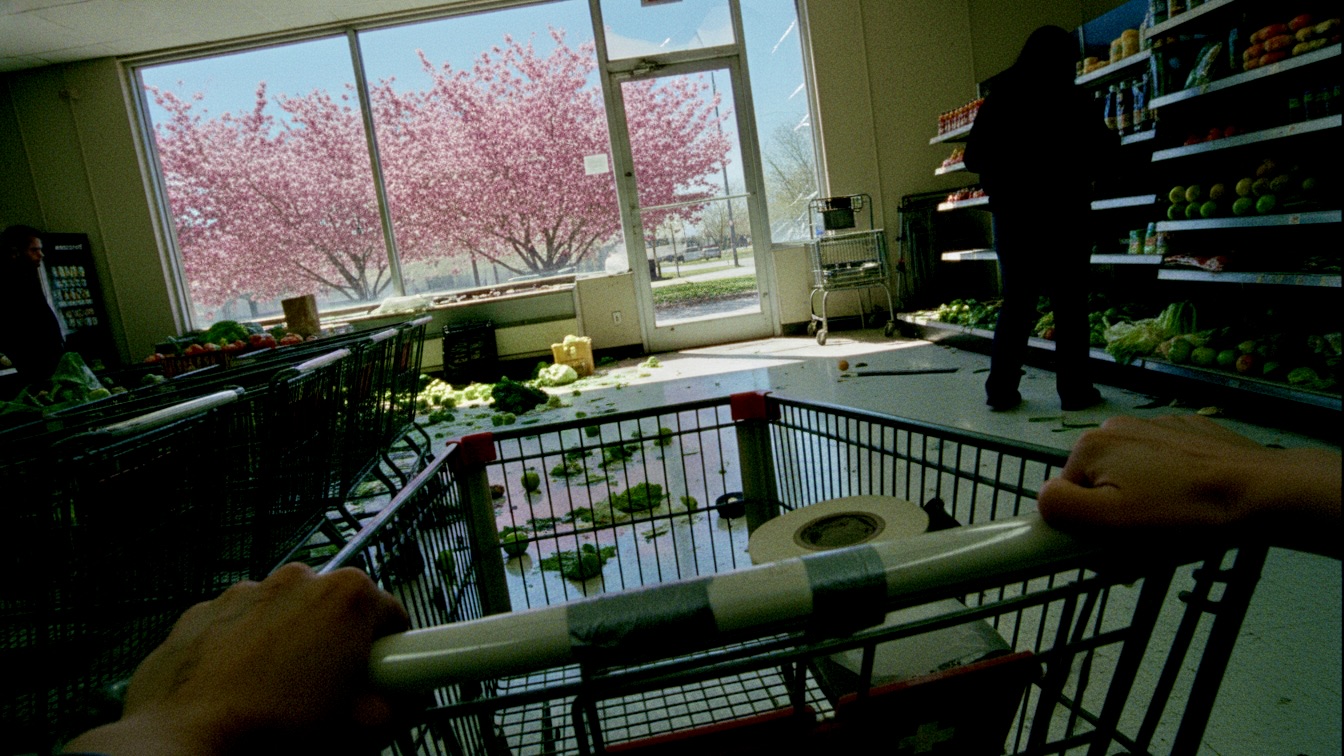
The story begins in a high-end grocery store where a routine Saturday morning shopping trip is interrupted by a catastrophic failure of the digital payment system. As the "Fed-Coin" network crashes, the convenience of a cashless society instantly transforms into a source of intense frustration and panic. The protagonist, a nurse named Annette, watches as the social contract dissolves, and the shoppers' entitlement turns into violent desperation. When the power begins to fail and the store’s "policy" becomes irrelevant, the environment descends into a full-scale riot.
Annette quickly moves from an observer to an active leader, recognizing the signs of a systemic collapse that she likens to a medical emergency. She rescues a terrified cashier named Terry and establishes a makeshift triage station to treat those injured in the initial surge of looting. Despite the overwhelming chaos and the physical threat of the mob, she manages to secure life-saving insulin for a desperate father and organizes a small group of survivors. Using shopping carts as a protective phalanx, she leads her group out of the collapsing building and into an uncertain, post-system world.
The central theme of the narrative is the profound fragility of modern civilization and its total dependence on digital infrastructure. The "Fed-Coin" system represents a society that has traded tangible security for digital convenience, leaving the populace helpless when the "cloud" vanishes. The story suggests that without the mediation of technology and commerce, the veneer of civility is incredibly thin. Once the digital ghosts disappear, the characters are forced to confront a reality where physical presence and immediate needs are the only things that matter.
Another major theme is the contrast between institutional policy and human morality. Terry, the young cashier, is initially paralyzed because he cannot look past the "policy" of the cashless store, even as the world burns around him. Annette, however, understands that when the system dies, human-to-human intervention must take its place. She rejects the rigid rules of the store to implement a higher moral code of triage and mutual aid. This shift highlights the necessity of individual agency and leadership during a crisis that renders traditional institutions useless.
The narrative also explores the indifference of nature to human catastrophe. The "beautiful, mocking spring light" and the "cherry blossoms" serve as a recurring motif that underscores the insignificance of the digital collapse in the grander scheme of the natural world. While the humans are destroying their own structures and fighting over almond milk, the birds continue to sing and the grass continues to grow. This juxtaposition creates a sense of surrealism, suggesting that while the "world" of human commerce is ending, the actual world remains stubbornly vibrant and renewal-oriented.
Annette is a character defined by her clinical detachment and her ingrained instinct to provide care under pressure. As a nurse, she views the unfolding riot through the lens of a medical professional, identifying the "rhythm" of the system’s death as if it were a failing patient. Her internal state is not one of panic, but of focused, pragmatic action, which allows her to navigate the violence without losing her humanity. She uses her "nurse voice" as a tool of command, projecting an authority that the crumbling institution can no longer provide.
Her motivations are rooted in a deep-seated sense of duty that transcends her formal employment. She does not help the injured man or the child because she is paid to do so, but because her identity is fundamentally tied to the preservation of life. This internal moral compass makes her the natural leader of the group, as she is the only one capable of transforming chaos into a structured plan for survival. By the end of the chapter, she has accepted the role of a protector, recognizing that in the absence of digital systems, human connection is the only currency left.
Terry represents the vulnerability and initial helplessness of a generation raised within a fully digitized society. As a nineteen-year-old cashier, his entire world is governed by the screen and the corporate policies dictated by his employer. When the terminal rasps and the "cloud" disappears, his identity as a worker is stripped away, leaving him frozen in a state of shock. He is a victim of a system that taught him how to follow a script but not how to survive a breakdown of that script.
However, Terry undergoes a rapid transformation under Annette’s firm and demanding mentorship. Though he begins the story cowering and terrified, he eventually finds the courage to brave the violent crowds to retrieve necessary tools for survival. His growth is a testament to the power of leadership and the human capacity for adaptation. By the end of the narrative, he has moved from a passive observer of his own demise to an active participant in a collective effort to survive, even as he continues to clutch his useless phone.
The pacing of the story is expertly crafted to mirror the escalating tension of a societal heart attack. The narrative begins with the small, irritating sound of a failing card reader and rapidly accelerates into the "roar" of a hundred people losing their minds. Short, punchy sentences and sharp dialogue create a sense of urgency that keeps the reader grounded in the immediate danger of the moment. This rapid tempo reflects the protagonist's own racing heart and the literal collapse of the physical environment around her.
Sensory details are used with visceral precision to evoke the grim reality of the riot. The author focuses on the "sour, metallic" smell of spilled bleach and vinegar, the "yellow slime" of broken eggs, and the "shimmering lake of heat" in the parking lot. These descriptions strip away any romantic notions of a post-apocalyptic setting, replacing them with the gritty, unpleasant textures of a grocery store turned into a battlefield. The sound of a glass jar shattering like a gunshot is a particularly effective auditory metaphor for the sudden break in social order.
The narrative voice is clinical yet deeply observant, reflecting Annette’s professional background. By describing the scene in medical terms—such as "arterial spray" and "system flatlining"—the author provides a unique perspective on social collapse. This choice of voice allows the reader to see the riot not just as a random act of violence, but as a predictable biological response to a systemic failure. The ending of the chapter, with the distant siren that is not coming to help, leaves the reader with a haunting sense of isolation and the realization that the old world is truly gone.


