2026 Spring Short Stories
Smoking Ditch Weed in the Greenhouse - Analysis
by Jamie F. Bell | Analysis
by Jamie F. Bell | Analysis
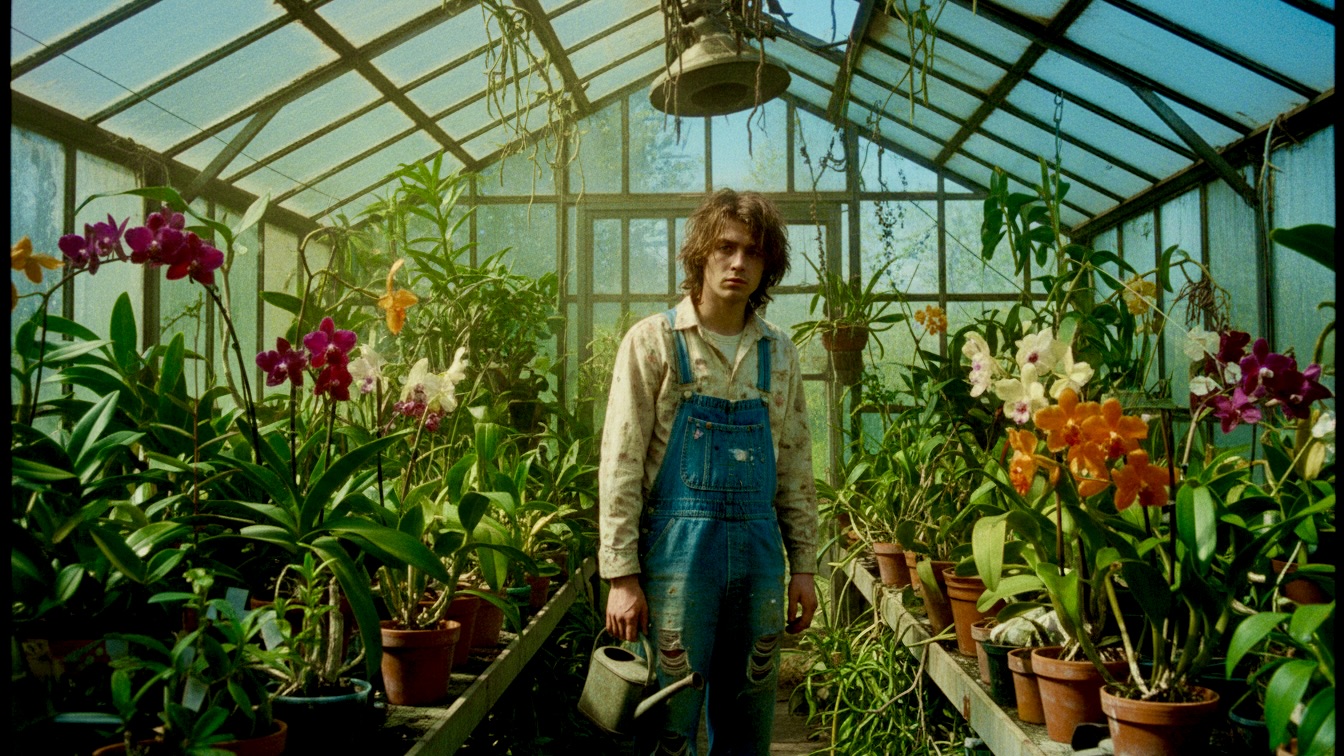
The story follows Dylan, a young man attending an uncomfortable family Easter brunch, as he escapes to his late grandmother’s neglected greenhouse. There, he encounters his cousin Rina, who has similarly retreated from the social performance of the family gathering. The two engage in a ritualistic bonding session fueled by cigarettes and harsh critiques of their relatives, using cynicism as a defensive mechanism against the perceived banality of their family life. However, the conversation shifts when Dylan attempts to pry into Rina’s recent decision to drop out of university. The dialogue rapidly devolves from shared mockery into a vicious, deeply personal confrontation that exposes the mutual resentment and insecurity both characters harbor, ultimately leaving Dylan isolated in the greenhouse to confront his own stagnation.
The narrative serves as a brutal examination of the intersection between performative cynicism and genuine emotional isolation. The greenhouse acts as a physical manifestation of the characters' internal states, a space filled with decaying life that mirrors their own stunted psychological growth. By mocking their relatives, Dylan and Rina attempt to establish a hierarchy of awareness, convincing themselves that their detachment makes them superior to the messy, emotional reality of their family. This shared disdain is a survival tactic, a way to insulate their fragile egos from the judgment they fear receiving from the outside world.
The story also explores the corrosive nature of projection and the failure of intimacy. When the characters turn their critical gaze inward, the facade of their camaraderie shatters, revealing that their bond is built entirely on the destruction of others rather than mutual support. The rot described on the greenhouse plants functions as a powerful metaphor for their own lives, suggesting that the decay is not external, but intrinsic. Ultimately, the text posits that the refusal to engage with the pain of human connection leads to a state of living death, where the characters are as trapped and suffocated as the neglected flora in their sanctuary.
Dylan is a man trapped by his own need for intellectual superiority and his paralyzing fear of failure. He views his life through a lens of detached observation, preferring to label his relatives as pathetic rather than acknowledging his own lack of direction. His job in data entry and his reliance on virtual communities suggest a man who has retreated from the tangible world to avoid the risk of real-world judgment. He is deeply insecure, a fact betrayed by his need to "poke the bruise" of Rina’s academic failure to validate his own choices.
His internal conflict stems from a desperate desire for connection coupled with an inability to be vulnerable. When Rina confronts him with the reality of his loneliness, he lacks the emotional vocabulary to defend himself, falling back on insults to preserve his crumbling ego. By the end of the chapter, his realization that he is "a ghost haunting his own bedroom" marks a transition from denial to a terrifying, quiet awareness. He is a character whose cynicism has become his cage, leaving him paralyzed in the wake of a truth he is not yet equipped to handle.
Rina is a woman grappling with the aftermath of a major life transition, oscillating between a desire for authentic living and the defensive posturing she has learned from her family. Her decision to drop out of university is clearly a source of profound internal distress, which she masks with aggressive rebellion and a "fuck the world" attitude. She is keenly aware of the performative nature of the brunch, but her frustration is compounded by the fact that she has no clear path forward.
Her aggression toward Dylan is a mirror of her own self-loathing. She recognizes in him the very stagnation she is trying to escape, and her vitriol is a desperate attempt to reject the possibility that she might end up like him. While she appears more confrontational and active than Dylan, her reliance on the same cynical rituals proves that she is equally stuck in the cycle of familial judgment. Her departure from the greenhouse represents a desperate attempt to physically remove herself from the mirror of her own failures, though her shaking hands suggest that her composure is entirely fragile.
The narrative voice is sharp, clinical, and steeped in a palpable sense of atmospheric dread. The author utilizes sensory details—the smear of lipstick, the smell of rotting roots, the humid heat—to anchor the abstract emotional tension in a tangible environment. This sensory saturation creates a feeling of claustrophobia that mirrors the mental state of the characters, ensuring the reader feels the weight of the greenhouse’s stagnant air.
The pacing is deliberately uneven, mimicking the erratic nature of a heated argument. The initial sections are slow and observational, allowing the reader to settle into the rhythm of the characters' shared misery. As the conflict escalates, the sentences become shorter and more staccato, accelerating the intensity of the dialogue. This shift effectively captures the transition from a calm, shared ritual to an explosive, irreparable rupture in their relationship. The final, lingering imagery of the black spots on the leaves serves as a somber, lingering conclusion, reinforcing the theme of rot through a quiet, lingering visual that persists long after the voices have faded.


