Your Neighbor Is Not Your Enemy
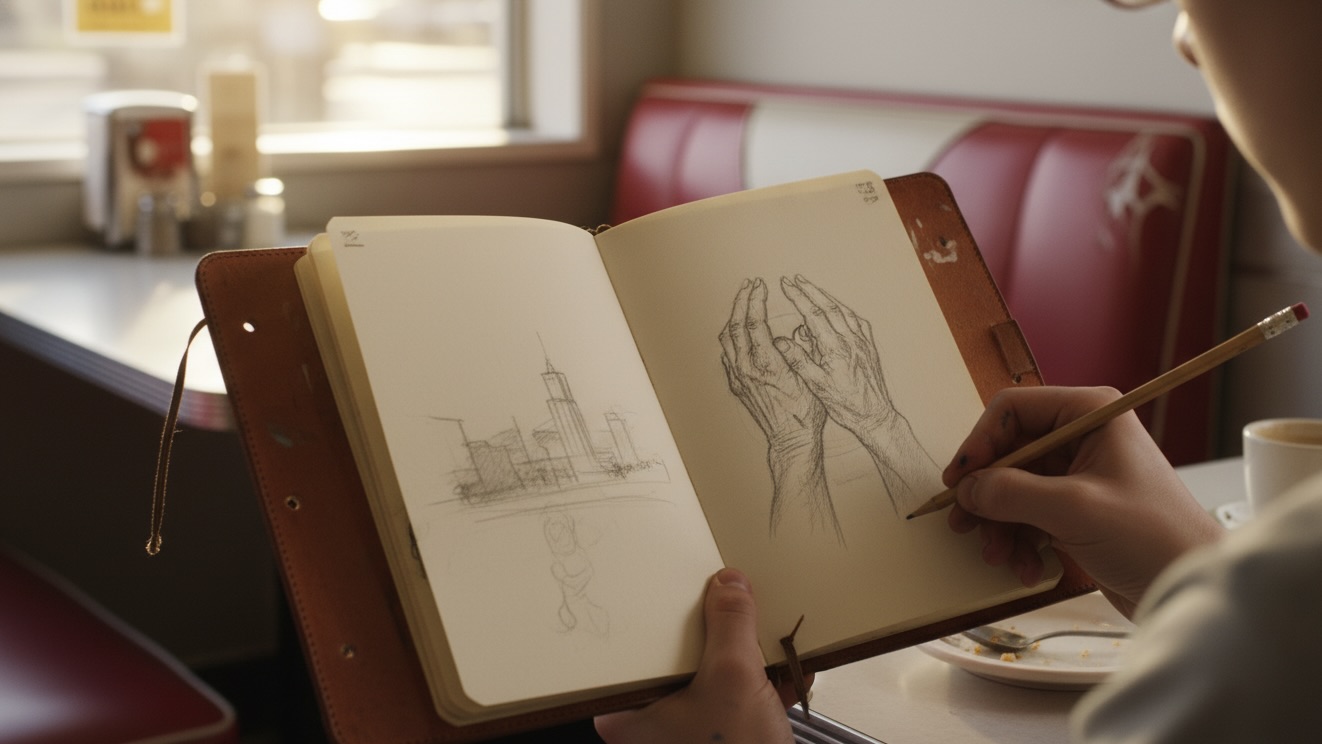
"Art is a cheat code for staying present when political noise tries to rot your community."
How grassroots art projects can heal social division in small northern communities.
Why are we letting people we’ve never met dictate who we hate in our own town? It’s exhausting watching the community splinter over AI-generated rage bait.
Living up north, isolation isn’t just about the physical distance between houses or the five-hour drive to the nearest city center. It’s the mental gap that grows when we spend more time in comment sections than in physical spaces. When misinformation starts rotting the vibe of a small town, everyone feels it. You see someone at the Co-op and instead of saying hello, you remember a spicy meme they shared and you freeze up. That’s social fragmentation in real time. It’s a survival response, sure, but it’s making us miserable and lonely.
This is where the arts actually matter, and I’m not talking about some high-brow gallery opening where everyone drinks expensive wine. I’m talking about the raw, messy work of creating something together in a basement or a community hall. Art is a cheat code for ACT—Acceptance and Commitment Therapy. It forces you to stay present. When you’re helping a collective paint a mural on a brick wall in the freezing rain, you aren’t thinking about political leanings. You’re thinking about the brush stroke and the person holding the ladder. You’re committed to the shared outcome, not the online argument.
We need to build "Third Places" that aren't digital. In small northern communities, the arts sector is often the only thing keeping the lights on for our collective mental health. Creating art—whether it’s a zine, a local play, or a community garden project—acts as a buffer against the noise. It’s a mindfulness exercise on a communal scale. You learn to observe your thoughts about others without immediately reacting to them. You see the human behind the "opinion" because they’re sitting right across from you, struggling with the same clay or the same chord progression.
Here’s a tiny exercise for your next collective meeting or rehearsal: The "Three-Second Rule." Before you respond to someone you disagree with, take three seconds to notice a physical sensation—the weight of your feet on the floor or the texture of the pencil in your hand. That’s grounding. It breaks the cycle of reactive anger. Resilience isn’t about winning an argument; it’s about having the dignity to remain kind when things get heated. Small arts organizations are the laboratories where we practice this. We’re rebuilding the muscle of nuance that the internet tried to kill.
Let’s be real. It’s hard to stay grounded when the feed is screaming that the world is ending. But your local arts scene is your anchor. It gives you a reason to show up, a reason to be vulnerable, and a reason to trust again. We don't need more awareness campaigns; we need more shared projects. Grab a camera, pick up a guitar, or just show up to the community center to help set up chairs. Reclaiming our towns starts with reclaiming our attention from the people trying to sell us division.
Northwestern Ontario Arts, Culture and Recreation
Rooted in Melgund Township, Northwestern Ontario we're exploring arts, culture, and recreation programming that brings our communitiess together. From creative workshops and local exhibitions to youth activities and cultural events, we support rural artists, strengthen community connection, and celebrate the creative spirit of Northwestern Ontario.
Through community-based arts initiatives, recreation programming, and cultural gatherings, Melgund Recreation, Arts and Culture fosters creative expression, collaboration, and long-term sustainability in the northern arts sector. Our work connects residents, empowers youth, and builds pride in local talent across rural Northwestern Ontario.
Learn more about our programs, events, and opportunities at Melgund Recreation, Arts and Culture.
Share This Story