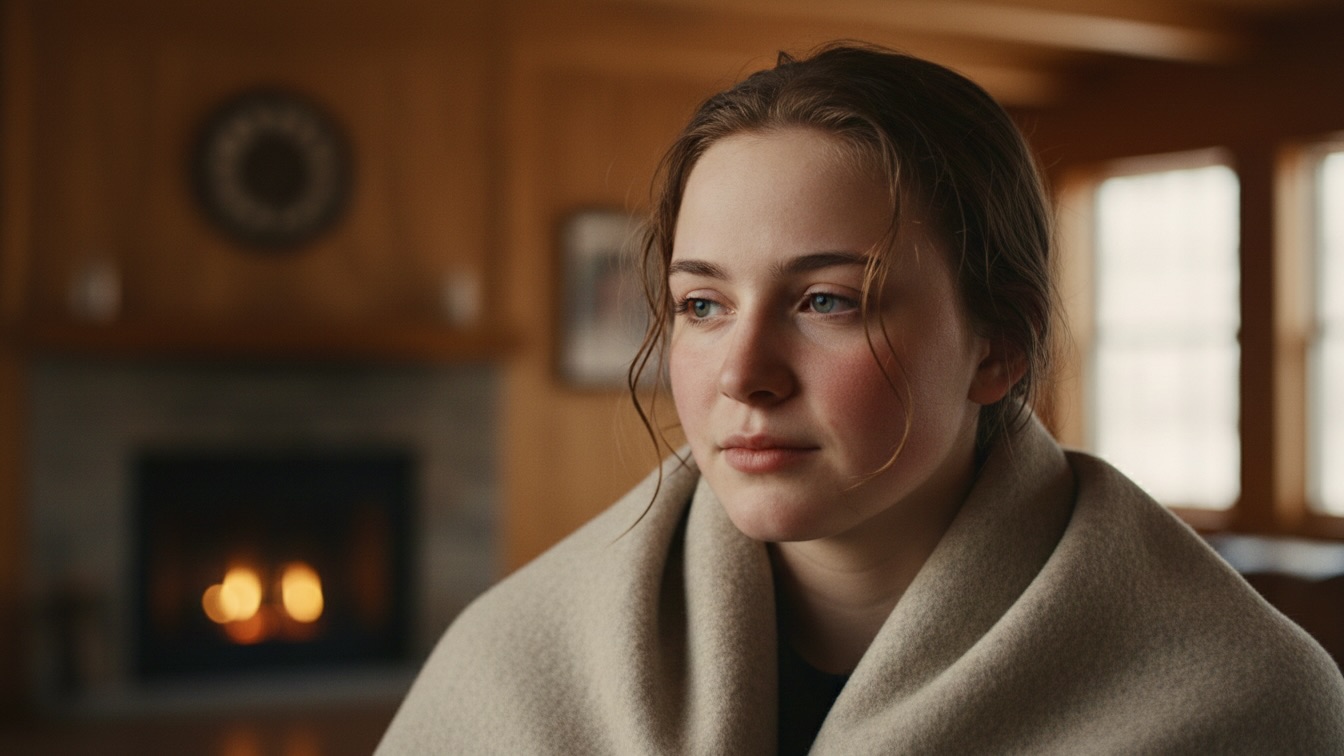
Format: Short Film / Anthology Episode | Est. Length: 10-12 minutes
Imagine an anthology series where the crucible of sport is merely a training ground for the ultimate test: survival. Each episode follows a different athlete or team pushed to their absolute limit, not on the field of play, but against the raw, unforgiving forces of nature or human error. From a climber trapped on a sheer rock face to a marathon runner lost in the desert, the series explores how the unique psychological and physical conditioning of a specific sport becomes the key—or the hindrance—to staying alive, revealing that the most important game is the one for your life.
The roar of the crowd is deafening as a puck screams toward the net. Goalie Hanna, a fortress of focused aggression, makes a spectacular game-winning save, securing the championship for her team. Her celebration is cut short by a flash of frustration as she watches her defenseman, Tyler, a player defined by his hesitation, skate off the ice.
After their team bus crashes during a deadly blizzard, a star goalie’s aggressive instincts clash with her cautious teammate’s passive strategy. Trapped and freezing, they must reconcile their opposing philosophies of survival to keep their team alive before the storm claims them all.
This story is a tense exploration of contrasting ideologies: proactive aggression versus defensive patience. It deconstructs the concept of "strength," questioning whether it is found in the explosive, decisive action Hanna champions on the ice, or in the quiet, enduring resilience Tyler embodies. The episode blends the genres of survival thriller and sports drama, using the high-stakes environment of a blizzard to strip away the rules of the game and reveal the core of its characters, ultimately arguing that true teamwork requires an appreciation for different, even opposing, forms of courage.
The emotional undercurrent is one of reassessment and earned respect. It delves into how preconceived notions and judgments, formed in the controlled environment of a hockey rink, can be dangerously wrong in a true crisis. The story is about the humbling power of nature and the realization that sometimes the bravest act is not to fight, but to endure.
The primary stakes are life and death for the entire hockey team. Stranded in a crashed bus during a severe blizzard with no communication, they face the imminent threat of freezing to death if they make the wrong decision. The personal stakes revolve around Hanna and Tyler's leadership and worldview; Hanna risks leading her terrified teammates to their deaths with her impulsive plan, while Tyler risks paralysis and despair by advocating for inaction. If they cannot find a way to synthesize their approaches, their personal conflict will doom everyone.
The primary antagonistic force is the blizzard—an impartial and overwhelming force of nature that serves as the ultimate adversary, creating the conditions of isolation, extreme cold, and zero visibility. Externally, the characters also fight against time and the failing shelter of the crashed bus. The core internal conflict exists between Hanna’s aggressive, "do something" philosophy and Tyler’s methodical, "wait and defend" mindset. This central tension fuels the narrative, forcing the other characters to choose who to trust while their own fear and panic threaten to tear the fragile group apart.
Hanna, a fiercely competitive goalie, secures a championship victory for her hockey team but remains deeply frustrated by the timid, defensive play of her teammate, Tyler. On the triumphant bus ride home, their celebration is violently cut short when a sudden, ferocious blizzard causes their bus to crash in a remote ditch, leaving them injured, stranded, and without communication as the temperature plummets.
In the dark and freezing aftermath, Hanna’s aggressive instincts take over, and she urges the team to abandon the bus and walk for help. Tyler, however, calmly and firmly counters her, arguing that leaving their only shelter is a death sentence, revealing a surprising and methodical grasp of survival tactics. As his quiet, defensive strategy—insulating the bus, huddling for warmth, rationing supplies—proves to be their best hope against the cold, Hanna is forced to confront her own flawed judgment and find a new way to lead by managing the team's morale, telling stories of past victories to keep their spirits from breaking. This crucible of ice and fear forges a new, profound respect between them just as they are rescued, forever changing their understanding of each other and the true meaning of strength.
Hanna: A star goalie whose identity is built on aggressive, decisive action. She is a natural leader who trusts her instincts, which have always served her well on the ice. Psychological Arc: Hanna begins the story viewing Tyler's caution as a critical weakness and a source of frustration. The crash forces her into a situation where her aggressive instincts are not only wrong but dangerous, compelling her to cede control and learn that strength can also be quiet, patient, and defensive. She ends the episode with a humbled perspective, a newfound respect for Tyler, and a more nuanced understanding of leadership.
Tyler: A quiet, reserved defenseman who plays with a frustrating level of hesitation, always reacting rather than acting. He is perceived by his teammates, especially Hanna, as lacking the fire necessary to be a great player. Psychological Arc: Tyler begins as a perceived weak link, burdened by a quiet fear that governs his actions. The crisis reveals that his "hesitation" is actually a deep-seated, methodical caution born from past trauma, making him the team's most valuable asset for survival. He transforms from a passive follower into a calm, effective leader, earning the respect of his team and finding validation for his inherent nature.
Supporting Characters: The team, particularly younger players like Sam, function as a barometer for the group's fear and hope, their vulnerability highlighting the stakes of Hanna and Tyler's leadership struggle. The Coach represents the established order, whose quick deference to Tyler's expertise validates his unexpected authority.
The Win & The Warning: The episode opens on the frantic final seconds of the championship game, culminating in Hanna's incredible save. The chaotic celebration highlights her fiery personality and her visible annoyance with Tyler's passive play on a near-goal against them, establishing their core conflict.
The Crash: The celebratory mood on the team bus is slowly eroded by a worsening snowstorm. The festive atmosphere gives way to nervous silence before a sudden, violent lurch and a bone-jarring crash plunges them into darkness and terror, abruptly shifting the genre from sports drama to survival thriller.
The Standoff (Midpoint): In the freezing, dark bus, panic begins to set in, and Hanna proposes a risky plan to walk for help. Tyler, with uncharacteristic firmness, shuts her down, laying out a logical, step-by-step survival plan to stay put, insulate the bus, and conserve energy, forcing the team to choose between Hanna's aggressive hope and his cautious logic.
The Huddle (Climax): As hours pass and the cold deepens, Tyler’s plan keeps them physically stable, but morale plummets. Recognizing the new threat is despair, Hanna takes on a different leadership role, using stories of the team's past triumphs to rekindle their spirit and fight off the encroaching fear, creating a powerful synthesis of their two leadership styles.
The Thaw: The sound of a snowplow and the flash of rescue lights pierce the darkness, signaling their salvation. In the warm, safe aftermath, Hanna and Tyler share a quiet moment of mutual acknowledgment, their on-ice conflict replaced by a profound, hard-won respect forged in the heart of the storm.
The audience experience begins with the high-adrenaline triumph of a sports victory, full of energy and motion. This is violently shattered by the crash, plunging the mood into one of shocking, claustrophobic terror and confusion. The emotional core of the story resides in the tense, freezing stillness inside the bus, where fear, frustration, and desperation battle with a fragile, flickering hope. As Hanna and Tyler find their unique rhythm of leadership, the mood shifts from one of individual survival to collective endurance, culminating in a wave of overwhelming relief at their rescue, and settling into a final, quiet tone of contemplative respect and changed perspective.
Expanding this episode into a season would follow the team's return to the ice, where the psychological trauma of the crash manifests in unexpected ways. The central arc would be the evolution of Hanna and Tyler's relationship, as they struggle to integrate their newfound respect into their on-ice dynamic. Tyler, now imbued with a quiet confidence, might play more assertively, while Hanna might learn to be more strategic and less reckless, forcing the entire team to adapt to this new power balance.
The overarching story would explore how a single, life-altering event redefines a team's identity. Subplots could follow other players dealing with their trauma—fear of travel, anxiety, or a lost passion for the game. The season would culminate in a new playoff run where their ultimate test is not just winning, but proving they have become a stronger, more resilient unit, not in spite of their shared trauma, but because of it, transforming them from a team of players into a family of survivors.
The visual language will be built on a foundation of extreme contrast. The opening hockey game will be shot with dynamic, fluid camera movements, sharp focus, bright arena lighting, and fast-paced editing to capture the speed and visceral impact of the sport. The color palette will be vibrant with the team's red jerseys set against the brilliant white ice. In stark opposition, the post-crash scenes will be dark, claustrophobic, and shot primarily handheld to create a sense of disorientation and immediacy. The palette will shift to cold blues, deep blacks, and grays, with the only light sources being the weak, narrow beams of phone flashlights.
The tone is a hybrid of a character-driven sports drama and a tense survival thriller, akin to The Grey meets Friday Night Lights. The sound design will be crucial, contrasting the cacophony of the arena—cheering crowds, clashing sticks, scraping skates—with the oppressive, muffled silence inside the bus, punctuated only by the howling wind, chattering teeth, and strained breathing. The overall mood is one of escalating tension that gives way to quiet resilience, emphasizing the psychological toll of the ordeal over graphic depiction.
This story is aimed at a young adult and adult audience (ages 16-45) who are fans of both high-stakes survival thrillers and character-focused dramas. It will appeal to viewers who appreciate the psychological tension of shows like Yellowjackets and the authentic team dynamics found in films like Miracle or The Way Back. The blend of sports action and life-or-death stakes makes it accessible to a broad audience beyond just sports fans, attracting anyone compelled by stories of human endurance and the re-forging of character under pressure.
For its 10-12 minute runtime, the pacing will be deliberately uneven to maximize emotional impact. Act One (The Game & Crash) will be rapid and visceral, establishing the characters and inciting incident within the first three minutes. Act Two (The Stranding & Huddle) will slow down dramatically, comprising the bulk of the runtime to build claustrophobic tension and allow the character dynamics to unfold in the near real-time of the bus. Act Three (Rescue & Resolution) will be brief and focused on the emotional release and the quiet, impactful final moment between Hanna and Tyler, ensuring the story ends on character rather than action.
The production's main challenge lies in creating a convincing and safe blizzard environment. The bus crash sequence will require a combination of practical effects for the interior chaos (using a gimbal rig for tilting) and VFX for the exterior shots of the bus sliding off the road. The interior bus scenes can be filmed on a controlled set, dressed to appear half-buried in snow, allowing for precise control over lighting and the "cold breath" effect.
Sound design is paramount to selling the environment and the characters' experience. A sophisticated mix will be needed to contrast the loud, echo-filled arena with the muffled, bass-heavy howl of the wind outside the bus. Foley work will be critical for capturing the subtle sounds of shivering, the rustle of layers of clothing, and the creaking metal of the bus, which will immerse the audience in the characters' freezing, claustrophobic reality.