Format: Short Film / Anthology Episode | Est. Length: 10-12 minutes
Imagine "The Lure" as an episode within an anthology series titled The Cold Embrace, exploring various supernatural and psychological horrors rooted in extreme cold, isolation, and the chilling aspects of human nature. Each episode could delve into a different manifestation of this "cold," whether literal or metaphorical, often set in remote, desolate landscapes or forgotten, frost-bitten places, linking characters who encounter an insidious, consuming force. The overarching narrative would explore humanity's vulnerability to elemental forces and the darkness that can emerge when warmth, both physical and emotional, is absent.
Amidst a raging blizzard, Ida arrives at a desolate, ice-choked manor, driven by a desperate letter from her ailing friend, Vic, only to find the house a frozen tomb and Vic chillingly transformed.
A woman braves a deadly blizzard to rescue her ailing friend, only to discover he has become a monstrous conduit for an insatiable cold, luring her into his frozen manor as prey. Now trapped, she must fight for survival against the man she came to save and the icy entity he has become.
The central themes revolve around betrayal, the insidious nature of transformation, and the profound loss of humanity. Ida's journey highlights the devastating impact of misplaced trust and the horror of realizing a loved one has become a threat, while Vic embodies the struggle against an overwhelming, consuming force that ultimately erases his former self. This narrative explores how love and loyalty can be weaponized against a protagonist, turning a mission of rescue into a fight for survival.
Further themes include the oppressive power of isolation and the environment, with the relentless cold serving as both a literal and metaphorical antagonist. It delves into the idea of a parasitic hunger, where one's warmth and life force can be drained by another, blurring the lines between victim and aggressor. The story also touches on the psychological horror of facing a corrupted version of someone deeply familiar, questioning the boundaries of identity and the point of no return.
For Ida, the stakes are immediate and absolute: her life. She faces not only the deadly blizzard outside but also the insidious, life-draining cold within the manor, culminating in a direct threat from Vic and his icy manifestation. For Vic, the stakes are the final vestiges of his humanity; by luring Ida, he succumbs entirely to the "hunger," cementing his transformation into a monster, even as a flicker of regret remains. The entire manor is also at stake, as it is slowly being consumed and destroyed by Vic's escalating power.
The primary antagonistic force is Vic, transformed into a cold-absorbing entity, and the physical manifestation of his hunger: the ice creature. This creates profound internal conflict for Ida, who must reconcile the man she loves with the monster he has become. External conflicts include the brutal blizzard, the frozen, deadly manor itself, and the direct physical threat from both Vic and the ice creature. The overarching conflict is the struggle against an all-consuming, supernatural cold that seeks to drain all warmth and life.
Ida battles a fierce blizzard to reach Vic's remote manor, responding to his desperate letter about a mysterious illness. Upon arrival, she finds the estate encased in ice, a silent, frozen tomb. After breaking in, she discovers Vic, emaciated and radiating an unnatural cold, who cryptically warns her to leave. Despite his chilling demeanor, Ida, driven by loyalty, seeks to help him, only to be told the house itself is hostile to warmth. She retreats to a designated room, but her sleep is violently interrupted by a monstrous, ice-and-shadow creature that breaches her barricade, forcing her to fight for her life with only a flashlight.
Escaping the creature, Ida stumbles upon Vic's journal, revealing his terrifying transformation: he is slowly becoming a being that absorbs heat, and the creature is a physical manifestation of his insatiable hunger. The final entry confirms her worst fear – he lured her there, not for rescue, but as a source of warmth to sustain himself. Vic then confronts her, confirming his betrayal with a chilling regret, as Ida realizes she is trapped. As she attempts a desperate escape through the main doors, Vic seals them with ice, demonstrating his terrifying power and confirming her fate as his ultimate meal, with icicles growing into daggers above her.
Ida: Starts as a determined, compassionate rescuer, braving extreme danger out of loyalty and love for Vic. Her psychological arc shifts from hopeful savior to terrified prey, forced to confront the monstrous truth about her friend and fight for her own survival. She represents the human capacity for selflessness, tragically exploited.
Vic: Initially perceived as a sick, desperate man, Vic is revealed to be a tragic figure consumed by a supernatural cold. His psychological arc is one of transformation from human to monster, struggling with the last vestiges of his humanity and regret, but ultimately driven by an overwhelming, parasitic hunger for warmth. He is a villain born of a curse, retaining just enough awareness to cause profound emotional horror.
Ida battles through a brutal blizzard to reach Vic's manor, struggling to force open a frozen gate and eventually breaking a window to gain entry. The house is a desolate, ice-choked tomb, with every surface covered in frost and giant icicles hanging from the chandeliers, establishing an immediate sense of unnatural cold and dread. Vic appears, gaunt and radiating an intense chill, warning her away with a voice stripped of warmth, revealing his terrifying physical transformation and the house's hostile nature.
Ida retreats to a room Vic suggested, barricading the door against an unknown threat, but is soon attacked by a monstrous ice creature that smashes through her defenses. She desperately fends off the creature with a flashlight, using its aversion to light to escape through the house. Ida discovers Vic's journal, which chillingly details his transformation into a cold-absorbing entity and reveals the creature is a part of him, culminating in the horrifying realization that he lured her there as a source of warmth.
Vic confronts Ida, confirming his betrayal with a chilling calm and expressing a monstrous regret for his actions, as Ida attempts a desperate escape through the main doors. She finds the doors sealed shut by a thick layer of ice, trapping her within the manor as Vic demonstrates his full power. The icicles on the chandelier visibly lengthen and sharpen into deadly daggers, poised to strike, as Vic declares she cannot leave, sealing her fate in a final, terrifying tableau.
The episode begins with a mood of determined urgency and concern, as Ida battles the elements to reach Vic. This quickly shifts to unsettling dread and confusion upon entering the frozen manor and encountering the changed Vic, escalating into intense fear and panic during the creature attack. The discovery of the journal brings a gut-wrenching sense of betrayal and horror, culminating in profound despair and terror as Ida faces her inevitable fate. The audience experiences a journey from initial hope to crushing realization, ending in a chilling sense of inescapable doom.
If expanded into a series, "The Lure" could serve as a powerful introduction to the insidious nature of the "Cold Embrace," establishing the pervasive threat of an elemental force that corrupts both environments and individuals. Subsequent episodes could explore other manifestations of this cold, perhaps a remote research station succumbing to an ancient ice entity, or a community slowly freezing from within due to a shared psychological trauma. The series could gradually reveal the origins of this "Cold," hinting at a larger, perhaps cosmic, entity or a fundamental imbalance in the world.
The overarching story could follow a recurring character, perhaps an investigator or a survivor from an earlier encounter, who begins to piece together the patterns of the Cold's influence across different locations and eras. This character's journey would involve not only fighting these individual manifestations but also seeking a way to understand or even combat the source of the Cold itself, escalating the stakes from personal survival to the fate of humanity, or at least, the warmth within it. Thematic escalation could explore the psychological toll of fighting a force that preys on empathy and connection, forcing characters to make impossible choices.
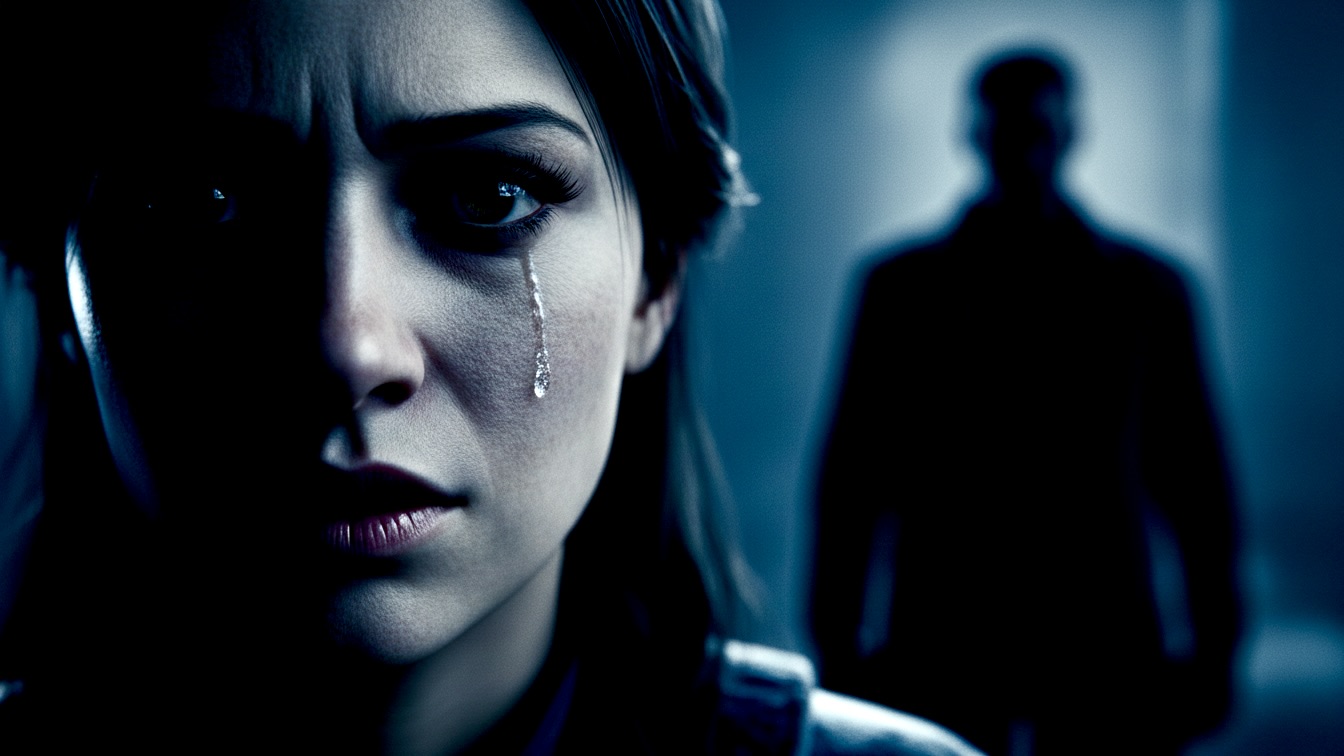
The visual style should be stark, gothic, and claustrophobic, emphasizing the oppressive cold and isolation. Cinematography would utilize wide shots to convey the manor's desolate grandeur and Ida's vulnerability, contrasted with tight close-ups on frozen textures, Vic's chilling features, and Ida's increasing desperation. The color palette would be dominated by blues, greys, and whites, with minimal warm tones, making any flicker of light or color feel precious and fleeting.
The tone is one of psychological horror blended with creature feature elements, leaning heavily into a sense of dread and existential terror. Influences could include the atmospheric tension of The Terror (AMC), the gothic decay of Crimson Peak, and the body horror/isolation of John Carpenter's The Thing. Sound design would be crucial, emphasizing the crunch of ice, the scream of the blizzard, the wet, ragged breathing of the creature, and the profound, echoing silence of the frozen manor to heighten the audience's discomfort and immersion.
The target audience is mature viewers (16+) who appreciate atmospheric horror, psychological thrillers, and gothic narratives. They enjoy stories that explore themes of betrayal, transformation, and the struggle against overwhelming, insidious forces. Viewers who seek intellectual horror that relies on dread and character-driven tension rather than jump scares, and those who are drawn to anthology series with a consistent thematic throughline, would be particularly engaged.
The pacing should be deliberate and suspenseful, building slowly from Ida's arduous journey to the unsettling discovery of the manor's state. The middle section, encompassing the creature attack and journal revelation, would accelerate into a more frantic, action-oriented tempo, before settling back into a chilling, inevitable descent towards the climax. The 10-12 minute runtime allows for a tight, focused narrative, effectively building tension through a three-act structure: setup (arrival, initial encounter), confrontation (creature, journal), and climax (Vic's revelation, final trap).
Achieving the pervasive sense of extreme cold and ice will require extensive practical effects combined with subtle CGI. Real ice and frost on sets, breath plumes from actors, and visible cold radiating from Vic are crucial for immersion. The ice creature could be a combination of practical suit effects for its physical presence and CGI for its shifting, shadowy, and dissipating elements, emphasizing its unnatural, ethereal quality. Careful attention to sound design for the creature's movements and vocalizations will be paramount to its effectiveness.
The manor set design should prioritize a sense of grand, decaying beauty, now utterly consumed by ice. This includes frozen furniture, ice-choked fireplaces, and the visibly growing icicles, which will require clever rigging and potentially time-lapse effects for the climax. Lighting will be key, using dim, cold light sources (flashlight, moonlight) to create deep shadows and highlight the glittering ice, enhancing the visual starkness and the feeling of isolation. Minimalist scoring, focusing on atmospheric drones and dissonant strings, would underscore the pervasive dread.