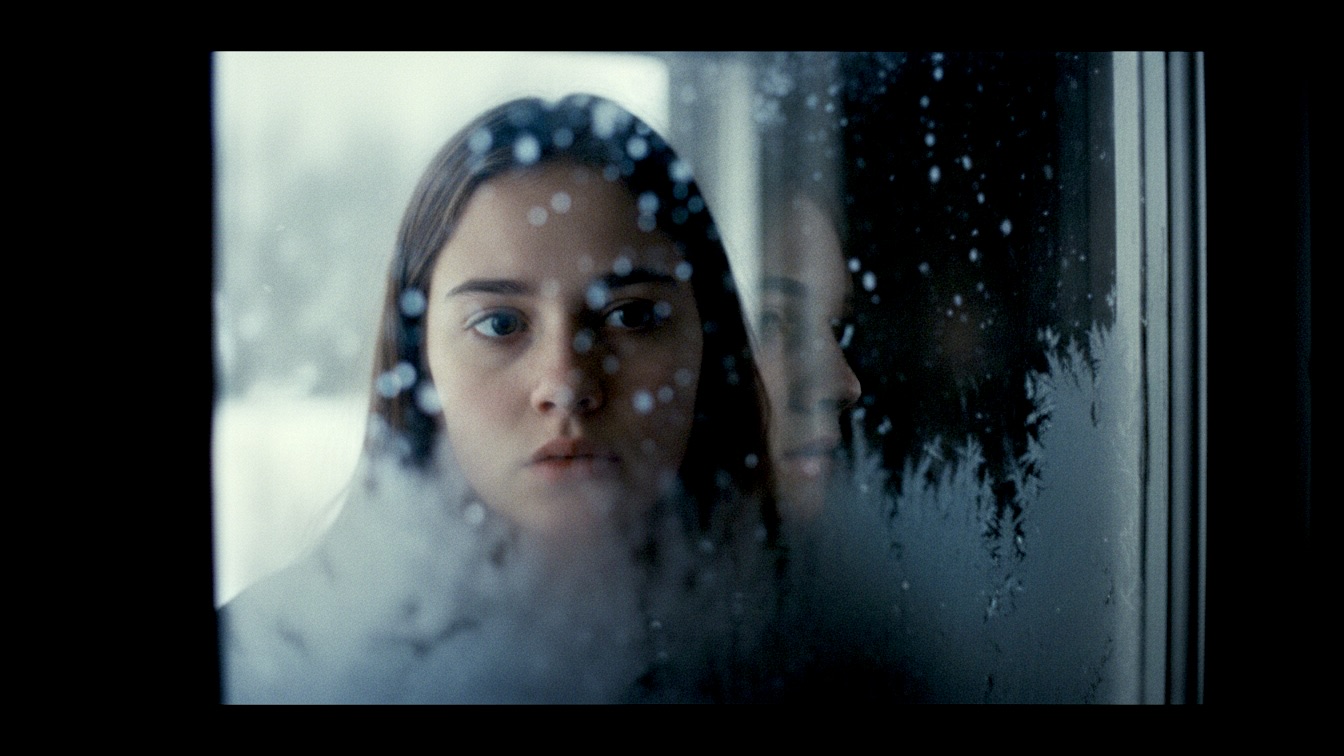
Format: Short Film / Anthology Episode | Est. Length: 10-12 minutes
Imagine a world quietly ending, not with a bang, but with a series of strange, localized phenomena. In a speculative anthology series titled The Stillness, each episode presents a contained, character-driven horror story where individuals in isolation confront uncanny events that blur the line between natural disaster and supernatural incursion. "The Thawing Glass" serves as a key episode, exploring how human desperation in the face of a world-altering storm becomes a doorway for something insidious, a theme that echoes across the series as characters everywhere discover the greatest threat isn't the changing world, but what comes with it.
Trapped in their freezing home by a relentless blizzard, siblings Elaine and Casey stare at their last can of food. The silence is broken by a faint, methodical knocking at the front door—a sound that is both impossible and their only hope.
Two starving siblings, isolated by a cataclysmic snowstorm, grant shelter to a mysterious frozen girl who appears on their doorstep. Her unsettling familiarity with their lives reveals she is not a victim of the storm, but a terrifying extension of it.
The primary theme is the insidious nature of hope and the vulnerability it creates in moments of extreme desperation. The story explores how the desire for rescue can blind individuals to danger, allowing threats to disguise themselves as salvation. It delves into the horror of the familiar becoming alien, as the sanctity and safety of the home are violated not by force, but by a quiet, creeping infiltration that erodes reality from the inside out.
Genre-wise, this is a piece of slow-burn, atmospheric horror blended with a survival thriller. The emotional undercurrents are built on a foundation of grief and abandonment, which slowly curdle into paranoia and existential dread. The story questions the cost of empathy in a world where the rules of nature and human interaction have fundamentally broken down.
The immediate stakes are physical survival: Elaine and Casey are days from freezing or starving to death, completely cut off from the world. The arrival of Ivy introduces psychological and existential stakes; their sanity and sense of reality are put at risk by her uncanny presence. Ultimately, the stakes escalate to their very identities, as Ivy's mirroring behavior suggests she is a parasitic entity intent on replacing them, making the fight not just for their lives, but for their existence.
The primary external conflict is Man vs. Nature, embodied by the relentless, world-ending blizzard that has isolated the siblings and is slowly killing their home. The internal conflict resides within Elaine, who battles her sense of responsibility and empathy against a growing, instinctual dread. The central antagonistic force is Ivy, a supernatural entity whose methods are psychological; she preys on their hope, exploits their memories, and uses quiet manipulation to dismantle their defenses, representing a force that is both an extension of the storm and a deeply personal predator.
Siblings Elaine and Casey are trapped in their isolated family home by a catastrophic blizzard, their parents missing and their supplies dwindling to a single can of soup. As hope fades, a mysterious, near-frozen girl named Ivy collapses on their doorstep. Over her brother’s fearful objections, Elaine’s sense of duty compels her to bring the stranger inside, reviving her with their last ration of food.
Ivy’s recovery brings not relief, but a creeping dread. She exhibits an unsettling familiarity with the house and its inhabitants, culminating in her humming a private lullaby known only to the siblings and their mother. Elaine’s suspicion turns to terror when she discovers the spare key to her parents' locked bedroom is missing, and she experiences a horrifying vision of Ivy's face replacing her own in a frosted windowpane. Elaine realizes they haven't rescued a victim; they've invited a predatory mimic into their home, a creature born of the storm that now threatens to consume their identities along with their shelter.
ELAINE (18): The pragmatic and protective older sister, burdened with the responsibility of keeping both herself and her brother alive. Psychological Arc: Elaine begins as a rational caregiver, forcing herself to believe in logical explanations for their parents' absence. Ivy’s arrival forces her to choose between empathy and survival, and as Ivy's uncanny nature is revealed, Elaine's pragmatism shatters, replaced by a primal, isolating terror as she becomes the sole witness to the true threat.
CASEY (16): The more vulnerable and emotionally transparent younger brother, clinging to the hope of their parents' return. Psychological Arc: Casey starts as the voice of hope, which quickly curdles into fearful resentment when Elaine gives their last meal to a stranger. His initial fear of Ivy is practical (loss of resources), but it transforms into a withdrawn, sullen denial, making him an unwitting obstacle to Elaine's attempts to confront the supernatural reality of their situation.
IVY (17): The antagonist, a mysterious girl who appears from the storm. She is an entity that mirrors and mimics, a quiet predator disguised as a helpless victim. Psychological Arc: Ivy's arc is one of insinuation and infiltration. She begins as a non-threatening, physically weak presence, but as she regains strength, she subtly asserts her power through psychological warfare—stealing memories, keys, and reflections—evolving from a passive object of pity into an active, terrifying threat to existence itself.
BEAT 1: THE LAST MEAL. In the vast, freezing kitchen, Elaine and Casey contemplate their last can of soup, the silence amplifying their despair and isolation. Casey questions if their parents remember them, establishing their emotional state of near-hopelessness. The cold is a physical character, eating sound and warmth, and the house feels like a tomb.
BEAT 2: THE KNOCKING. A faint, rhythmic knocking at the front door shatters the stillness, sparking a desperate, impossible hope in Casey. Elaine is immediately suspicious, sensing the wrongness of the sound in the impassable storm. This inciting incident forces a choice: remain sealed in their tomb or open the door to the unknown.
BEAT 3: THE INVITATION. They open the door to find Ivy, a girl their age, coated in snow and nearly frozen to death. Against Casey’s panicked protests, Elaine’s compassion wins out, and they carry the unconscious girl inside. They have willingly broken their quarantine, letting the storm, in human form, into their home.
BEAT 4: THE LULLABY (MIDPOINT). After being revived with the last of the soup, Ivy begins humming a strange, familiar tune. Elaine freezes, recognizing it as a private lullaby her mother made up, a secret melody no stranger could possibly know. This is the turning point where the story pivots from a survival drama into a supernatural horror, confirming that Ivy is more than she seems.
BEAT 5: THE MISSING KEY. Driven by a new, sharp paranoia, Elaine checks for the spare key to her parents' locked bedroom, a symbol of family and security. She finds the hook empty, a clean space on the wallpaper where the key used to be, proving something has violated the deepest sanctum of their home. The sense of dread intensifies as she realizes this violation happened without her knowledge.
BEAT 6: THE REFLECTION (CLIMAX). Elaine stares at her own exhausted reflection in a frosted window, her breath creating a small, clear portal. For a heart-stopping moment, her reflection morphs into Ivy's, complete with the teardrop mole and a serene, knowing smile. The vision confirms her worst fears: Ivy is not just an intruder, but a mimic, a doppelgänger actively working to replace her.
BEAT 7: THE OCCUPANT. The vision vanishes, leaving Elaine trembling and utterly alone with her terrifying knowledge. The house is no longer their sanctuary; it is an occupied territory. She understands that the true horror is not the storm outside, but the quiet, smiling storm they welcomed inside.
The episode's emotional journey begins in a state of bleak, oppressive stillness and quiet desperation. The knocking introduces a sharp, frantic spike of hope, which is immediately tempered by the tense mystery of Ivy's arrival. The mood then settles into a fragile, suspicious pity, which is shattered at the midpoint by the lullaby, plunging the narrative into a deep well of uncanny dread. This dread escalates through the discovery of the missing key into outright paranoia, culminating in the climax's moment of pure psychological terror, leaving the audience in a state of unresolved, chilling horror.
If expanded, this episode could serve as a pilot. The season arc would follow Elaine and Casey's attempts to survive and understand Ivy, who becomes a permanent, terrifying fixture in the house. They would discover she is a "Thaw," one of many entities brought by the storm that insinuate themselves into families, feeding on memory and identity. The overarching story would involve Elaine trying to find a way to fight Ivy without Casey, who may fall under Ivy's influence, creating a tense, internal family conflict against a supernatural backdrop.
Alternatively, in an anthology format, the season arc would connect disparate stories through recurring symbols (the teardrop mole, the specific patterns of frost) and a growing background narrative about the storm's true nature. Subsequent episodes would show other families facing their own versions of "Thaws," building a fragmented mosaic of a world being quietly replaced. A character might escape one episode only to appear in another, carrying a warning that connects the isolated incidents into a larger, cohesive mythology of the "Stillness."
The visual style will be claustrophobic and painterly, using a desaturated, cool-toned color palette dominated by blues, grays, and whites to emphasize the oppressive cold. The camera work should be slow and deliberate, with static shots that make the house feel like a portrait and creeping zooms that build tension and suggest an unseen observer. Light will be scarce and natural, sourced from the pale, diffuse glow filtering through the frosted windows, creating long shadows and a sense of perpetual twilight.
The tone is one of atmospheric, psychological dread, prioritizing suspense and uncanny horror over jump scares. The sound design will be crucial, contrasting the oppressive silence inside the house with the muffled, howling wind outside, and highlighting small, sharp sounds—a spoon against a mug, the click of a door, the soft humming—to create maximum tension. Tonal comparables include the contained paranoia of It Comes at Night, the chilling domestic atmosphere of The Lodge, and the slow-burn dread of The Blackcoat's Daughter.
The target audience is mature viewers aged 18-40 who are fans of elevated horror, psychological thrillers, and speculative fiction. This includes followers of A24-style horror that prioritizes atmosphere and thematic depth over gore, as well as audiences of prestige anthology series like Black Mirror and Channel Zero. The film would appeal to those who appreciate slow-burn narratives that build to a deeply unsettling climax and leave lingering questions.
For a 10-12 minute runtime, the pacing will be meticulously controlled. The first act (approx. 3 minutes) will be deliberately slow, establishing the bleak atmosphere and the characters' desperation. The pace will quicken with the inciting incident of the knocking and remain tense through the second act (approx. 6 minutes) as Ivy's mystery unfolds. The midpoint reveal of the lullaby will mark a significant tonal shift, after which the pacing will become more suspenseful, building rapidly through the discovery of the key to the sharp, shocking climax in the final moments, ending abruptly to leave the audience unsettled.
The production benefits from a single, contained location—an older, character-rich house—which is both budget-friendly and essential for cultivating the story's claustrophobic feel. The primary challenge will be creating a convincing and pervasive sense of cold. This should be achieved through practical effects: extensive, artfully designed frost patterns on all windows, visible breath from the actors in every scene, and set dressing that reflects a house losing its battle with winter.
Subtle VFX will be required for the climactic reflection scene. This effect must be seamless and terrifyingly brief to be effective, appearing as a near-subliminal flash of the wrong face. The sound design is paramount; investing in a detailed foley and atmospheric score will be critical to conveying the oppressive silence, the menacing storm, and the chilling horror of Ivy's humming.