Melgund Township Winter Story Library
The Unaccommodating Providence of Mr. Grizzleton - Treatment
by Jamie F. Bell | Treatment
by Jamie F. Bell | Treatment
Format: Short Film / Anthology Episode | Est. Length: 10-12 minutes
Imagine a world hiding pockets of extreme, weaponized architecture, each a monument to a singular, obsessive paranoia. "The Unaccommodating Providence of Mr. Grizzleton" serves as a standalone episode in an anthology series titled Hostile Designs, where unsuspecting individuals stumble into these meticulously crafted death traps. Each episode explores a new location—a suburban home, a remote lighthouse, an abandoned factory—unraveling the story of its creator through the lethal puzzles they left behind, forcing our protagonists to outwit the very space that is trying to kill them.
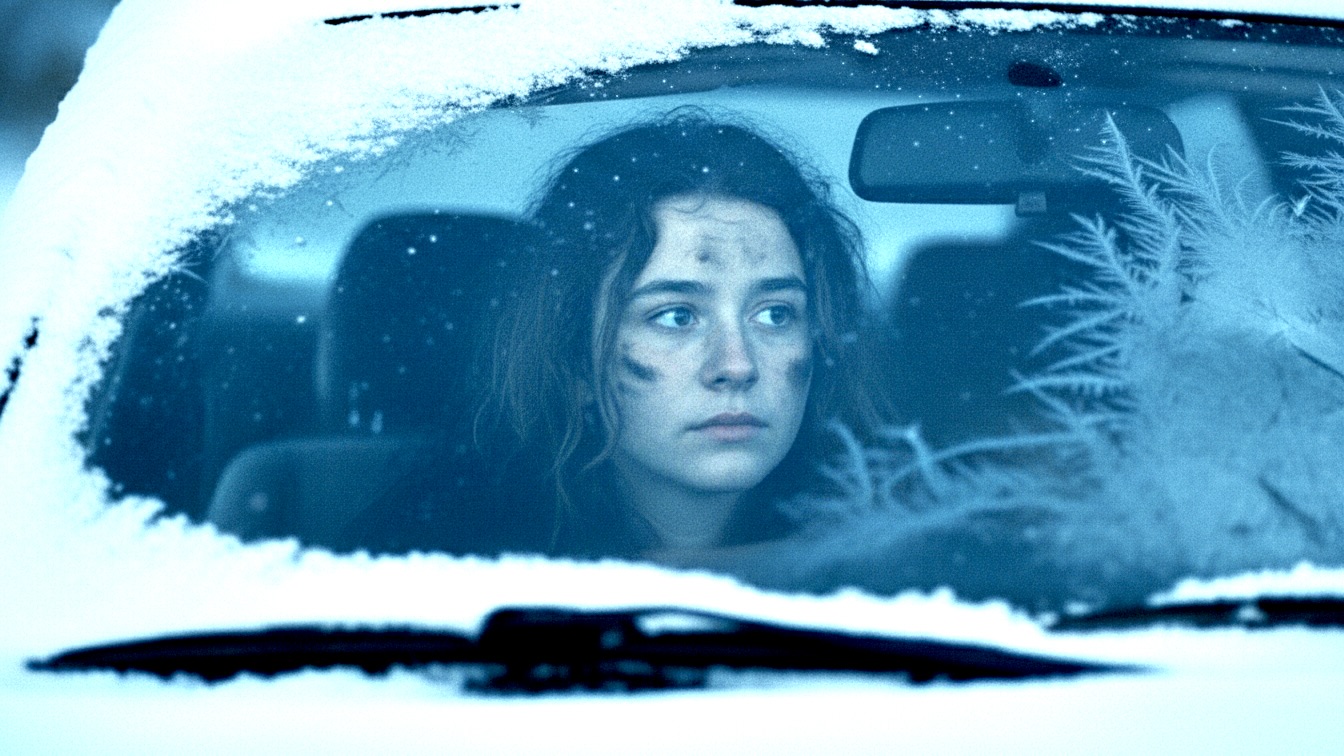
Stranded by a vicious blizzard after their car slides off the road, two teenagers, Meg and Dan, break into a remote, seemingly cozy log cabin for shelter. Their relief is shattered when a single misplaced step nearly brings a massive blacksmith's anvil crashing down upon them.
After taking refuge from a blizzard in an isolated cabin, two teenagers discover it's an intricate death trap designed by a paranoid survivalist. They must use the cabin's own lethal mechanisms to engineer their escape before they fall victim to the house's malevolent architecture or the raging storm outside.
This story is a dark comedy wrapped in a survival horror shell, exploring themes of ingenuity versus paranoia and order versus chaos. The cabin itself is a physical manifestation of Mr. Grizzleton's misanthropic worldview—a place where every comfort is a potential threat and every solution is cartoonishly violent. The narrative contrasts the indifferent, chaotic danger of the natural blizzard with the highly personal, deliberate malevolence of the man-made traps, questioning which is more terrifying.
Beneath the tension lies an exploration of resilience and morbid humor as a coping mechanism. Meg and Dan’s survival depends not just on avoiding triggers, but on adopting the creator's mindset to turn his own systems against him. It's a story about how the most absurd and terrifying circumstances can forge an unexpected competence and a deeper, if dysfunctional, bond.
The stakes are immediate and absolute: life or death. Every step inside the cabin could be their last, with the environment actively trying to kill them through a series of elaborate, Rube Goldberg-esque traps. Beyond the immediate physical danger, the stakes include their sanity and hope, as the psychological toll of being hunted by an inanimate space threatens to overwhelm them. If they fail, they will not only die but become another gruesome punchline in the cabin's dark history, their bodies a warning to future intruders.
The primary conflict is Person vs. Environment, amplified to a sadistic degree. The protagonists face two hostile environments simultaneously: the indifferent, elemental fury of the blizzard outside, and the calculated, malicious design of the cabin inside. The unseen antagonist, Mr. Grizzleton, acts through his creations, his paranoia and engineering prowess forming the opposing force. Internally, Meg battles her pragmatic fear and rising panic, while Dan must temper his reckless optimism against the deadly reality of their situation, creating a secondary conflict between their opposing survival instincts.
Stranded in a blizzard, teenagers Meg and Dan seek refuge in a remote cabin, only to be greeted by a near-fatal anvil trap rigged to the door. They quickly realize the entire cabin is a meticulously designed death machine, with further dangers including a shotgun-rigged armchair and canned goods with ominously descriptive labels like "Regrettable Repast." The cabin is the fortress of a paranoid survivalist, Mr. Grizzleton, whose dark sense of humor is evident in every lethal detail.
Just as they manage to start a fire and find a single can of safe food, the cabin's automated defense system activates, sealing them inside with heavy steel shutters. Their sanctuary becomes a tomb. Realizing that waiting for a rescue that will never find them is a death sentence, they formulate a desperate plan: to re-rig the anvil trap, turning it into a wrecking ball to smash their way out. Their insane gambit works, and they escape the demolished cabin back into the raging storm, trading one form of certain death for a slim chance at survival.
MEG: A pragmatic, intelligent, and cautious teenager whose sarcasm is a shield for her anxiety. At the start, she is purely reactive, her focus entirely on surviving Dan’s impulsiveness and the immediate threats. Her psychological arc is one of transformation from a terrified victim into a reluctant strategist; she is forced to move beyond fear, applying her analytical mind to deconstruct the cabin's lethal logic and ultimately masterminding their escape. She ends the ordeal exhausted but empowered, having discovered a deep well of resilience and ingenuity she never knew she possessed.
DAN: An impulsive, infuriatingly optimistic teenager who acts first and thinks much, much later. He begins as the primary liability, his carelessness nearly getting them killed multiple times, yet his refusal to succumb to despair is also an asset. His arc is about the violent collision of his optimism with a truly malevolent reality; he learns the hard way that some situations can't be solved with a grin, but he never fully loses his core belief in finding a "bright side." He ends with a newfound, albeit grudging, respect for caution, his creativity channeled from reckless exploration into brilliantly insane problem-solving.
BEAT 1: THE WELCOME MAT: Stranded in a blizzard, Meg and Dan break into a cabin for warmth. Dan’s first step inside snaps a tripwire, and Meg yanks him back just as a massive anvil slams into the floor where his foot was, establishing the cabin as an immediate, lethal threat.
BEAT 2: A TOUR OF DANGER: As they cautiously explore, the full scope of the cabin’s paranoia is revealed. They discover a comfortable armchair is rigged with upward-facing shotgun shells connected to a pressure plate, and the well-stocked pantry is filled with cans bearing threatening, comical labels, making even the prospect of food a life-or-death decision.
BEAT 3: A MOMENT'S PEACE: After a tense search, they find a way to safely open a can of peaches and manage to start a fire. For a brief moment, huddled by the hearth, the warmth and food create a fragile bubble of safety and relief amidst the constant danger.
BEAT 4: THE LOCKDOWN: The cabin's generator kicks in, triggering an automated defense system. Heavy steel shutters slam down over the windows and doors with a series of final, echoing clanks, plunging them into near darkness and turning their shelter into a sealed prison.
BEAT 5: THE WRECKING BALL: Realizing they are trapped and will eventually freeze or starve, Dan proposes an insane idea: weaponize the anvil trap. Working together, they re-rig the mechanism with steel cable and a pulley, aiming to turn the anvil into a pendulum that can smash through the cabin wall.
BEAT 6: DESPERATE ESCAPE: With a makeshift rope, they trigger their contraption. The anvil swings in a devastating arc, obliterating a section of the wall and exposing them to the raging blizzard, which immediately extinguishes their fire. They scramble through the wreckage, escaping the engineered prison and choosing to face the indifferent chaos of the storm.
The audience experience begins with the sharp panic of a car accident, quickly shifting into a state of high-strung, claustrophobic tension as the cabin's true nature is revealed. This dread is consistently undercut by moments of gallows humor, creating a disorienting blend of fear and laughter. The emotional midpoint offers a brief, warm respite, allowing the audience and characters to catch their breath before the mood plummets into suffocating despair during the lockdown sequence. The final act is a surge of frantic, desperate energy, culminating in a cathartic, destructive climax, and resolving into a quiet, exhausted, and deeply fragile sense of hope in the final moments.
If expanded into a series, "Mr. Grizzleton's" cabin could be the first of many "Hostile Designs" the characters encounter. A potential season arc could see Meg and Dan, now marked by their experience, developing a reputation as unlikely experts in surviving such places. They might be sought out by others, or perhaps they actively seek out other locations, driven by a need to understand who builds these places and why.
A larger conspiracy could be introduced, suggesting that Mr. Grizzleton was not an isolated eccentric but part of a hidden community or subculture of "architectural survivalists" who trade designs and compete to build the most inescapable fortress. The overarching story would follow Meg and Dan as they transition from accidental survivors to proactive investigators, piecing together the puzzle of this deadly network while trying to stay one step ahead of the next trap. Their relationship would evolve, their trauma bonding them as they navigate a world far more dangerous and bizarre than they ever imagined.
The visual style will be grounded and claustrophobic, emphasizing the contrast between the vast, chaotic whiteout of the blizzard and the tightly controlled, menacing interior of the cabin. Inside, the camera will use tight shots, slow creeping zooms, and a shallow depth of field to create a sense of unease, making the space feel oppressive and ensuring the audience is always looking for the next threat. The lighting will transition from the cold, blue, ambient light of the storm to the warm, flickering, but shadow-heavy glow of the fireplace, which should feel both comforting and menacing.
The tone is a delicate balance of survival thriller and black comedy, akin to 10 Cloverfield Lane for its single-location tension and The Cabin in the Woods for its self-aware, darkly humorous take on horror tropes. The sound design is critical, amplifying the creaks of the floorboards, the howl of the wind, and the sudden, sharp mechanical sounds of the traps to build suspense. The violence, when it occurs, is shocking and absurdly over-the-top, reinforcing the cartoonish malevolence of the cabin's creator.
The primary audience is fans of high-concept genre fare, including suspense thrillers, survival horror, and dark comedies (ages 16-40). Viewers who enjoy puzzle-box narratives and escape-room scenarios, such as those found in films like Saw (minus the gore), Cube, or Don't Breathe, will be drawn to the premise. The episode's blend of genuine tension and absurd humor makes it suitable for a streaming audience on platforms like Netflix, Hulu, or Shudder, where it can exist as a binge-worthy short or part of a larger, curated anthology series.
For a 10-12 minute runtime, the pacing must be relentless. The opening act, from the car crash to the discovery of the anvil trap, should be incredibly swift, establishing the stakes within the first two minutes. The second act will be a tense, escalating series of discoveries, slowing down only for the brief midpoint at the fireplace before the lockdown sequence re-ignites the tension. The third act—devising and executing the escape plan—is a frantic, high-energy montage of desperate engineering, leading to an explosive climax and a short, quiet denouement that allows the audience a final moment to breathe.
The primary production challenge is the safe and effective execution of the practical and mechanical traps, especially the anvil. The climactic swing of the anvil would likely be a composite shot, combining a practical rig for the setup with a VFX-enhanced swing and impact for maximum destructive effect and actor safety. The set design of the cabin is paramount; it must look simultaneously cozy and menacing, with every detail hinting at the owner's paranoid craftsmanship.
A contained, single-location shoot makes this a budget-conscious production, but significant resources must be allocated to the art department and special effects. Creating a convincing blizzard environment will be key, likely requiring a combination of on-set snow machines for interactive shots and digital enhancement for wider exterior views. The sound design will be crucial in selling the isolation and the ever-present mechanical threat humming just beneath the surface of the cabin's rustic charm.