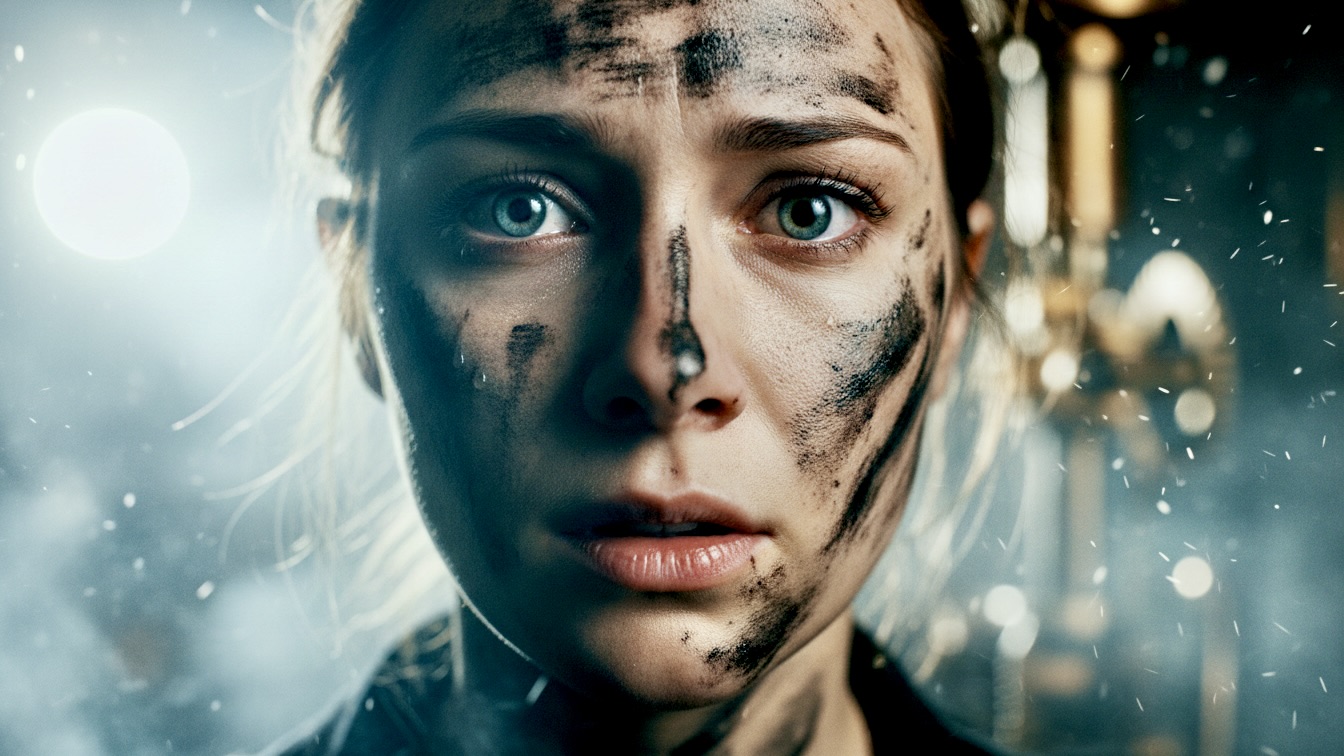
In a city gripped by a perpetual, brutal winter, Theresa, a skilled but un-Guilded mechanic, faces a critical crisis when her apartment's cogitator, the sole source of heat, breaks down. The Guild's exorbitant prices and slow service mean certain death by freezing. Driven by desperation, Theresa descends into the city's unregulated Undercrofts, a dark maze of tunnels and illicit markets, to find a replacement part. There, she encounters Old Man Lampe, a cynical junk dealer, who sells her a mysterious, pre-Freeze governor gear that hums with its own internal warmth and power. Despite knowing the severe dangers and illegality of unregulated technology, Theresa, facing imminent death from the cold, installs the strange gear. However, the gear proves to be far more powerful and volatile than anticipated, transforming the cogitator into a runaway engine that rapidly overheats her flat, threatens to explode, and traps her between the inferno within and the deadly cold outside.
The chapter "Steampunk Winter" deeply explores the themes of survival against systemic oppression, the perilous allure of forbidden technology, and the psychological impact of extreme desperation. Theresa's struggle is not merely against the elements, but against a meticulously calibrated system – the Aether & Cog Guild – that maintains its monopoly by making basic necessities like heat prohibitively expensive and inaccessible to those "below the Sky-Lines." This highlights how societal structures can become as lethal an antagonist as any natural disaster, forcing individuals into impossible choices where survival itself becomes a rebellious act. The Guild represents the cold, calculating indifference of authority, mirroring the literal cold of Winnipeg.
Desperation is a pervasive force in the narrative, compelling Theresa to abandon caution and embrace increasingly risky solutions. Her journey into the Undercrofts and her decision to purchase the unregulated gear are direct consequences of a system designed to keep its citizens "cold, hungry, and compliant." This choice underscores the idea that when faced with certain death, the line between rational decision-making and reckless abandon blurs, and the unknown danger becomes preferable to the known one. The narrative suggests that extreme conditions strip away societal norms, revealing the primal drive to simply exist.
The mysterious gear itself embodies the theme of forbidden knowledge and its double-edged nature. It offers a promise of life-saving warmth, a "small sun," yet its unregulated power poses an even greater, more catastrophic threat. This conflict between salvation and destruction reflects a common trope in steampunk where technological marvels, when unchecked by ethical considerations or systemic control, can lead to unforeseen and devastating consequences. The gear's transformation of the cogitator from a simple heating unit into a "spinning vortex of pure white light" symbolizes the overwhelming and uncontrollable power that lies outside the established order, a power that can consume as easily as it can create.
Theresa is presented as a resourceful, practical, and resilient individual whose internal world is dominated by a fierce will to survive against overwhelming odds. Initially, her internal state is one of weary resignation, accustomed to the constant battle against failing machinery and the oppressive Guild. The repeated phrase "Another sheared tooth. Of course." encapsulates her grim acceptance of a life filled with endless, minor mechanical failures that compound into major threats. However, this resignation quickly gives way to a desperate, almost primal, urgency as the cold becomes an immediate, tangible threat.
Her motivations are singularly focused on self-preservation and the procurement of heat, which in her world equates to life itself. She is driven by a deep-seated refusal to passively succumb to the freezing temperatures or the Guild's exploitative system. This motivation compels her to act decisively, venturing into the dangerous Undercrofts despite the implied risks, and ultimately to embrace a piece of technology she knows to be illegal and potentially catastrophic. Her actions are a testament to the powerful human instinct to fight for existence when faced with an existential threat.
Theresa's central conflict is multifaceted, encompassing both external and internal battles. Externally, she is locked in a struggle against the brutal Winnipeg winter, a broken machine, and the crushing monopoly of the Aether & Cog Guild. Her journey into the Undercrofts and her interaction with Old Man Lampe highlight the stark realities of her world and the lengths people must go to circumvent an unjust system. Internally, Theresa grapples with a profound moral and ethical dilemma: the choice between certain death by freezing and the unknown, potentially catastrophic, dangers of using unregulated, "Pre-Freeze" technology. Her hesitation before installing the gear ("This was a mistake. A terrible, life-altering mistake.") reveals her awareness of the profound risk, but the overwhelming physical sensation of the cold ultimately overrides her caution, pushing her into a desperate gamble for survival.
The narrative employs a stark, visceral style that effectively immerses the reader in Theresa's desperate struggle for survival. The pacing begins with a sense of weary stasis, reflecting Theresa's routine despair over mechanical failures, but rapidly accelerates as she makes her desperate journey to the Undercrofts and particularly during the installation and subsequent meltdown of the mysterious gear. This escalating pace mirrors Theresa's increasing panic and the rapidly unfolding catastrophe, creating a powerful sense of urgency and dread. The final moments are frantic, conveying the overwhelming nature of the impending disaster.
The tone is consistently bleak and oppressive, underscored by a pervasive sense of desperation that evolves into outright terror. The narrative voice, a close third-person limited perspective, aligns entirely with Theresa's internal experience, allowing the reader to feel her mounting fear, her physical discomfort, and her difficult choices. This intimate perspective makes her desperation palpable, drawing the reader into her struggle against both the elements and the systemic forces arrayed against her. The language is direct and unadorned, reflecting the harsh realities of her existence.
Sensory details are meticulously woven throughout the chapter, particularly those related to the biting cold and the escalating mechanical chaos. The omnipresent cold is depicted as a physical entity, "creeping in through the floorboards," a "physical weight," and "an active predator," making its threat tangible. Sounds are crucial in building tension: the "deafening" silence of the dead machine, the "howling wind," Lampe's "gravelly rasp," the "low, almost sub-audible hum" of the gear, and finally, the terrifying "deep, resonant roar" and "high-pitched mechanical shriek" of the overloaded cogitator. Visuals like "plumed breath," "opaque sheet of ice," "glowing pipes," and the "spinning vortex of pure white light" heighten the drama and illustrate the transformation of the familiar into the monstrous. The smells of "grease," "unrefined coal," "boiled cabbage," and later "burning oil, scorched wood, and ozone" further ground the narrative in its gritty, steampunk reality, contributing to the chapter's intense and immersive atmosphere.