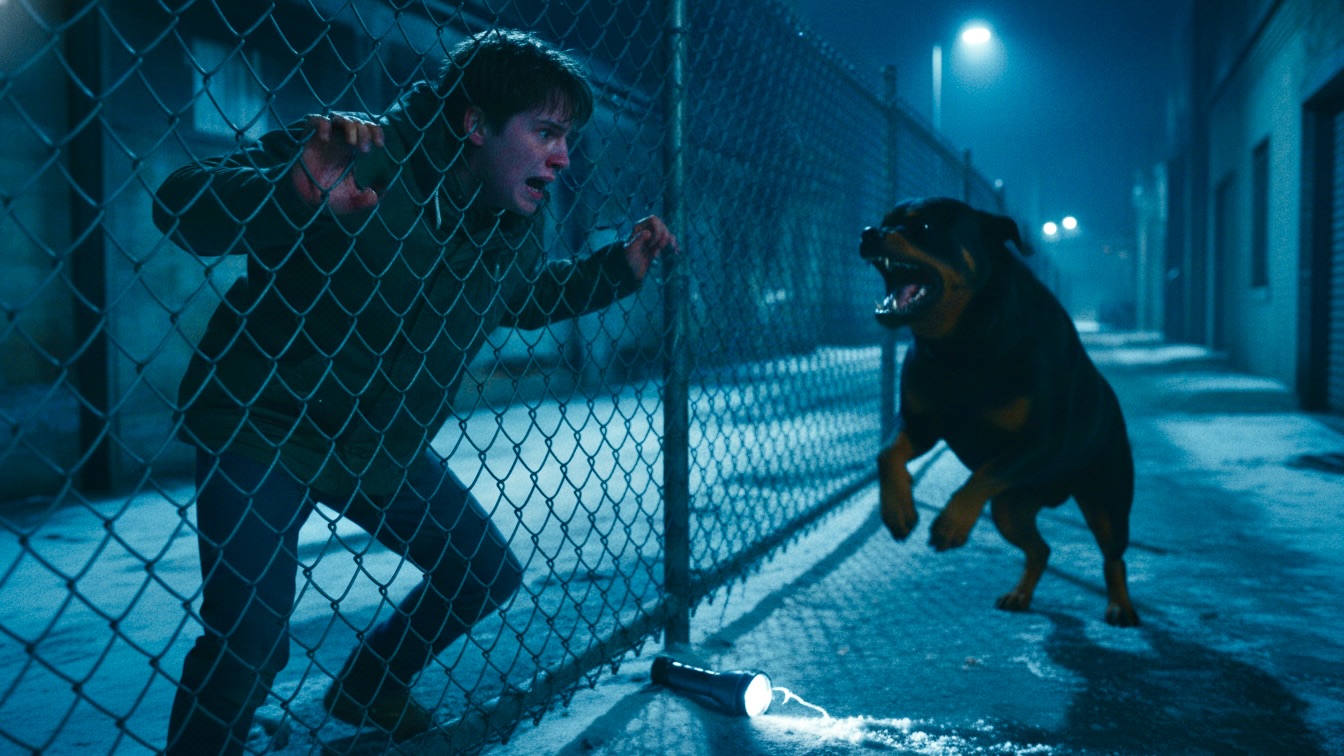
The chapter "Hostile Takeover" plunges Debbie, proprietor of Canvas & Rust Gallery, into a crisis. She receives a Strategic Lawsuit Against Public Participation (SLAPP) from developers, demanding an impossible half-million dollars for alleged defamation related to her community activism. Overwhelmed and facing certain bankruptcy, Debbie is then confronted by Helena Shaw, a powerful gallery owner, who offers a "rescue mission" that is, in fact, a hostile takeover: all debts cleared and legal fees covered in exchange for Canvas & Rust becoming a subsidiary of Shaw Galleries, with Debbie as a salaried employee. Desperate, Debbie seeks counsel from Jack, who vehemently opposes Helena's offer, leading to a painful argument where Debbie, in her fear, lashes out at him, widening a chasm between them. Feeling useless and wounded by Debbie's words, Jack, driven by a desperate need to find an alternative to surrender, ventures into the desolate warehouse district, hoping to find evidence against the developers. His search culminates in a terrifying encounter with a guard dog, leaving him injured, empty-handed, and more convinced of his failure.
The chapter deeply explores the theme of power dynamics and exploitation, illustrating how large, well-resourced entities can crush smaller, independent forces. The SLAPP suit is a clear example of legal intimidation designed to silence dissent through financial ruin, demonstrating a brutal imbalance of power. Helena Shaw's offer, presented as a lifeline, is a sophisticated form of exploitation, capitalizing on Debbie's desperation to absorb her gallery and vision into a corporate empire. This predatory approach highlights how vulnerability can be leveraged for strategic acquisition.
Idealism versus pragmatism forms a central conflict, particularly in Debbie's internal struggle and her interactions with Claire and Jack. Debbie's initial idealism, her fight for her gallery and community, is battered by the harsh realities of financial ruin. Claire represents cold pragmatism, advising Debbie to accept Helena's offer as a lesser of two evils, while Jack embodies unwavering idealism, urging continued resistance despite impossible odds. This thematic tension underscores the difficult choices individuals face when their values clash with the demands of survival.
The theme of loss and desperation permeates the narrative, driving the characters' actions and emotional states. Debbie faces the imminent loss of her life's work and identity, leading to a profound sense of despair and exhaustion. Jack, feeling powerless to help Debbie and wounded by her accusations, is propelled by his own desperation to undertake a reckless, dangerous search for a solution. His "nothing to lose" mentality, initially an insult, becomes a desperate mission statement, highlighting the lengths to which individuals will go when pushed to their limits.
Finally, the chapter examines the cost of resistance and the burden of responsibility. Debbie's efforts to resist the developers have directly led to the lawsuit, demonstrating the severe repercussions of challenging powerful interests. Her financial precarity, a constant struggle to keep the gallery afloat, underscores the heavy personal and financial toll of maintaining an independent vision in a hostile environment. The argument with Jack further illustrates the personal cost, as the immense pressure on Debbie causes her to lash out, damaging her most crucial relationship in her moment of greatest need.
Debbie's internal state is a tumultuous landscape of panic, despair, and a desperate, fragile defiance. Upon receiving the lawsuit, she experiences a profound sense of unreality, the impossible sum feeling "like something from a movie." This initial shock quickly gives way to a crushing realization that her situation is "an execution," not a fight, revealing her deep-seated fear and vulnerability. Her entire identity is intertwined with Canvas & Rust, making the threat to its existence a threat to her very self, evident in her lament that a piece of paper could erase "her entire life’s work."
Her motivations are rooted in a fierce commitment to her gallery and its artistic mission, coupled with a deep-seated pride in her independence. She has poured her life into this endeavor, making countless sacrifices, and the thought of losing it is unbearable. This commitment fuels her initial, albeit hollow, defiance against the lawsuit. Her internal conflict is stark: the desire to preserve her vision clashes violently with the overwhelming financial and legal realities, pushing her towards a desperate pragmatism.
Psychologically, Debbie exhibits a classic fight-or-flight response. When confronted with the existential threat, her initial panic gives way to a desperate lashing out at Jack, a displacement of her overwhelming fear and frustration. Her cutting words, though immediately regretted, reveal the immense pressure she is under and her feeling of isolation in carrying the burden of the gallery's survival. She seeks a solution, a "way out," demonstrating a deep-seated need for security and an end to her relentless struggle.
Claire operates as the pragmatic, unsentimental voice of reality in the chapter. Her internal state is characterized by a grim, unsurprised resignation, suggesting she has long understood the precariousness of their situation and the ruthless nature of the forces they face. She maintains a careful neutrality, her stillness being a "tell" of her acute observation, and her movements are "efficient and devoid of emotion," indicating a coping mechanism of detachment in the face of crisis. A brief flicker of fear when Helena Shaw calls reveals a crack in her usual composure, hinting at the true power of their adversary.
Her motivations are primarily driven by a clear-eyed assessment of survival. She is not swayed by emotional appeals or idealistic notions, but rather by the cold, hard facts of their financial insolvency and the overwhelming cost of legal defense. She understands the strategic nature of the SLAPP suit and Helena's offer, seeing them through a purely transactional lens. Her advice to "take it" is a stark endorsement of choosing a difficult "life" over certain "death," embodying a pragmatic approach to an impossible situation.
Psychologically, Claire functions as a foil to Debbie's emotional turmoil and Jack's idealism. She provides an external, dispassionate perspective that forces Debbie to confront the brutal realities. Her precise, judgmental cadence when describing the SLAPP suit highlights her intellectual understanding of the machinations of power. She represents the survival instinct stripped of romanticism, willing to make an uncomfortable compromise for the sake of continuity, even if it means sacrificing independence.
Helena Shaw embodies a predatory, calculating intelligence, her internal state one of cool confidence and strategic intent. Her voice, described as "smooth as chilled vodka" and "dripping with a predatory sympathy," reveals a masterful manipulator who uses charm and feigned concern to disarm her targets. She moves with an "unhurried grace" that underscores her sense of power and control, demonstrating no anxiety or urgency. Her "cold, expectant gaze" and "dismissive smile" betray her true nature: a ruthless businesswoman focused solely on acquisition.
Her motivations are entirely driven by expansion and control. She sees Debbie's gallery not as a unique artistic space, but as an asset to be absorbed, its "grit" and "eye for raw talent" valuable commodities to be integrated into her larger empire. She exploits Debbie's vulnerability, offering a "rescue" that is transparently a "hostile takeover" designed to eliminate competition and consolidate her influence. Helena seeks to sanitize and brand Debbie's vision, demonstrating a desire for ownership and the imposition of her own corporate identity.
Psychologically, Helena is a classic antagonist figure who thrives on others' weakness. Her ability to know about the lawsuit almost immediately highlights her extensive network and demonstrates her pervasive influence. She meticulously dissects Debbie's weaknesses—lack of capital, infrastructure—and presents her offer as the only logical solution, effectively cornering her. Her deliberate actions and carefully chosen words are designed to dismantle Debbie's resistance by appealing to her deepest fears and desires for stability.
Jack's internal state is characterized by unwavering loyalty, idealism, and a deep-seated desire to protect Debbie and their shared cause. He initially greets Debbie with a "slow smile," showcasing his natural warmth and support, which quickly morphs into concern when he sees her distress. His reaction to Helena's offer is one of profound disappointment and a feeling "like betrayal," indicating his strong moral compass and his belief in fighting for principles. He feels helpless and deeply wounded by Debbie's accusations, which leads to a quiet retreat into himself.
His motivations are rooted in a strong sense of justice and a fierce commitment to what he believes is right. He wants to fight, to find a "way out" that does not involve surrender, driven by his loyalty to Debbie and the gallery's ideals. Debbie's cruel words, accusing him of having "nothing to lose," ironically transform his perceived powerlessness into a desperate mission statement, compelling him to act. He is motivated by a need to prove his worth and to provide a tangible solution, a "piece of leverage," to save Debbie.
Psychologically, Jack represents the romantic idealist, someone who believes in fighting against overwhelming odds. His immediate suggestion to "crowdfund" reveals his community-oriented, hopeful approach, contrasting sharply with the bleak reality. Debbie's lashing out at him inflicts a deep emotional wound, causing him to recoil and retreat, showcasing his vulnerability despite his physical bravery. His solitary, dangerous quest into the warehouse district is a desperate attempt to regain agency and to bridge the chasm that has opened between him and Debbie, driven by love and a refusal to give up.
The chapter employs a pacing that skillfully builds tension and desperation. It begins with a slow, deliberate dread as Debbie processes the ominous legal documents, then accelerates with the swift, almost theatrical arrival of Helena Shaw. The dialogue between Debbie and Jack is sharp and quick, reflecting their emotional turmoil, before the pace shifts again to a more suspenseful, action-oriented segment as Jack embarks on his perilous search. This varied pacing keeps the reader deeply engaged, mirroring the protagonist's escalating crisis.
The tone is consistently ominous, desperate, and bleak, punctuated by moments of sharp anger and profound sorrow. The narrative effectively conveys a suffocating sense of entrapment and impending doom. The descriptions of the cold, the decaying gallery, and the desolate warehouse district contribute to a pervasive atmosphere of hopelessness, which is only briefly challenged by Jack's desperate, albeit futile, act of resistance.
Rich sensory details immerse the reader in Debbie's and Jack's experiences. The tactile sensations of the "too heavy," "rigid and unforgiving" envelope and the "crisp and cold" legal paper emphasize the tangible weight of Debbie's predicament. Auditory details like the "low humming" in Debbie's ears, the "deafening" clock, and the "wet, vicious clack" of the dog's teeth heighten the tension and emotional impact. Olfactory details such as Helena's "expensive and faintly metallic" perfume and the "cold ash and damp, charred wood" of the warehouse add depth to the settings. The pervasive cold, described as "bone-deep" and "seeping through his boots," underscores the harshness of their environment and their struggle.
The narrative voice is primarily third-person limited, closely following Debbie's perspective for much of the chapter before shifting to Jack's. This allows for deep insight into their internal states, their fears, and their motivations, making their struggles intimately personal. The shift to Jack's point of view at the end broadens the narrative scope, offering a glimpse into another character's desperate attempt to find agency and hope, while reinforcing the pervasive themes of powerlessness and the cost of resistance.
The text is replete with powerful figurative language, which enhances its thematic depth and emotional resonance. Metaphors like the lawsuit being "an execution" or "a tombstone" vividly convey the finality of Debbie's predicament. Helena's offer is described as a "gun" compared to Debbie's "palette knife," starkly illustrating the power imbalance. The "chasm" and "canyon" between Debbie and Jack effectively symbolize their emotional distance and the profound rupture in their relationship. Such imagery not only enriches the prose but also serves to underscore the characters' internal and external conflicts.