The narrative opens with Art, an elderly hiker, struggling with his equipment and growing increasingly frustrated by the manicured nature of the trail he is navigating with his companions, Nancy and Chuck. Motivated by a sense of superiority and a deep-seated nostalgia for his youth, Art disparages the marked path as a route for tourists. He insists on taking a shortcut via an old logger’s path he recalls from fifty years prior, dismissing Nancy’s concerns about an incoming weather front and the absence of the trail on modern maps.
Despite Nancy’s hesitation and the visible fatigue of Chuck, Art’s confidence bullies the group into leaving the safety of the marked trail. Initially, the physical exertion validates Art’s self-image, but the landscape soon fails to align with his memories. As they push deeper into the woods, a severe snow squall descends upon them, obliterating visibility and erasing their tracks. The familiar landmarks Art sought are missing, replaced by new growth following a clear-cut he had forgotten, revealing that he has led them into a void based on a phantom memory.
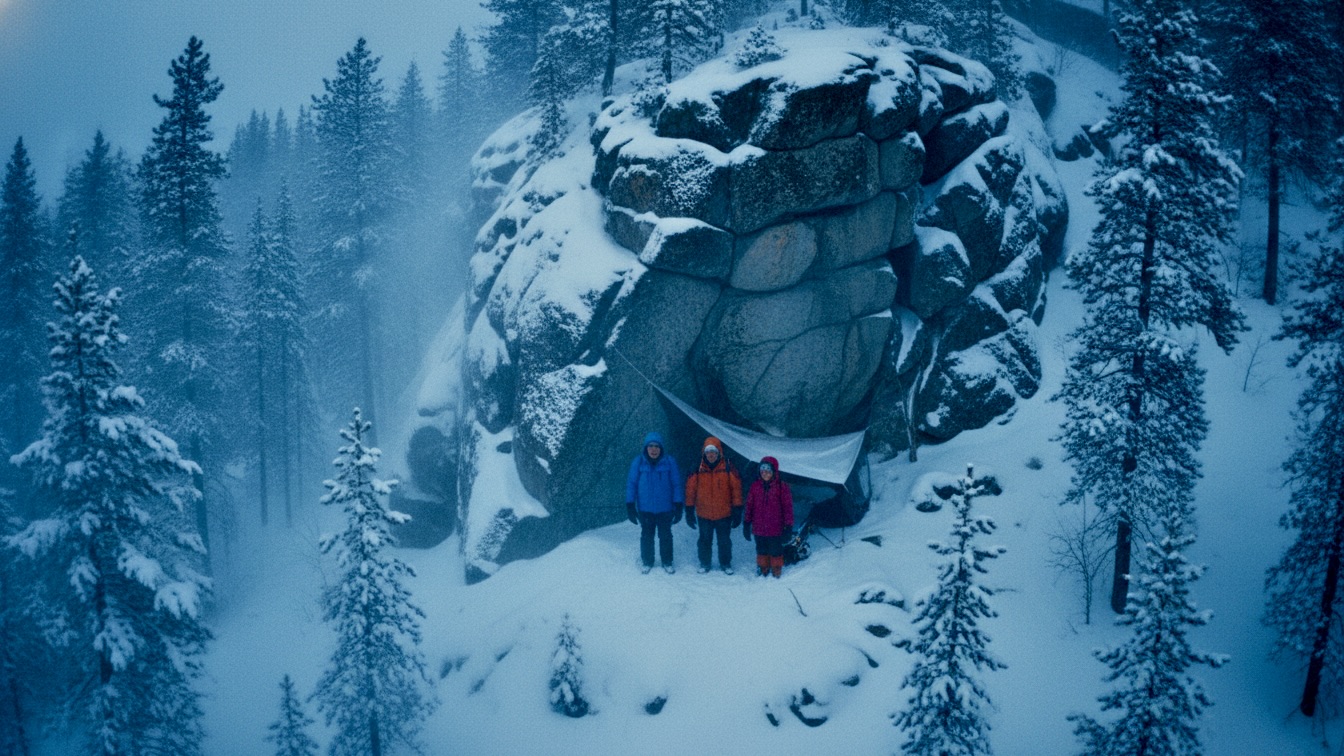
The situation deteriorates rapidly as the cold transforms from an annoyance into a life-threatening predator. Art is forced to confront the terrifying reality that his arrogance has endangered the group. With the trail gone and disorientation setting in, they scramble for shelter under a granite outcropping. The chapter concludes with the trio huddled together against the storm, Art’s pride shattered as he faces the grim consequences of relying on a past that no longer exists.
The central theme of the text is the treacherous nature of nostalgia and the fallibility of memory. The story posits that memory is not a static repository of facts but a fluid, often deceptive narrative that the ego constructs to protect itself. Art does not merely remember a path; he remembers a version of himself—young, capable, and dominant. He superimposes this internal map over the external reality, expecting the mountain to conform to his recollection. The tragedy lies in the disconnect between the immutability of the physical world and the distortion of the psychological one. The "old logger's path" serves as a metaphor for the past itself: overgrown, inaccessible, and ultimately erased by the passage of time.
Parallel to the exploration of memory is the theme of hubris versus nature. The mountain is presented initially as a conquered object, something Art claims to know like the "veins on [his] own hands." He treats the modern safety measures—the blue diamonds, the switchbacks, the map—as insults to his competence. This anthropocentric arrogance is systematically dismantled by the environment. The narrative shifts the power dynamic swiftly; the mountain transitions from a passive setting to an active, hostile antagonist. The storm does not care about Art’s history or his pride, reducing the self-proclaimed expert to a frightened old man huddled in a crevice.
Furthermore, the story examines the conflict between the romanticized past and the pragmatic present. Art represents a rejection of the present, viewing modern conveniences and safety precautions as signs of weakness. He equates suffering and difficulty with authenticity, believing that the "real" mountain is only found through struggle. Nancy, conversely, embodies the pragmatic present, relying on maps, weather reports, and visible markers. The narrative validates her caution over Art’s romanticism. The revelation that the forest was clear-cut in the eighties serves as a brutal intrusion of reality, proving that the world moves on regardless of how tightly one clings to the way things used to be.
Art functions as a tragic protagonist whose internal psychological conflict drives the external plot. He is a man grappling with the indignities of aging, evidenced early on by his struggle with the snowshoe binding and his cracking knees. These physical failings create a cognitive dissonance; his self-image is that of a rugged outdoorsman, yet his body is failing him. To resolve this tension, he projects his frustration outward, criticizing the trail, the equipment, and the "tourist" mentality. His decision to go off-trail is not a navigational choice but a psychological defense mechanism. He needs to prove that he is not like "them," that he still possesses the strength and knowledge of his youth.
His motivation is deeply rooted in a need for validation and dominance. When he convinces Chuck and Nancy to follow him, he feels a surge of satisfaction, noting that "he had him" and relishing the role of the leader. This need for control blinds him to the objective dangers around him. He engages in classic confirmation bias, interpreting the initial physical struggle through the deep snow not as a warning sign, but as a "satisfying" challenge that validates his toughness. He actively suppresses the dissonance when the landscape fails to match his memory, rationalizing the discrepancies until it is too late.
The climax of Art's character arc is the collapse of his ego in the face of the storm. The realization that he is lost is accompanied by the crushing understanding that his memory was a "lie." This moment is psychologically devastating; it is the death of the version of himself he has been trying to resurrect. By the end of the chapter, stripped of his bravado, Art is reduced to a state of "dumb" shock. The shame he feels is described viscerally as a "shard of ice in his gut." He is no longer the hero of his own story but a man paralyzed by the fear that his vanity may cost him and his friends their lives.
The narrative voice employs a close third-person perspective aligned with Art, which is crucial for the story's impact. By filtering the experience through Art’s consciousness, the author allows the reader to inhabit his arrogance and his eventual terror. The sensory details are initially focused on annoyance—the biting binding, the stinging cold—which reflects Art’s irritable mood. As the story progresses, the sensory language shifts to emphasize the overwhelming power of nature. The wind evolves from a "gentle whisper" to a "physical presence" and finally to a "scream," mirroring the escalation of danger.
Pacing is utilized effectively to mirror the psychological state of the protagonist. The early paragraphs are slow and rhythmic, marked by the "shuff-crunch" of the snowshoes and the "lazy" switchbacks. This reflects the boredom and impatience Art feels. When he makes the decision to go off-trail, the pacing accelerates; the sentences become punchier, reflecting his adrenaline and renewed purpose. However, as the storm hits, the narrative becomes chaotic and disorienting. The visibility shrinks, and the descriptions become fragmented—"Rock, tree, snow"—replicating the sensory deprivation and panic of the characters.
The author uses distinct tonal shifts to underscore the thematic arc. The tone begins with a mixture of grumpiness and nostalgic longing, painting Art as a curmudgeon. It swells into unearned confidence and hubris as he takes the lead. The transition to the final tone of dread is sharp and unforgiving. The imagery of the "grey sheet" thrown over the sun signals this shift, draining the color and life from the scene. The final image of the "swirling white" serves as a powerful metaphor for the erasure of Art’s identity and his certainty; he looks for the past but finds only a blank, hostile void.