Melgund Township Winter Story Library
A Single Preserved Snowflake - Analysis
by Jamie F. Bell | Analysis
by Jamie F. Bell | Analysis
The narrative follows Charlie, a young boy driven by desperation and hope, as he struggles to leave his apartment building. Armed with a crude map drawn on a grease-stained paper bag and a glass paperweight containing a preserved snowflake, he ventures into a biting, hostile winter landscape. The map, purportedly left by his absent brother Sam, guides Charlie through a decaying cityscape, past landmarks marked with snowflake symbols that only he seems to understand as a secret code. His journey is physically arduous, marked by ill-fitting boots and a piercing wind that serves as a constant antagonist.
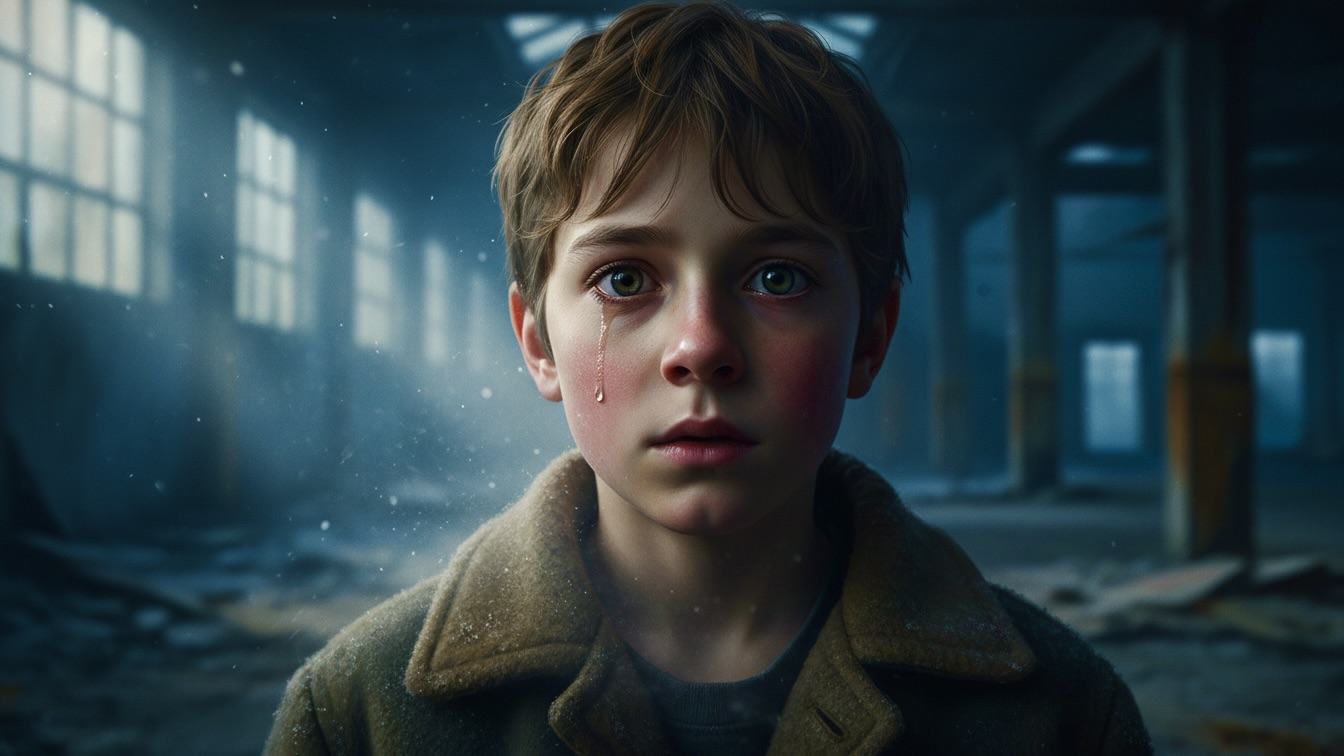
Charlie eventually arrives at a dilapidated warehouse indicated as the final destination on his map. There, he encounters a shadowy, rasping man who claims to be an intermediary for Sam. The stranger demands the glass paperweight—Charlie’s most prized possession and his only tangible link to his brother—as proof of identity. Blinded by the need to reunite with Sam, Charlie surrenders the object. The man seizes the paperweight and disappears into the darkness, leaving Charlie alone in the freezing warehouse, bereft of his anchor and forced to confront a crushing, empty reality.
The central theme of the text is the devastating interplay between the preservation of memory and the inevitability of loss. The glass paperweight serves as a potent symbol of arrested time; inside the glass, the snowflake is perfect, permanent, and immune to the entropy of the outside world. This stands in stark contrast to the setting, which is characterized by decay, rot, and the relentless progression of a harsh winter. The "old wood" of the door, the "crumbly" bricks, and the "garbage and frozen pee" of the alleyways all depict a world that is actively decomposing, unlike the suspended animation of the snowflake.
Furthermore, the story explores the psychology of grief and the destructive power of false hope. The map acts as a manifestation of magical thinking, a psychological defense mechanism where the protagonist believes that ritualistic actions—following the symbols—can alter reality and bring back the lost loved one. The tragedy lies in the exploitation of this innocence. The narrative suggests that the purity of Charlie’s love, represented by the snowflake, is incompatible with the predatory nature of the real world. The exchange at the end is not just a theft of an object, but a transactional loss of innocence where the spiritual is traded for the material, and hope is revealed to be a vulnerability.
Finally, the text examines the concept of isolation within a crowd. Charlie moves through a city that is populated but entirely indifferent to his plight. People hurry past with faces hidden, reducing Charlie to "just another little shape moving through the cold." This reinforces the psychological reality of trauma, which often creates a solipsistic bubble around the sufferer. The physical coldness of the environment mirrors the emotional coldness of a society that fails to protect its most vulnerable members, culminating in the "hole" inside Charlie that mirrors the empty warehouse.
Charlie is characterized by a profound sense of displacement and vulnerability, physically manifested by his "too big" second-hand boots. This detail suggests he is trying to fill a role or navigate a world that he is not yet equipped to handle. He is a child forced into a journey that requires adult bravery, yet he relies on the logic of childhood—codes, secret spots, and talismans—to survive. His internal monologue reveals a deep reliance on Sam, positioning the brother not just as a sibling, but as a primary attachment figure whose absence has destabilized Charlie’s entire world.
Psychologically, Charlie is operating in a state of denial fueled by the bargaining stage of grief. He views the paperweight not merely as a keepsake, but as an "anchor" that keeps him tethered to bravery and to Sam. His willingness to trade this object indicates the severity of his desperation; he is willing to sacrifice the symbol of the bond to restore the actual bond. When he hands over the snowflake, he is stripping himself of his psychological armor. The subsequent realization that "no one was coming back" marks a traumatic breakthrough where the fantasy collapses, leaving him with a psychic void that is "huge and freezing."
The man in the warehouse acts as the shadow archetype, a physical manifestation of the cold, unfeeling world Charlie has entered. He is described in terms of darkness and hardness—"angles," "shadows," and a voice like "rocks grinding." He lacks individuality, serving instead as a predatory force that recognizes and exploits Charlie’s vulnerability. He validates the boy’s delusion about the map only long enough to extract value from him, representing the cruel indifference of reality toward the narratives we construct to comfort ourselves.
The narrative voice is intimate and immediate, utilizing a first-person perspective that limits the reader to Charlie’s sensory experience and cognitive limitations. This technique creates a sense of claustrophobia and heightened tension, as the reader likely understands the danger of the situation before Charlie does. The prose is simple but laden with heavy, tactile imagery. Words like "swollen," "hard," "stiff," and "crumbly" create a texture of resistance and decay. The environment is not just a backdrop but an active aggressor; the wind "slaps" him and steals air from his lungs, emphasizing the hostility of the world toward the protagonist.
Pacing is used effectively to mirror Charlie’s psychological state. The journey to the warehouse is slow and arduous, marked by the physical effort of walking through the snow and the mental effort of decoding the map. This builds a sense of anticipation and creates a false promise of a climax. However, the encounter with the man is rapid and jarring. The swiftness with which the paperweight is snatched—"shot out and snatched"—contrasts with the slow build-up, mimicking the sudden shock of trauma. The ending slows down again, settling into a static, hollow silence that emphasizes the permanence of the loss.
Symbolism is woven deeply into the visual descriptions. The color palette is relentlessly drab—grey snow, dirty plate sky, black shadows—which makes the "glow" of the snowflake in the paperweight the only source of light and beauty in the story. This visual contrast underscores the thematic conflict between the ideal and the real. The "hole" described in the final paragraph is a powerful somatic metaphor, translating emotional emptiness into a physical sensation that aligns with the freezing temperature, effectively merging the internal and external landscapes of the story.