Format: Short Film / Anthology Episode | Est. Length: 10-12 minutes
Imagine a series titled The Gaps, an anthology where each episode uncovers a different "missing" person or forgotten cold case in a decaying Rust Belt town, seen through the eyes of amateur sleuths who find what the authorities overlook. This story serves as a pilot or standalone entry, blending the gritty realism of a police procedural with the modern obsession of digital true-crime culture. The series explores the intersection of digital voyeurism and real-world trauma, highlighting how institutional neglect forces marginalized families to rely on outsiders to find justice in the mud of their own backyards.
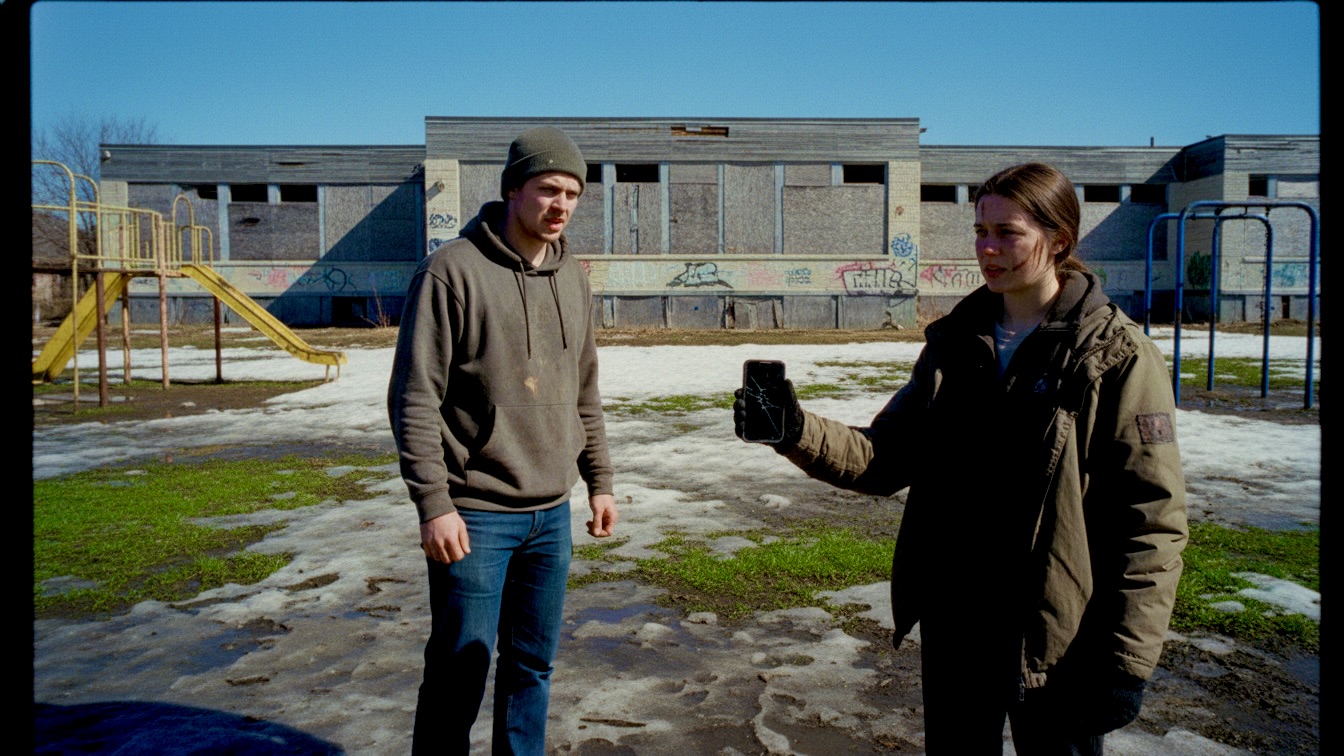
Stacey stands in the freezing mud of an abandoned high school playground, waiting to intercept the brother of a missing girl with a piece of evidence the police missed: a burner phone buried in a snowbank.
An amateur true-crime sleuth risks her reputation to hand over a secret burner phone to the grieving brother of a missing girl. Together, they bypass a negligent police force to unlock a hidden life that could lead to the truth.
The primary theme explores the ethics of true-crime consumption versus the visceral reality of grief. It examines how digital voyeurism—Canva graphics, Reddit threads, and podcasts—clashes with the heavy, muddy reality of a family's loss, questioning whether the "detective" is helping or merely consuming a tragedy.
The secondary theme focuses on institutional neglect and the subversion of the "missing white woman syndrome." It highlights how Indigenous victims are often dismissed as runaways by lazy authorities, forcing those left behind to form desperate alliances with social outcasts to ensure their loved ones are not simply paved over by the town’s apathy.
For Benji, the stakes are absolute: this phone is the final chance to find his sister alive or achieve closure before the trail goes completely cold and the town forgets her name. For Stacey, the stake is her own humanity; if the phone is a dead end, she remains a "freak" who preys on grief for content, but if it works, she becomes the only person in Oakhaven who actually looked for Maya.
The primary external conflict is the systemic apathy of the local police department, which has already written Maya off as a runaway to avoid paperwork. Internally, Benji struggles with the resentment he feels toward Stacey’s hobbyist approach to his tragedy, while Stacey must reconcile her desire for a "solved puzzle" with the terrifying, physical weight of Benji's suffering and the realization that Maya had a dangerous secret life.
In the bleak, muddy thaw of March, Stacey waits at a derelict high school to confront Benji, whose sister Maya has been missing for thirty-four days. Despite Benji’s initial hostility toward Stacey’s internet-sleuth reputation and her "weird internet detective crap," she reveals that she searched the ravine the police ignored and found a discarded burner phone. Stacey challenges the official narrative of the police search, proving that the authorities never descended into the gully where the spring runoff collects lost items.
The tension shifts from a hostile confrontation to a desperate, fragile alliance as they retreat to Stacey’s car to attempt to revive the device. As Stacey meticulously cleans the mud from the charging port and the phone flickers to life, they are forced to confront the reality that Maya was leading a secret life. The episode ends as the screen glows in the dark car, signaling the start of a journey that will take them far beyond the safety of their digital screens and into the heart of a local conspiracy.
Stacey: A socially isolated young woman in her early twenties who finds purpose in true-crime podcasts and digital investigation. She begins as a detached observer treating Maya's disappearance as a logic puzzle to be solved in Canva, but by the end of the episode, she is grounded in the terrifying, physical reality of the case, moving from a voyeur to an active participant in a family's trauma.
Benji: A nineteen-year-old Indigenous man crushed by the weight of his sister’s disappearance and his mother’s collapsing mental state. He starts the story fueled by defensive rage against "internet freaks" who treat his life like entertainment, but he ends in a state of desperate, vulnerable partnership, realizing that the girl he despised is the only one who actually bothered to search the ravine.
The Interception: Stacey waits in the rotting playground of Oakhaven High, her presence a silent challenge to the town's decay as the wind rattles empty swing chains. Benji approaches, exhausted and defensive, attempting to brush past her to avoid another lecture on her "internet detective crap" after a long hardware store shift. Stacey blocks his path, her boots sinking into the mud as she prepares to drop the bombshell that will change the trajectory of the investigation.
The Confrontation: Benji explodes in a fit of righteous anger, accusing Stacey of treating his sister’s life like a school project for her Twitter followers and Reddit threads. Stacey absorbs the verbal assault, acknowledging the cruelty of her digital habits while pivoting to the incompetence of the local police who ignored the ravine. The tension peaks as she describes the physical toll of searching the gully herself, forcing Benji to see her as something more than a digital parasite.
The Reveal: Stacey opens her hand to show the cracked burner phone, a physical piece of evidence marked with a single "M" that contradicts the "runaway" narrative. Benji’s knees buckle as the reality of his sister’s secret life hits him, the anger draining away to reveal a hollow, desperate grief in the freezing slush. They form a silent pact to handle the evidence themselves, knowing the police would only lose or ignore a device belonging to a girl they have already forgotten.
The Revival: Inside Stacey’s cramped, freezing Honda Civic, she uses a sewing needle to meticulously clean the mud from the phone’s charging port while Benji watches in breathless silence. The heater struggles against the cold as they wait for a sign of life, the silence between them thick with the weight of what they might find on the other side of the screen. The episode ends on a high-tension beat as the screen flickers to life, the glowing battery icon illuminating their faces in the dark and confirming that Maya’s secrets are still reachable.
The episode moves from cold, clinical observation to raw, unshielded vulnerability. The audience begins by questioning Stacey’s motives and feeling Benji’s justified anger, but eventually transitions into a shared sense of desperate hope and dread. The final mood is one of "terrifying alliance," where the relief of finding evidence is immediately eclipsed by the fear of what that evidence reveals about the victim.
If expanded, the season would follow Stacey and Benji as they use the burner phone to trace Maya’s final days, uncovering a network of exploitation that the town’s elite have worked hard to hide. Each episode would peel back a layer of Oakhaven’s rot, showing how the school’s asbestos closure and the town's economic decay provided the perfect cover for a series of disappearances that the authorities were paid to ignore.
The character evolution would see Stacey moving from a voyeur to a target, realizing that "solving" a crime has real-world consequences for her own safety. Benji would evolve from a passive victim of the system to a proactive investigator, eventually forced to decide if he wants justice through the law or revenge through the secrets he uncovers on the burner phone.
The visual style is "Rust Belt Gothic," characterized by a desaturated palette of grays, browns, and "diseased" whites. Handheld camera work should emphasize the instability of the characters' lives, with tight, claustrophobic close-ups inside the car to contrast with the wide, lonely shots of the abandoned high school and the skeletal playground equipment.
The tone is somber and grounded, reminiscent of Winter’s Bone or Mare of Easttown. Sound design is crucial, focusing on the "wet squelch" of mud, the "clinking" of swing chains, and the absence of a traditional score, replaced by the low hum of a car heater and the rhythmic pulsing of the phone’s charging light.
The target audience consists of adults and older teens (16+) who enjoy elevated procedural dramas and social thrillers. It specifically appeals to the "true crime" demographic while offering a critical, deconstructive look at the genre's impact on real victims and the ethics of amateur investigation.
The pacing is a "slow burn" that accelerates during the final five minutes of the 10-12 minute runtime. It follows a three-act structure: the confrontation (Act I), the revelation of the burner phone (Act II), and the technical tension of reviving the device in the car (Act III), ending on a cliffhanger that demands an immediate transition to the next chapter.
Location scouting is paramount; the "Oakhaven High" exterior must feel like a character itself, requiring a derelict building with authentic decay and boarded windows. The mud and slush are practical elements that should be enhanced on set to ensure the actors' physical discomfort and the "wet" aesthetic are palpable to the audience.
The burner phone requires a custom prop with a functional LED screen capable of displaying the specific "cracked" light patterns and the pulsing battery icon. Lighting in the car scene should be motivated entirely by the dim yellow dome light and the phone's internal glow to maintain the gritty, realistic aesthetic of a cold March evening.


