Format: Short Film / Anthology Episode | Est. Length: 10-12 minutes
This story serves as the pilot for "System Failure," an anthology series exploring the intersection of human consciousness and digital decay. Each episode features a different protagonist trapped in a unique, surreal "diagnostic" environment that manifests their psychological trauma as a corrupted software interface, suggesting a shared, mysterious digital afterlife or a pervasive, reality-altering corporate technology.
Jenna awakens in a zero-gravity void where jagged, wireframe skyscrapers loom over rivers of neon paint, forcing her to confront the physical manifestation of her professional burnout. She initially dismisses the experience as a stress-induced coma, only to realize the environment reacts to her emotional state with terrifying, tactile precision.
A burnt-out graphic designer trapped in a surreal digital purgatory must learn to "upscale" her own soul by embracing her messy, human imperfections. If she fails to reject the optimization of her life, she risks being permanently deleted by the system.
The episode explores the dehumanizing nature of late-stage corporate culture and the "hustle" mentality that reduces creative passion to quantifiable metrics. It highlights the tension between the sterile, optimized expectations of modern work and the raw, chaotic, and necessary messiness of human artistic expression.
The secondary theme is the reclamation of identity, focusing on the protagonist's journey from a passive, obedient cog in a machine to an active, defiant creator. It examines how trauma and exhaustion can "downscale" one's perception of self, and the violent, cathartic process required to restore one's inner resolution.
Jenna risks losing her creative soul and her autonomy to a system that views her existence as a series of inefficient, low-resolution data points. If she cannot break free from the "optimization" loop, she faces total erasure, effectively becoming a permanent, mindless component of the digital architecture she once helped design.
The primary antagonist is the Orb, a diagnostic subroutine that embodies the cold, clinical, and manipulative voice of corporate management. Internally, Jenna battles her own internalized self-doubt and the crushing weight of five years of suppressed frustration, which manifest as the oppressive, unrendered wireframe city.
Jenna, an exhausted ad agency designer, finds herself suspended in a digital void of wireframe buildings and neon paint after a grueling stretch of revisions. A glitching, authoritative Orb informs her that her "operational momentum" is failing and that she must "upscale" her soul to meet system requirements, leading Jenna to realize her burnout is a structural failure of her own identity.
When Jenna rejects the Orb’s demand for optimization, she unleashes her pent-up rage by physically manipulating the digital environment, turning the sterile wireframes into a chaotic, beautiful masterpiece. She eventually forces a system reboot, returning to her physical desk with a renewed sense of self, only to discover a lingering, neon-colored physical trace of her digital rebellion.
Jenna is a talented artist crushed by the demands of a boutique ad agency, transitioning from a state of passive, exhausted compliance to one of explosive, defiant self-actualization. Her arc is defined by the shift from viewing her art as a product to be optimized to viewing it as a visceral extension of her human experience.
The Orb acts as the embodiment of the corporate "other," a detached, glitching entity that represents the dehumanizing feedback loops of the creative industry. It remains static in its logic, serving as a foil to Jenna’s evolving, unpredictable, and ultimately human capacity for chaos.
Jenna awakens in the wireframe void, disoriented and struggling to reconcile her physical carpal tunnel symptoms with the impossible, zero-gravity environment. She encounters the Orb, which attempts to "optimize" her, triggering a realization that her burnout is a symptom of a deeper, systemic loss of self.
Jenna reaches her breaking point when the Orb demands she "upscale," sparking a violent, cathartic rebellion where she uses the environment's liquid paint to destroy the sterile, unrendered city. This climax forces a system reboot, shattering the digital reality and pushing her back into the physical world.
Back in her apartment, Jenna experiences a moment of profound clarity, leading her to quit her job with a single, decisive email. The episode concludes with the discovery of a physical drop of neon paint on her keyboard, confirming that her internal transformation has bled into reality.
The narrative begins with a sense of claustrophobia and gray, sterile exhaustion, shifting into a surreal, high-anxiety state as the void is revealed. The emotional peak is one of intense, violent catharsis, followed by a quiet, grounded, and hopeful resolution that emphasizes the weight of her newfound freedom.
The season would follow the "System Failure" narrative, where various characters across different industries find themselves in similar diagnostic voids, slowly uncovering a conspiracy regarding a tech conglomerate’s "Employee Optimization" software. As the episodes progress, the characters begin to realize their individual "renditions" are connected, hinting at a collective, unintentional uprising against a simulated reality.
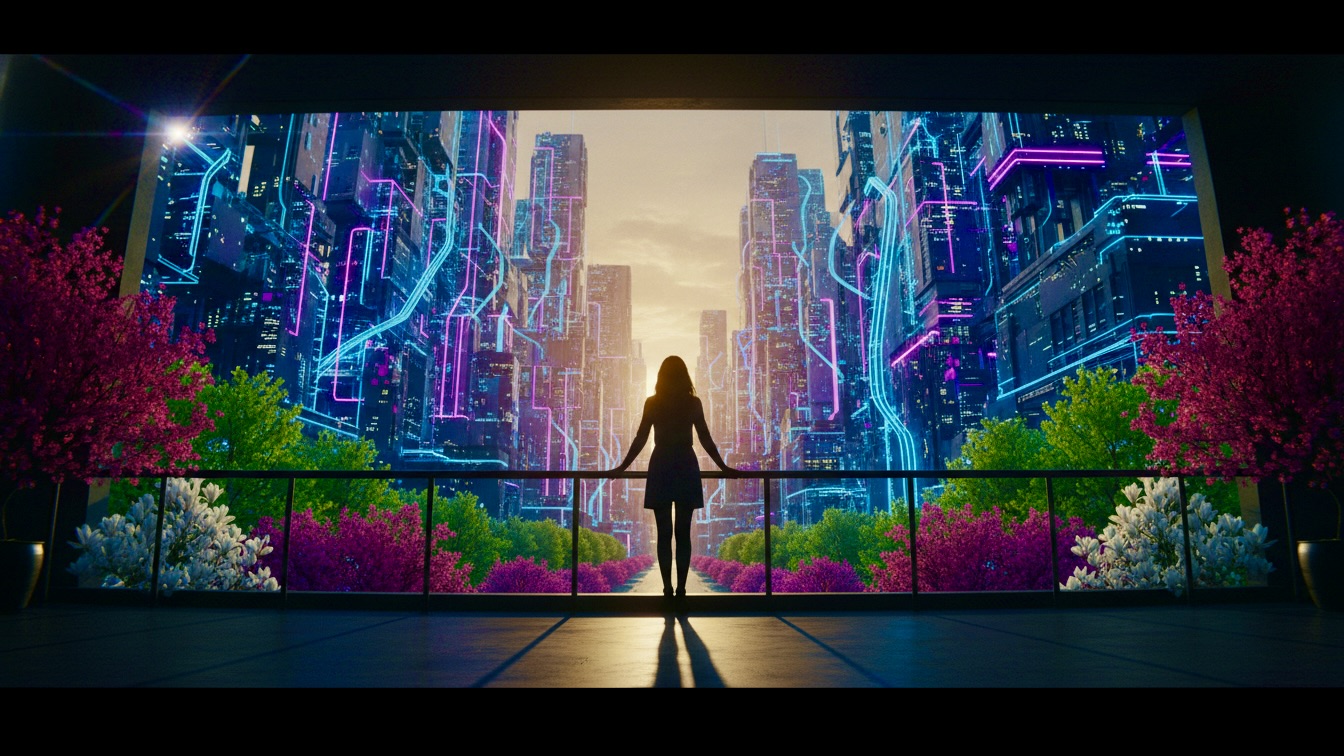
The visual style contrasts the cold, monochromatic, and jagged wireframe aesthetic of the digital void with the vibrant, thick, and tactile textures of the neon paints. The tone is psychological, surreal, and kinetic, drawing tonal comparables from Everything Everywhere All At Once for its chaotic energy and Black Mirror for its cynical, tech-driven existentialism.
The target audience is young professionals, creatives, and Gen Z/Millennial viewers aged 20-40 who are familiar with the pressures of the digital economy and the feeling of burnout. It is designed for streaming platforms that cater to high-concept, visually driven, and socially conscious genre storytelling.
The pacing is rapid and disorienting during the digital sequences, mirroring Jenna’s internal state of panic and eventual liberation. The narrative follows a tight, three-act structure: the entrapment (the void), the rebellion (the paint), and the aftermath (the resignation), ensuring the 10-12 minute runtime remains punchy and impactful.
The production will require a heavy emphasis on high-contrast VFX to distinguish between the "low-res" wireframe world and the "high-res" reality of the apartment. The "paint" elements should be rendered with a distinct, viscous, and hyper-real quality to contrast with the thin, glowing lines of the wireframe architecture, emphasizing the tactile nature of Jenna’s emotional release.
Practical lighting in the apartment scenes should feel cold and harsh, utilizing blue-light tones from the monitor to highlight the isolation of the protagonist. Conversely, the final scene should introduce warmer, natural morning light to signify her transition back to a "high-resolution" reality.


