Format: Short Film / Anthology Episode | Est. Length: 10-12 minutes
This story functions as a pilot episode for The Scavenger’s Loom, an anthology series set in a post-collapse urban landscape where survival is defined by the reclamation of consumer detritus. Each episode explores how the remnants of a hyper-capitalist past—fashion, technology, and branding—become the new currency for warlords and desperate survivors. The series tracks the shifting power dynamics of a city where the "haves" are those who control the most iconic, preserved remnants of the old world.
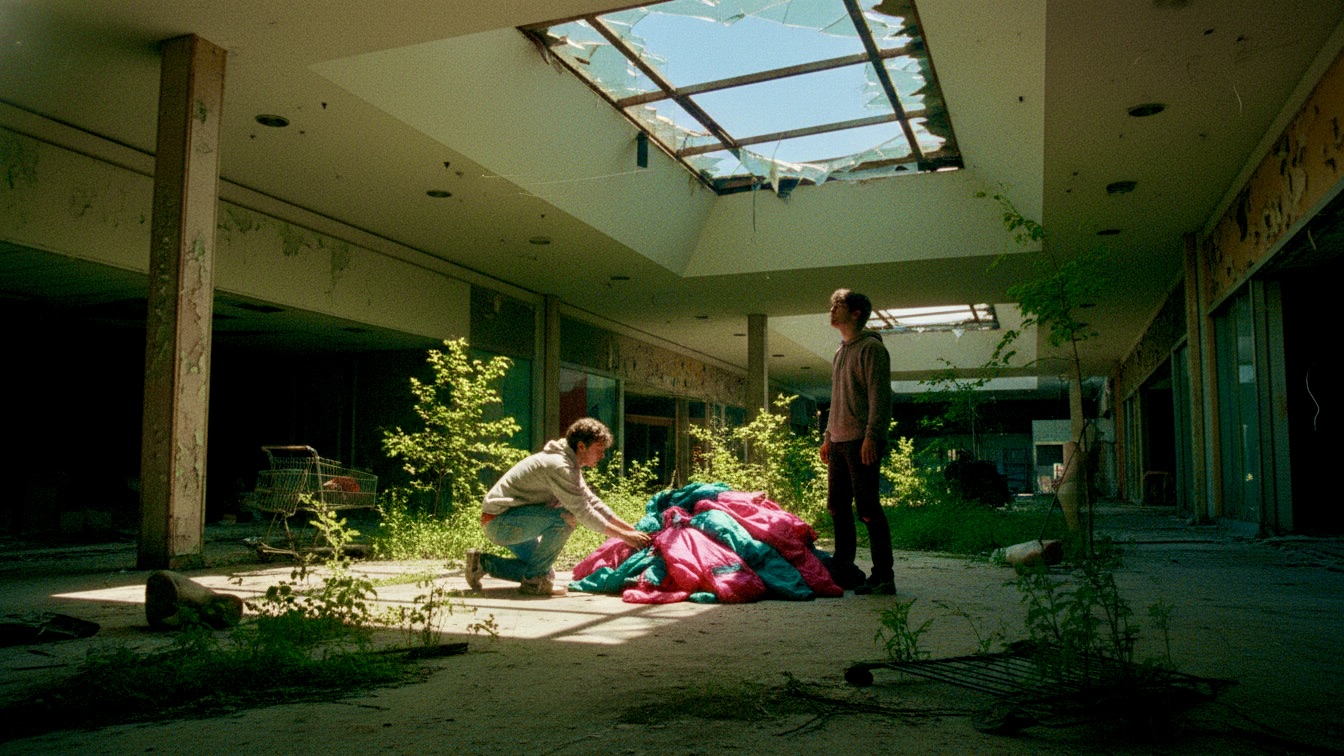
Len and Toby, two struggling tailors in a decaying city, face eviction from their studio as they count a pathetic pile of bottle caps—the only currency their landlord accepts. With rent due tomorrow and nowhere to go, they gamble their lives on a rumor of a sealed cache of pre-collapse apparel hidden deep within a dangerous, scavenged mall.
Two desperate tailors risk their lives to recover a cache of pristine, vintage sportswear in a lawless wasteland. Their discovery forces them to pivot from scavengers to power brokers by selling "style" to a volatile local warlord.
The episode explores the absurdity of value, contrasting the primal need for food and shelter with the human desire for status and identity. It highlights how aesthetic branding can be weaponized as a tool of control, turning useless nylon windbreakers into symbols of authority in a world stripped of meaning.
Beneath the grit, the story touches on the resilience of human creativity and the desperate, often dangerous lengths people go to in order to maintain a sense of self. It questions whether civilization is built on utility or merely on the performance of power through appearance.
For Len and Toby, the stakes are literal survival; failure means homelessness in a city where the streets are controlled by violent, territorial gangs. Beyond their immediate survival, they risk their lives by entering the Starlight Galleria, a death trap of structural instability and rival scavengers, and subsequently by manipulating a warlord who is known for executing those who displease him.
The primary external conflict is the crushing economic pressure of their landlord, Grist, and the lethal volatility of King Riff, a warlord who demands perfection. Internally, Len struggles with the paralyzing fear of his environment versus the manic, high-risk ambition that he and Toby must adopt to escape their cycle of poverty.
Len and Toby are on the brink of ruin, unable to pay their rent in a city where currency is measured in bottle caps. After hearing a rumor about a "dead stock" cache in the gutted Starlight Galleria, they undertake a dangerous trek across gang lines to recover the goods. They find a pristine stash of neon sportswear, a commodity so rare it defies the surrounding decay.
Realizing that selling the clothes for mere caps would be a waste, Len hatches a dangerous plan to leverage the apparel for protection and property. They approach King Riff, a sadistic warlord, and successfully transition from desperate scavengers to the King’s exclusive stylists, securing a new base of operations and a powerful, albeit terrifying, patron.
Len is a pragmatic, cautious tailor who has been ground down by the city's apathy; his arc moves from a state of paralyzing, fearful scarcity to a calculated, ambitious confidence as he realizes he can manipulate the warlord’s vanity. Toby is the impulsive, manic catalyst whose reckless optimism drives the pair forward; he begins as a desperate drifter and ends as a key player in a high-stakes, dangerous business partnership. King Riff is a volatile, fashion-obsessed warlord whose need for status makes him both a dangerous enemy and a lucrative, if unpredictable, client.
The episode opens with the suffocating tension of the studio, where the counting of meager bottle caps establishes the desperate, claustrophobic reality of the protagonists' lives. The midpoint occurs deep in the sub-basement of the Starlight Galleria, where the discovery of the neon apparel shifts the tone from a survival horror trek to a moment of awe-filled, transformative potential. The climax unfolds in King Riff’s neon-drenched throne room, where Len’s gamble to offer "style" instead of goods forces a tense standoff that results in their survival and the acquisition of their new shop.
The episode begins with a heavy, oppressive sense of gray decay and hopelessness, characterized by the dust and the "vicious" glare of the sun. As the characters discover the neon cache, the mood shifts into a vibrant, surreal energy, culminating in the final scene where the characters experience a fragile, hard-won sense of security amidst the ruins.
The season would follow Len and Toby’s rise as the city’s premiere "stylists," navigating the treacherous politics of different warlords who all crave the cache. As they gain power, they must contend with the moral cost of their success, potentially attracting the attention of larger, more dangerous factions who want to control the remaining supply of "pre-collapse" artifacts.
The thematic escalation would move from simple survival to the corruption of power, as Len and Toby realize that by dressing the warlords, they are becoming architects of the city’s violent hierarchy. Their evolution from victims to collaborators will test their friendship and their humanity as they become inextricably linked to the very systems they once feared.
The visual style is "Post-Collapse Neon," contrasting the desaturated, crumbling textures of the ruined city with the jarring, hyper-vibrant colors of the recovered sportswear. The cinematography should emphasize the claustrophobia of the ruins through tight, handheld shots, opening up into wide, saturated frames once the neon apparel is introduced. Tonal influences include the gritty realism of Children of Men blended with the stylized, pop-culture-obsessed aesthetic of Repo Man.
The target audience is young adults and adults (18-35) who enjoy dystopian fiction, dark satire, and character-driven dramas. It appeals to viewers interested in the intersection of subculture, fashion, and societal collapse, suitable for streaming platforms with a penchant for high-concept, gritty anthology storytelling.
The pacing is designed to be relentless and tight, mirroring the characters' panic-driven decision-making. The first act establishes the "ticking clock" of the rent deadline, while the second and third acts accelerate into a high-stakes negotiation, keeping the runtime within a lean 10-12 minutes to maintain maximum narrative tension.
The production relies heavily on the juxtaposition of practical, weathered set design and the "alien" brightness of the neon clothing. The costumes must feel like artifacts—pristine, synthetic, and out of place—requiring careful attention to fabric texture and color grading to ensure they pop against the drab, decaying environment.
Special effects should be minimal, focusing on the sensory details of the environment—the sound of the zipper, the rustle of the nylon, and the flicker of blacklights—to ground the surreal elements of the story in a tactile, believable reality. The "Starlight Galleria" set should feel like a cathedral of trash, utilizing verticality and shadows to emphasize the danger of the scavenged space.


