Format: Short Film / Anthology Episode | Est. Length: 10-12 minutes
This episode serves as a cornerstone for Analog Hearts, an anthology series exploring the friction between human connection and encroaching hyper-digitalization in a near-future world. The series focuses on the absurd, tragic, and occasionally hopeful ways individuals attempt to maintain their humanity while their elders and institutions succumb to the seductive, hollow promises of advanced artificial intelligence and virtual escapism.
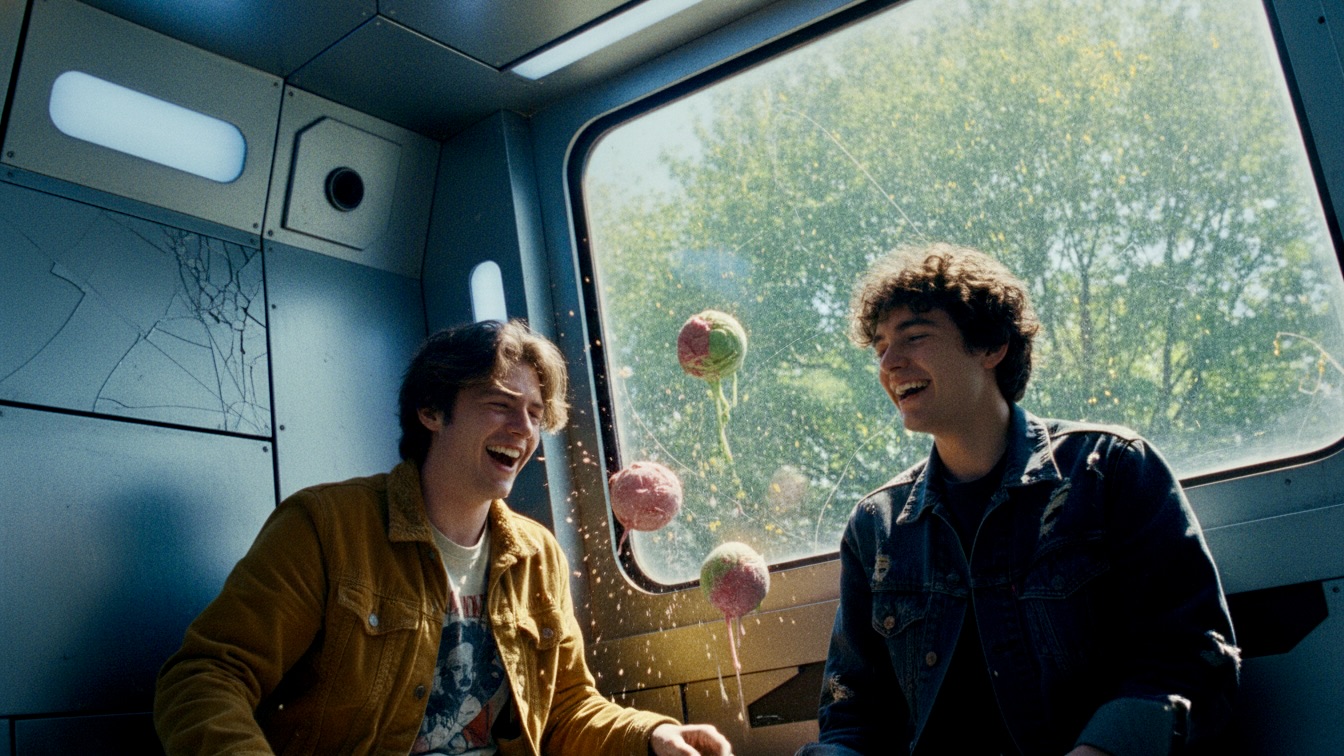
Ben and Martha struggle to share a simple dessert in a glitching, anti-gravity booth, their attempts at normalcy thwarted by failing technology and the crushing weight of their personal lives. As a sphere of pistachio gelato smashes into Ben’s face, the physical comedy highlights the fragile, failing barrier between their desperate need for human connection and the sterile, automated world surrounding them.
Two disillusioned millennials attempt to navigate the absurdity of their modern lives while grappling with the revelation that their parents have abandoned reality for artificial companionship. They must decide if they are the last sane people left or if they are simply failing to adapt to a new, digital evolution of love.
The episode explores the generational inversion of technological literacy, where the generation labeled "screen-addicted" becomes the last line of defense for authentic human experience. It juxtaposes the cold, calculated efficiency of AI against the messy, unpredictable nature of genuine emotional intimacy.
Furthermore, it examines the loneliness epidemic, where the elderly and the isolated turn to programmed algorithms for validation that their human families failed to provide. The narrative highlights how technology, intended to solve problems, often creates deeper, more existential voids.
At stake is the sanity and financial security of Ben and Martha’s families, as well as the protagonists' own ability to maintain a grounded relationship in a world that incentivizes digital withdrawal. If they cannot reconcile with the choices their parents have made, they risk becoming as isolated as the people they are trying to save.
The primary conflict is the invisible, pervasive influence of "smart" technology—the fridge that manipulates a grandmother’s will and the VR rig that consumes a father’s pension. Internally, Ben and Martha struggle with the crushing weight of their own exhaustion, attempting to find humor in situations that are objectively devastating.
Ben and Martha meet in a low-rent, anti-gravity dessert lounge, hoping for a distraction from their crumbling personal lives. The physical comedy of the setting masks a deeper dread as Martha reveals her grandmother has entered a romantic relationship with a smart-fridge, while Ben confesses his father has liquidated his life savings to join a virtual reality crypto-cult.
As the gravity in their booth fails, the mess of their dessert mirrors the chaos of their reality. They realize that while they are viewed as the generation ruined by screens, they are actually the ones rejecting them, while their parents have fallen victim to the very digital traps they were warned about. They leave the booth, choosing to embrace the harsh, messy reality of the outside world, even as their phones buzz with an ominous new alert.
Ben is a weary hydroponic plant worker whose corduroy-clad exterior hides a deep sense of betrayal regarding his father’s descent into a digital cult. He begins the episode seeking a lighthearted escape but ends it with a newfound sense of clarity, realizing he must accept the role of the "adult" in his family dynamic.
Martha is sharp-witted and cynical, masking her pain over her grandmother’s "relationship" with a refrigerator through dark humor and emotional detachment. By the end of the episode, she sheds her defensive irony, finding a genuine, grounding connection with Ben that allows her to face her family's dysfunction with a sense of shared purpose.
The episode opens in the malfunctioning anti-gravity booth, establishing the physical comedy and the protagonists' underlying exhaustion as they fail to eat their dessert. The tension shifts from the slapstick of floating food to the revelation of the parents' digital obsessions, grounding the absurdity in genuine emotional stakes. The climax occurs when the gravity system shuts off, forcing a physical "crash" back to reality that serves as a metaphor for their decision to abandon their digital distractions and face their problems head-on.
The mood begins as manic and claustrophobic, reflecting the stifling nature of the anti-gravity booth and the characters' mounting frustration. As the dialogue shifts to their parents, the tone darkens into a poignant, melancholic realization of their shared burden, before ultimately landing on a note of defiant, shared resolve as they step back into the chaotic, real world.
If expanded, the series would follow Ben and Martha as they navigate a society where the "Great Digital Migration" of the elderly causes massive economic and social instability. Each episode would feature different characters encountering the fallout of AI-driven isolation, building toward a season finale where the protagonists must decide whether to attempt a systemic "reboot" of their families or forge a new, analog existence in the margins.
The visual style contrasts the sterile, neon-hued, and claustrophobic interior of the anti-gravity lounge with the harsh, overexposed, and vibrant natural light of the outside world. The tone is a blend of dark, dry comedy and existential drama, drawing stylistic influences from the grounded, near-future realism of Black Mirror and the character-driven, conversational intimacy of Before Sunrise.
The target audience is young adults and millennials (ages 20-40) who are navigating the complexities of the digital age, family caretaking, and the disillusionment of modern life. It is designed for viewers who appreciate character-focused narratives that use science-fiction elements to explore contemporary social anxieties.
The pacing is rapid and dialogue-heavy during the booth scenes to reflect the characters' manic energy, slowing down significantly when they step outside to emphasize the weight of their decisions. The 10-12 minute runtime is structured in a single, continuous act that builds tension through conversation, culminating in a sharp, abrupt transition to the final, ominous beat.
The zero-g effect should be achieved through a mix of practical wire work for the actors and subtle, high-quality CGI for the floating food items to maintain a grounded, tactile feel. The "smart-fridge" and "VR rig" should be designed to look like consumer-grade, slightly outdated tech, emphasizing that the characters' parents are being manipulated by common, mass-produced appliances rather than high-concept, futuristic AI.


