Format: Short Film / Anthology Episode | Est. Length: 10-12 minutes
Imagine a world where the fabric of reality is as thin as a film of pollen on a puddle, where internal trauma manifests as physical, environmental glitches. This episode serves as a cornerstone for The Glitch Archive, an anthology series exploring characters who perceive "hardware failures" in the natural world triggered by profound grief or neurodivergence. In this universe, the mundane landscape of small-town America becomes a high-definition projection screen for the subconscious, forcing residents to navigate a reality that is literally breaking under the weight of their unaddressed emotions.
A teenage boy stands paralyzed at a muddy town festival, watching a "low frame-rate" world through eyes that see a dead man’s fishing stories projected in high-definition across the surface of a toxic yellow puddle.
In the wake of his grandfather’s death, a boy perceives the world as failing software during a surreal neon-pollen storm. He must choose between the cold clarity of reality and the comforting, glitchy fictions of a man who never told the truth.
The episode explores the intersection of grief and sensory perception, framing emotional trauma as a technical "hardware failure" of the human mind. It utilizes the metaphor of digital glitches—stuttering frame rates and unrendered textures—to illustrate the isolation of neurodivergence and the overwhelming nature of loss.
Additionally, the story delves into the power of the "noble lie" and the legacies we inherit. It questions whether the fictions passed down by our elders are burdens to be cleared away or necessary filters that make a harsh, muddy world inhabitantable.
For Norman, the stakes are entirely psychological and existential; he risks a permanent break from shared reality as his brain's "bandwidth" is consumed by the projections of his late grandfather. If he cannot reconcile the "filth" of the physical world with the "cinema" of his memories, he will remain a social pariah, trapped in a state of sensory overload that prevents him from ever moving past his grief.
The primary conflict is internal, pitting Norman’s need for emotional processing against a sensory environment that has become hostile and "glitchy." Externally, he is opposed by Mrs. Pendler, who represents the rigid, judgmental standards of the "normal" world. She acts as a sensory irritant—her crinkling jacket and sharp voice serving as a needle that constantly threatens to pop the fragile bubble of Norman’s internal reality.
Norman attends the "Weather Whimsy Festival," a town event celebrating the muddy transition to spring, while suffering from a sensory processing disorder triggered by the death of his grandfather, Art. The air is thick with a neon yellow pollen that turns the slush into toxic-looking waste and creates high-definition projections of Art’s legendary tall tales in the puddles. While the townspeople see only mud and "tree-snot," Norman sees a prehistoric pike and a fishing rod made of light, struggling to maintain his grip on the present as his brain "stutters" through the visual frame rate of the world.
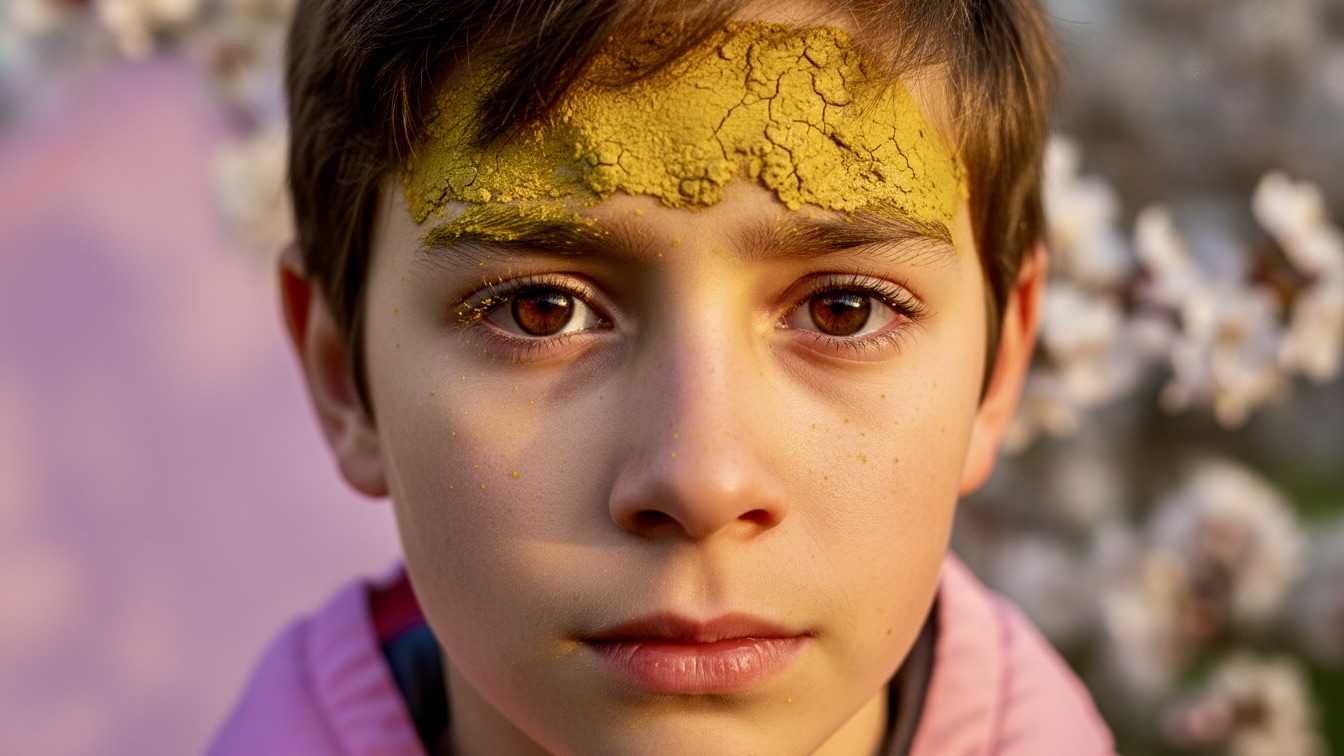
The tension breaks when a localized pollen tornado erupts, a "glitch" in the weather that lifts Norman’s bike and carries it toward a desolate line of trees known as Hope Row. Chasing the bike through a thick atmosphere that tastes of Art’s cheap tobacco, Norman finds a final projection of his grandfather in the mud—a face that distorts into a digital crown. Despite Mrs. Pendler’s fearful pleas for him to come away from the "bad air," Norman embraces the vision. He crowns himself with the yellow muck, finally accepting that while his grandfather’s stories were lies, they are the only medium through which he can process his love and his loss.
Norman: A neurodivergent teenager whose grief has manifested as a "software glitch," causing him to experience the world with a stuttering frame rate and digital artifacts. At the start, he is paralyzed and overwhelmed by the "bandwidth" of his environment; by the end, he achieves a state of empowered acceptance, choosing to inhabit his "glitched" reality rather than fight it.
Mrs. Pendler: A local busybody in a crinkling pink windbreaker who serves as the episode’s grounded, albeit abrasive, antagonist. She begins the story as a map of judgment, viewing Norman’s behavior as a mere "episode," but ends in a state of genuine fear as she witnesses a level of reality she cannot perceive or control.
Grandpa Art (Vision): A big, calloused man who exists only in the "pollen projections" and Norman’s memory. He is the source of the "noble lies" that haunt Norman, appearing as a mischievous figure who continues to distort the world even from the grave.
Norman stands at the festival, his brain "stuttering" at a low frame rate while neon yellow pollen coats the SUVs and melting snow. He discovers a rectangular puddle where the yellow film acts as a projection screen, showing his dead grandfather Art holding a fishing rod made of light. Mrs. Pendler interrupts his trance with sharp remarks about the "filth," but Norman remains fixated on the prehistoric pike swimming in the mud.
A sudden, localized pollen tornado erupts, lifting Norman’s bike into the air like a poorly rendered CGI object and carrying it toward the edge of the park. Norman chases the bike to Hope Row, where the air becomes thick with the impossible smell of Art’s cheap tobacco and fish scales. He finds his bike in the mud and sees Art’s face in a puddle, grinning with yellowed teeth as the image distorts into a digital-looking crown.
Mrs. Pendler arrives, her judgment replaced by fear as she begs Norman to leave the "bad air," but he insists the dust makes things clear. In a moment of catharsis, Norman scoops up the yellow muck and presses it to his forehead, crowning himself with the physical remains of his grandfather's lies. Norman stands tall, the mud drying on his skin, finally finding comfort in the "cinema" of his grief as the tobacco scent surrounds him like a hug.
The episode begins with a sense of cold, clinical detachment and sensory overload, mirroring Norman’s "glitched" mental state. As the pollen tornado hits, the mood shifts into surrealist horror and chaos, creating a peak of high anxiety for both the character and the audience. The finale transitions into a "warm" surrealism, where the initial "toxic" yellow becomes a golden, comforting hue, leaving the audience with a sense of bittersweet resolution and psychological triumph.
If expanded, the season would follow Norman as he realizes the "Weather Whimsy" event was not an isolated incident but the first of many "environmental leaks" in the town. He would begin to encounter other residents—the "Glitch-Seers"—who each perceive different technical failures in reality based on their own unresolved traumas.
The overarching narrative would involve the town’s struggle to suppress these manifestations as the "glitches" become more frequent and public. Norman would eventually lead a small group of outcasts to uncover the source of the anomalies, discovering that the town was built on a site where the boundary between memory and matter has been permanently compromised.
The visual style is "Digital Surrealism," utilizing high-contrast colors—specifically the toxic neon yellow of the pollen against the drab grays of a late-March thaw. The camera work should feature variable frame rates, subtle digital artifacts, and "pixel-sorting" effects in the puddles to mimic Norman’s perspective, creating a "glitch-core" aesthetic that feels both modern and haunting.
The tone is a blend of magical realism and psychological drama, comparable to the grounded weirdness of Tales from the Loop mixed with the sensory intensity of Punch-Drunk Love. It avoids traditional "horror" tropes in favor of an atmospheric, "uncanny" feeling that emphasizes the beauty within the breakdown of reality.
The target audience includes fans of speculative fiction and psychological dramas, specifically the 16–34 demographic who appreciate "weird fiction" and anthology series like Black Mirror. It also appeals to viewers interested in neurodiversity and unconventional portrayals of mental health, offering a visual language for experiences that are often difficult to articulate.
The pacing is deliberate and atmospheric, starting with a slow, observational tempo that mirrors Norman’s stuttering perception. The middle act (the pollen tornado) accelerates sharply into a frantic, high-energy sequence, before settling into a heavy, resonant finale at Hope Row. The 10-12 minute runtime allows for a focused character study that prioritizes visual storytelling over heavy dialogue.
The "pollen tornado" and "puddle projections" require a sophisticated blend of practical wind effects and high-end VFX to ensure the "glitches" look intentional and high-definition rather than low-budget. The yellow dust should be treated as a character itself, requiring careful color grading to maintain its "neon" quality without washing out the actors.
Sound design is critical to the episode’s success; the "crinkling" of Mrs. Pendler’s jacket should be hyper-real and irritating, while the "glitch" moments should be accompanied by bit-crushed environmental audio. The transition from the sharp, digital sounds of the festival to the warm, analog hum of the tobacco-scented finale will be the key to the episode's emotional resolution.


