Format: Short Film / Anthology Episode | Est. Length: 10-12 minutes
This episode serves as a standalone entry in a speculative anthology series titled The Analog Threshold, which explores the fragile psychological tether between modern humanity and the digital grid. Each episode drops urban characters into extreme, stripped-down environments where the sudden absence of technology forces an existential confrontation with their own survival instincts and latent anxieties.
Steve clicks a striker over a fuel-starved Coleman stove, the spark illuminating a desolate, freezing campsite as the realization sets in that their only source of heat is dead. The silence of the mountain basin, devoid of digital noise, immediately begins to press down on the trio like a physical, suffocating weight.
Three screen-dependent friends on a "digital detox" camping trip find their sanity unraveling when a simple fuel failure leaves them stranded in the freezing wilderness. As the darkness deepens, they are forced to confront the terrifying reality of their own helplessness in a world without connectivity.
The episode explores the theme of "digital atrophy," examining how constant connectivity has eroded human self-reliance and our ability to cope with raw, uncurated reality. It highlights the tension between the curated comfort of the city and the indifferent, brutal honesty of the natural world.
Beyond survival, the narrative probes the existential dread of isolation, questioning whether modern identity is merely a performance maintained by the "feed." The story suggests that when the screen goes black, the resulting void is not just a lack of entertainment, but a terrifying confrontation with the self.
The characters face the immediate physical risk of hypothermia and exposure in an unforgiving spring landscape, but the higher stakes are psychological. They risk a complete breakdown of their social cohesion and the shattering of their illusions regarding their own competence and maturity.
The primary conflict is internal—a battle against learned helplessness and the withdrawal symptoms of a society addicted to dopamine-loop feedback. Externally, the antagonistic force is the environment itself; the indifferent, freezing wilderness acts as a mirror that reflects their inadequacy, culminating in a night of paranoia where the woods themselves seem to threaten their fragile existence.
Steve, Sam, and Nancy arrive in the Basin for a planned digital detox, but the trip quickly turns sour when they discover their fuel supply is empty, leaving them unable to cook or heat their campsite. As the temperature drops and the woods fall into an oppressive, heavy silence, the trio’s inability to cope without digital distractions leads to mounting tension and a shared sense of existential failure.
As night falls, the vulnerability of their canvas shelter becomes the focal point of their anxiety, especially when an unexplained noise outside triggers a state of near-hysterical paranoia. After a sleepless night of shivering and fear, the dawn brings a cold, hollow relief, and they retreat to their car, instantly reverting to their digital addictions the moment they are back in the safety of the grid.
Steve: The self-appointed leader who feels the weight of responsibility for the group's failed experiment. He begins as a confident organizer and ends as a man haunted by the realization of his own fragility, struggling to reconcile his city-bred competence with the harsh reality of the wild.
Sam: A tech-addicted cynic who treats the loss of his phone as a bereavement. He transitions from mocking, flat-toned pessimism to genuine, raw terror when the silence of the woods forces him to face his own lack of survival skills.
Nancy: The catalyst for the trip who sought a "reset" for her dopamine receptors. She begins as a manic, shivering participant and ends as a traumatized survivor, her initial desire for a detox replaced by a desperate, silent longing for the comfort of the radiator and the grid.
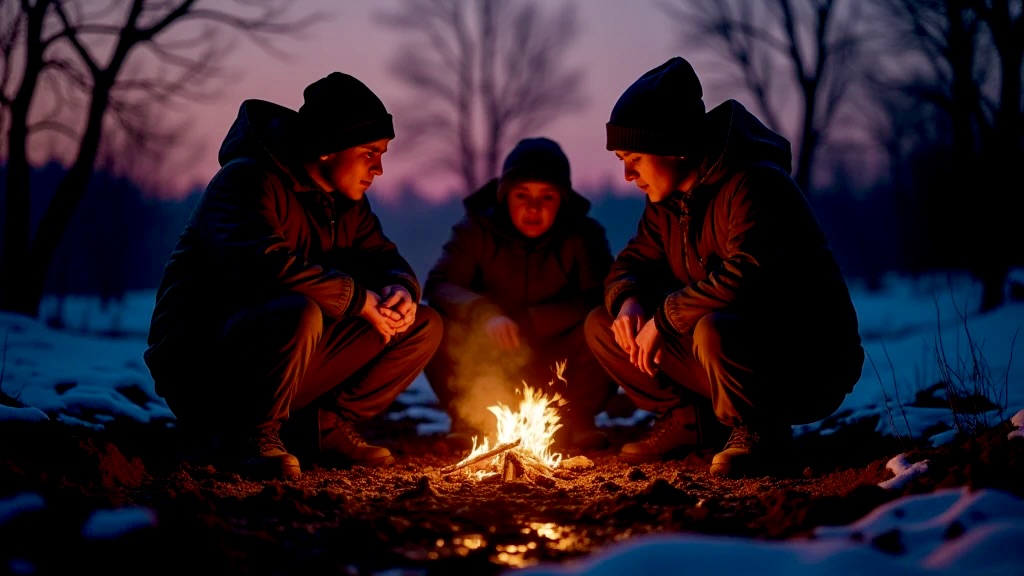
The trio discovers the empty fuel can and the realization that their stove is useless, setting the stage for their descent into cold and frustration. The campfire struggle serves as the midpoint, where their inability to coax heat from the damp wood highlights their total lack of primitive survival proficiency. The climax occurs when a mysterious sound outside the tent forces Steve to confront the darkness, revealing that the "threat" is less about a physical predator and more about their own paralyzing fear of the unknown.
The emotional trajectory moves from initial irritation and mild discomfort to a creeping, pervasive dread, finally settling into a hollow, melancholic resignation. The audience experiences a claustrophobic shift as the vast, open woods are narrowed down to the suffocating, dark interior of the tent, creating a sense of being trapped in a void.
If expanded, the season would follow different groups of people as the "digital grid" experiences intermittent, unexplained outages across the country. The overarching arc tracks the slow, creeping realization that the infrastructure is failing, with each episode showing characters at different stages of the collapse, moving from denial to a desperate, often futile, attempt to adapt to a world that no longer provides a safety net.
The visual style is stark and desaturated, emphasizing the "bruised" purple and charcoal tones of the late-April wilderness. The camera work is intimate and handheld, creating a sense of unease and physical proximity, with lighting that relies heavily on the sickly, flickering yellow of a dying flashlight and the cold, blueish glow of smartphone screens.
The target audience is young adults and professionals (ages 18-35) who are deeply integrated into the digital world and would find the premise of a "forced disconnect" both relatable and deeply unsettling. It is designed for viewers who enjoy psychological thrillers and "survival" dramas that prioritize character study over action.
The pacing is slow and deliberate, designed to mirror the agonizing passage of time when one is cold and bored. The narrative structure follows a linear progression through one long, grueling night, allowing the tension to build through silence and dialogue rather than rapid-fire editing or traditional action sequences.
The production will require a high level of attention to sound design, as the "silence" of the woods must feel like a character in itself, punctuated by the sharp, jarring noises of nature that trigger the characters' paranoia. Practical effects will focus on the tactile elements of the cold—the condensation on the tent walls, the soot-stained hands, and the visible breath—to ground the audience in the physical reality of the characters' suffering.
The tent interior should be designed to feel increasingly cramped and claustrophobic as the night progresses, utilizing tight framing to emphasize the characters' lack of personal space. The contrast between the "natural" lighting of the woods and the "artificial" blue light of the phones must be stark and jarring to emphasize the thematic divide between the two worlds.


