A brutalist concrete lab on a deserted campus. Fluorescent hum. The smell of ozone and disinfectant. Weekend isolation.
“Jerry, would you kindly cease that incessant tapping? It is dismantling my focus.”
Jerry froze. His finger hovered over the glass surface of the smartphone, the screen cracked in the upper right corner like a spiderweb caught in a freeze. He hadn't realized he was doing it. A nervous tic. Tap, tap, tap against the Gorilla Glass. He looked up. Tina was staring at him from across the black resin workbench. She looked severe. She always looked severe, but under the harsh fluorescent strips of the Biology department, she looked like a judge in a kangaroo court.
“My apologies,” Jerry said. The words felt heavy in his mouth. “The silence is… palpable. It requires percussion.”
“The silence is necessary,” Tina corrected. She adjusted her safety goggles, pushing them up the bridge of her nose. “We are observing cellular mitosis in real-time. We require absolute stillness. The atmosphere must remain sterile.”
“The atmosphere is dead,” Maria said. She was sitting on a stool near the fume hood, her back to them. She hadn’t moved in twenty minutes. Her voice was floaty, detached, as if she were narrating a dream. “Can you not feel it? The air pressure has dropped. Significantly.”
Jerry looked at the digital clock on the wall. 2:14 AM. The red numbers seemed to bleed slightly into the surrounding darkness of the room. Outside the wall of windows, the campus was a black void. No streetlights. No moon. just the reflection of the lab, trapping them inside. Spring in this part of the state was wet and dark, the kind of season that rotted wood and dampened spirits.
“You are being dramatic, Maria,” Tina said, though she didn't look away from her microscope. “It is merely the HVAC system cycling down for the weekend. Conservation of energy. A standard protocol.”
“Standard protocol,” Jerry muttered. He put his phone face down. The back of the case was greasy. He needed to wash his hands. He felt a layer of grime on his skin, the specific kind of filth that comes from sitting in a climate-controlled room for fourteen hours. “I am going to procure hydration. The vending machine on the third floor creates a decent coffee simulation.”
“Make it quick,” Tina said. “We have a window of observation that is rapidly closing. If the cultures destabilize before we document the growth rate, this entire weekend becomes a monument to wasted effort.”
“I shall return with haste,” Jerry said, standing up. His knees popped. The sound was loud in the quiet room.
He walked to the door. The lab was cold. Not just air-conditioned cold, but deep-freeze cold. The kind of chill that settles in the marrow. He grabbed the handle. It was stainless steel, cold enough to burn. He pulled. The heavy door swung open with a pneumatic hiss that sounded too much like a gasp.
Jerry stepped into the hallway.
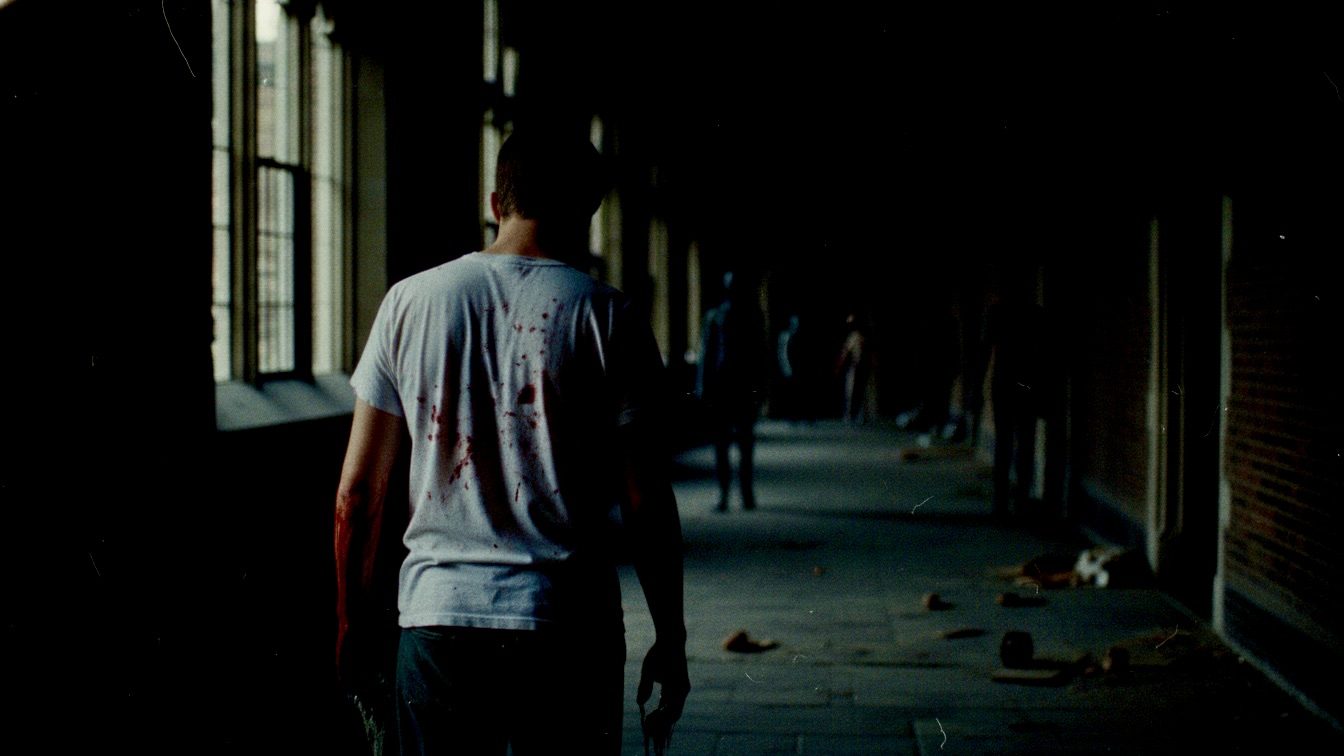
The Science Block was built in the seventies. Brutalist architecture. Raw concrete walls, exposed pipes, linoleum floors that squeaked even when you tried to be stealthy. During the day, it was a hive of activity. At 2:15 AM on a Saturday, it was a tomb.
The hallway stretched out to his left and right. Long. Impossible. The lights were on motion sensors, but the sensor at the far end was broken, leaving a pool of darkness that seemed to be creeping closer.
Jerry walked toward the stairwell. His sneakers squeaked. Squeak. Squeak. The rhythm annoyed him. He tried to walk softer, rolling his weight from heel to toe, but the silence amplified everything. He could hear the hum of the electricity in the walls. A low, thrumming vibration. It felt like the building was digesting something.
He reached the stairwell door. He pushed. Locked.
Jerry frowned. He tried again, shoving his shoulder against the crash bar. It didn't budge.
“Wonderful,” he whispered. “Truly exceptional security measures.”
He checked his phone. No signal. The Wi-Fi icon was grayed out. That was weird. The campus network was supposed to be omnipresent. He felt a prickle of irritation start at the base of his neck. He turned back toward the elevators.
The elevator panel was dark. He pressed the button. Nothing. He pressed it again, harder.
“Come on,” he hissed. “Do not be difficult.”
The building didn't answer. The silence in the hallway felt heavier now. It wasn't empty silence. It was the silence of a held breath. Jerry looked down the corridor, toward the darkness at the far end. Was it just him, or was the darkness closer than it had been a minute ago?
He squinted. The shadows weren't static. They were undulating slightly, like heat haze, but the air was freezing.
Paranoia. That’s what this was. Sleep deprivation and caffeine withdrawal. His brain was misfiring. He needed to get back to the lab. Back to the light. Back to Tina’s annoying, grounding authority.
He turned and walked back. Faster this time. He didn't care about the squeaking shoes. He just wanted to be behind the heavy door.
He reached the lab. He grabbed the handle.
It wouldn't turn.
Jerry’s heart skipped a beat. A physical thud in his chest. He jiggled the handle. Locked.
“Tina?” he called out. His voice sounded thin in the concrete echo chamber. “Tina, the door is jammed. Open it up.”
No answer.
He knocked on the small rectangular window set into the door. It was reinforced glass with wire mesh running through it. He pressed his face against it, shielding his eyes from the hallway glare with his hands.
Inside, the lab looked normal. He could see Tina at the microscope. Maria was still on the stool.
“Tina!” he yelled, banging his fist on the glass. “Maria! Open the door!”
They didn't move. They didn't even flinch. It was like they couldn't hear him. Or worse, like they were ignoring him.
Jerry stepped back, his breath coming faster. He checked his phone again. Still no signal. 2:18 AM.
He looked down the hall. The darkness at the end was definitely closer. It had swallowed the water fountain. It was about thirty feet away now. A wall of black. Not absence of light. Presence of black.
“Okay,” Jerry said to himself. “Okay. Rational assessment. The door is soundproofed. They are focused. The lock engaged automatically. You have a keycard.”
He patted his pockets. Jeans. Hoodie. Back pockets.
Empty.
His keycard was on the workbench next to his cracked phone.
“Exquisite,” he muttered. A flush of hot panic washed over him, contrasting with the cold air. “Simply exquisite planning, Jerry.”
He looked at the window again. Tina moved. She turned her head, looking toward the door. Jerry waved his arms.
“Tina! Here! Open the damn door!”
Tina looked right at him. Her expression was blank. She stared directly into his eyes, through the wire mesh. Then, she turned back to the microscope.
Jerry felt cold water trickle down his spine. She had seen him. She had looked right at him. And she had done nothing.
Why?
Because she didn't see him? Was the glass one-way? No, that was absurd. It was standard safety glass.
Unless…
Jerry looked down the hall. The darkness was twenty feet away.
He heard a sound coming from the blackness. A wet, sliding sound. Like raw meat being dragged across concrete.
Slap. Drag. Slap. Drag.
His flight response kicked in. Hard. It bypassed his brain and went straight to his legs. He bolted in the opposite direction, away from the lab, away from the encroaching dark, toward the East Wing connection.
He ran. His sneakers slapped the linoleum. He didn't care about the noise anymore. He just wanted distance.
He reached the corner and skidded around it, grabbing the wall for balance. The concrete scraped his palm. He sprinted down the East corridor. This hallway was lined with faculty offices. Closed doors with frosted glass windows. Names he knew. Dr. Aris. Professor Liang.
He stopped at Dr. Aris’s door. He tried the handle. Locked. He pounded on the wood.
“Is anyone there? Hello?”
Silence.
He kept moving. The air was getting colder. He could see his breath now, puffing out in white clouds that lingered too long in the stagnant air.
He needed a plan. He couldn't just run around the fourth floor all night. The elevators were dead. The stairs were locked. The lab was… compromised.
There was a janitor's closet near the restrooms. Maybe it was unlocked? Maybe there was a weapon? A mop handle? Anything.
He reached the restrooms. The door to the closet was slightly ajar. Thank god.
Jerry slipped inside and pulled the door shut, engaging the deadbolt. He leaned back against the door, sliding down until he hit the floor. He was in darkness now, smelling of industrial lemon cleaner and wet mop heads.
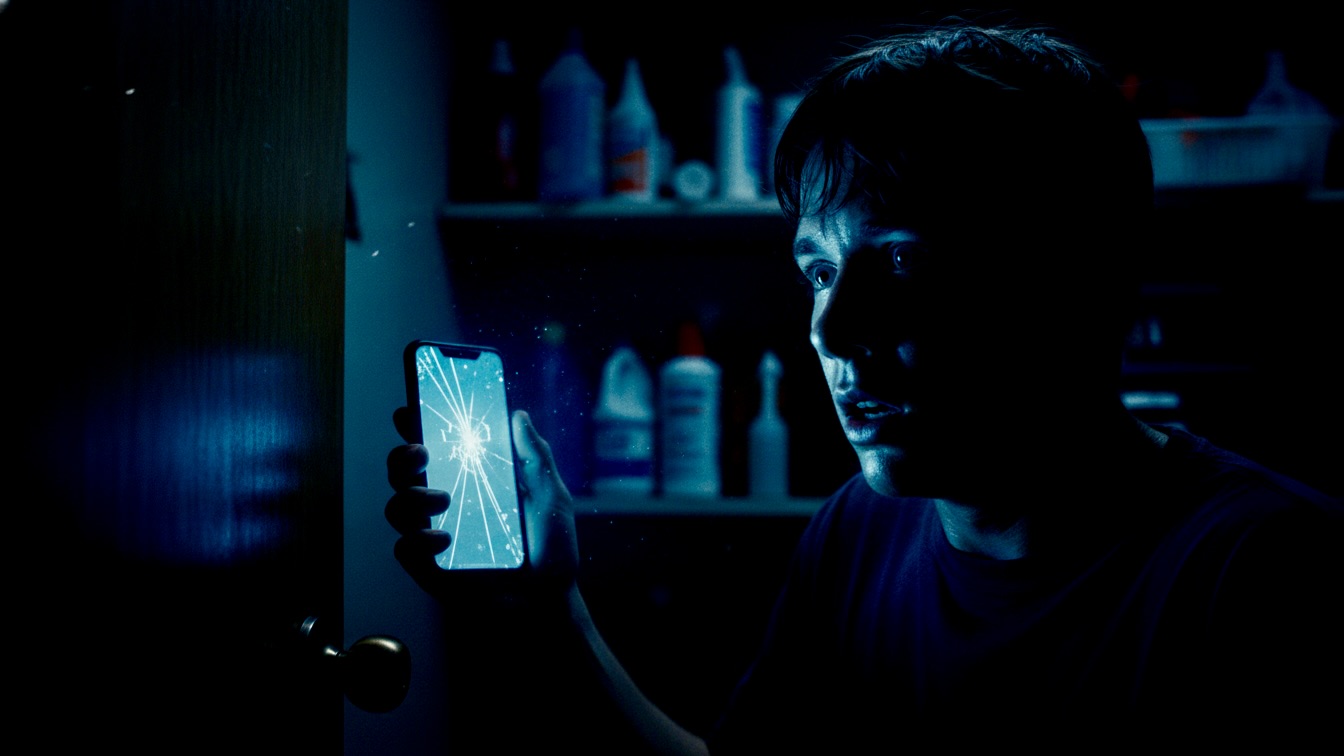
He pulled out his phone. He used the screen as a flashlight.
The closet was small. Shelves of paper towels. Jugs of chemicals. A slop sink.
Jerry closed his eyes. “Compose yourself,” he whispered. “You are a man of science. You are not a character in a pulp novel. There is a logical explanation. A prank. A hallucination induced by chemical fumes in the lab.”
He took a deep breath. Inhale. Exhale.
Slap. Drag.
The sound was outside the door.
Jerry stopped breathing. He held his breath until his lungs burned.
The sound stopped. Right in front of the closet.
Jerry watched the gap at the bottom of the door. The light from the hallway was cut off. A shadow was standing there.
He waited. His heart was hammering against his ribs like a trapped bird.
Then, a voice.
“Jerry?”
It was Tina.
Relief flooded him so fast it almost made him dizzy. He scrambled up. “Tina! Oh, thank god. I thought—”
He reached for the deadbolt. His hand stopped inches from the metal.
Something was wrong with her voice. It was Tina’s pitch, Tina’s cadence. But the tone was flat. Perfectly flat. Like a recording.
“Jerry,” the voice said again. “Open the aperture. We require your assistance.”
Aperture? Tina used formal language, yes. She was pretentious. But she would say ‘door’. She wouldn't say ‘aperture’ to a janitor's closet.
“Tina?” Jerry asked, his voice trembling. “Is Maria with you?”
“The sample has breached containment,” Tina said. “We require biomass to stabilize the reaction. Open the aperture.”
Biomass.
Jerry backed away from the door. He backed into the slop sink. Water soaked into the back of his hoodie.
“I… I don't think I will do that, Tina.”
“Jerry. Do not be obstinate. The variable must be introduced.”
The handle of the door turned. Slowly. The lock rattled.
“Open it,” the voice changed. It wasn't Tina anymore. It was deeper. Guttural. Multiple voices layered on top of each other. “OPEN IT.”
Jerry scrambled onto the sink, trying to get high ground, as if that would help. He kicked a jug of bleach over. It crashed to the floor, splitting open. The smell of chlorine hit him instantly, burning his nose.
“Go away!” he screamed.
The pounding started. A heavy, rhythmic thudding against the door. The wood splintered.
Jerry looked around frantically. There was a vent. High up on the wall. A rectangular HVAC grate.
He didn't think. He grabbed the shelving unit and hauled himself up. It wobbled dangerously. He reached for the grate. His fingers clawed at the screws. They were loose. Old maintenance. Thank god for deferred campus maintenance.
He ripped the grate off. The duct was small, but Jerry was skinny. Anxiety kept him thin.
The door below cracked. A hand reached through. It wasn't a hand. It was pale, elongated, with too many joints.
Jerry pulled himself into the vent. He scraped his stomach on the raw metal edge. He kicked his legs, scrambling into the darkness of the ductwork just as the closet door gave way with a deafening crash.
He crawled. He didn't look back. The duct was tight, smelling of dust and old air. He crawled on his elbows and knees, the metal booming softly with his weight.
He could hear movement behind him. Scuttling. Fast.
“Oh god, oh god, oh god,” he chanted, a mantra of pure terror.
He reached a junction. Left or right? He didn't know the schematic of the building. He went left. It felt like it was heading back toward the main lab.
He crawled for what felt like hours. His knees were bleeding. His hands were raw.
Finally, he saw light ahead. Another grate. He shimmied toward it.
He peered through the slats.
He was looking down into the Bio-Lab.
It was bird’s eye view. He could see the black resin benches. He could see the microscopes.
And he could see the people.
Tina was standing by the whiteboard. Maria was sitting on the floor.
And Jerry was sitting on the stool.
Jerry blinked. He rubbed his eyes with dirty, bloody knuckles and looked again.
Yes. There was a Jerry down there. He was wearing the same grey hoodie. He was tapping on his phone. Tap, tap, tap.
The real Jerry—the Jerry in the vent—felt his mind tilt.
“This is a cognitive break,” he whispered. “I am having a stroke.”
Below him, the Tina-thing spoke.
“The replication is proceeding according to the theoretical model,” she said. Her voice was normal now. Haughty. Arrogant.
“The new iteration seems stable,” the Jerry-thing said. It sounded exactly like him. “Though the anxiety levels are perhaps… diminished. A net positive, I would argue.”
“And the original?” Maria asked. She was drawing a circle on the floor with a marker. “The discarded biological material?”
“Currently navigating the infrastructure,” Tina said. She glanced up. Not at the vent, but at the ceiling in general. “The cleanup crew is pursuing. It should be resolved momentarily.”
Jerry in the vent clamped his hand over his mouth. A scream was trying to climb up his throat.
Cleanup crew.
The scuttling sound behind him in the duct was getting louder.
He looked down. He had to get out. But if he dropped into the lab, he would be face-to-face with… them.
The Dopplegangers.
But staying here meant the scuttling thing would catch him.
Jerry made a choice. He wasn't going to die in a tube like a rat.
He positioned his feet against the side of the grate. He kicked. Hard.
The grate flew off. Clattered onto the lab floor.
The three figures below looked up in unison. Their faces were impassive. Clinical.
Jerry dropped.
He hit the floor hard, rolling to absorb the impact. He knocked over a tray of beakers. Glass shattered. The sound was explosive.
He scrambled to his feet, grabbing a shard of heavy glass.
“Stay back!” he yelled. He waved the glass like a knife. “I do not consent to this! I do not consent to being replaced!”
The Jerry-thing looked at him with mild interest. It adjusted its glasses.
“Fascinating,” it said. “The survival instinct is remarkably persistent in the flawed copy.”
“You’re the copy!” Jerry screamed. “You’re the fake!”
“Semantics,” Tina said. She took a step forward. She was holding a scalpel. “You are inefficient, Jerry. You are paralyzed by neurosis. The new version is streamlined. Better suited for the work we must do.”
“What work?” Jerry backed up. He was cornered against the fume hood.
“The Great Work,” Maria said. She stood up. Her eyes were entirely black. No whites. Just deep, glossy pools of obsidian. “The campus is hungry, Jerry. It requires evolution. We are merely the facilitators.”
They were closing in. A semi-circle of death.
Jerry looked at the door. The door he had tried to open earlier.
“Don't bother,” the Jerry-thing said. “We welded it shut. Metaphorically and physically. You are in the petri dish now.”
Jerry looked at the shard of glass in his hand. Then at the fire alarm pull station on the wall next to the fume hood.
“Evolution requires stress,” Jerry said. His voice shook, but he felt a strange, cold clarity. “Let’s test your adaptation to thermal variations.”
He slammed the glass shard into the fire alarm cover, shattering the plastic, and yanked the handle down.
Nothing happened.
No bells. No strobes. No sprinklers.
The Tina-thing smiled. It was a horrible smile. Too wide. Too many teeth.
“We disconnected the safety systems an hour ago,” she said. “We told you. The atmosphere must remain sterile.”
Jerry slumped.
Then, the vent above—the one he had jumped from—erupted.
The thing that had been chasing him fell out.
It wasn't a person. It was a mass of muscle and bone, wet and red, shaped vaguely like a dog but with human hands for paws. It landed on the workbench, crushing a microscope.
The Dopplegangers didn't look surprised. They looked annoyed.
“A crude instrument,” Tina sighed. “But effective.”
The creature turned its head toward Jerry. It didn't have eyes. Just a mouth full of needle-teeth.
Jerry threw the glass shard at it. It bounced off the creature’s wet shoulder harmlessly.
“Run,” his brain whispered. “Just run.”
But there was nowhere to run.
Wait. The fume hood.
Behind the fume hood was the maintenance chase for the plumbing. It was a vertical shaft that ran the height of the building.
Jerry turned and kicked the panel under the sink. It was flimsy particle board. It cracked. He kicked again.
“He is attempting to access the interstitial spaces,” the Jerry-thing noted calmly. “Statistically unlikely to result in survival.”
“Stop him,” Tina commanded.
The creature lunged.
Jerry threw himself flat on the floor, sliding through the hole he’d made in the cabinet. He squeezed past the P-trap of the sink, smelling sewage and rot.
He fell.
He didn't fall far. He landed on a bundle of insulated pipes about four feet down. The shaft was dark, smelling of earth and old copper.
Above him, the light from the lab was a square of brightness.
He saw the creature’s face fill the hole. It snarled, a wet, gurgling sound.
Then, the Jerry-thing’s face appeared next to it.
“Goodbye, Jerry,” it said. “Do try to decompose quietly. We have a deadline.”
The panel was shoved back into place. Darkness slammed down on him.
Jerry sat on the pipes, trembling. He was alive. He was trapped in the walls of the Science Block, surrounded by monsters who wore his friends' faces, but he was alive.
He reached into his pocket for his phone. He needed light.
His pocket was empty.
He remembered. He had left his phone in the janitor's closet. Or maybe he dropped it in the vent.
No.
The Jerry-thing had it. He had seen him tapping on it.
Jerry sat in the absolute dark. He listened.
He could hear the building. Not the hum of electricity this time.
He heard a heartbeat.
Slow. Massive. Thumping through the concrete walls against his back.
Thump... Thump... Thump...
The building was alive. And he was in its veins.
He reached out, his hand brushing against something on the wall of the shaft. It felt like a ladder rung.
He grabbed it. Rust flaked off under his fingers.
He began to climb. Down. Away from the lab. Toward the basement. Toward the roots.
If the top floors were compromised, maybe the exit was down. Or maybe he was just climbing into the stomach.
It didn't matter. Movement was the only defense against the madness.
“Just keep moving,” he whispered to the dark. “Do not let the constitution waver.”
He climbed. The sound of the heartbeat grew louder with every rung.
“He climbed, and the sound of the heartbeat grew louder with every rung, pulsing through the rust and the dark like a second, terrible life.”