Bette finds a letter from a ghost town and a boyfriend with a bank account full of lies.
The letter was heavy. Not heavy like a book, but heavy like a threat. It sat on the granite counter, next to a half-eaten protein bar and a puddle of condensation from Bette’s iced coffee. The envelope was thick, cream-colored, and felt like skin. The postmark said Vesper’s End. Bette pulled up Google Maps. She typed it in. No results found. She zoomed in on the mountain range north of the city. There was just green. A lot of green and a few grey lines for fire roads. No towns. No Vesper’s End.
Mark walked into the kitchen. He didn't look at Bette. He looked at his phone. His thumb swiped rapidly. He was checking his balance again. He did that every twenty minutes. He called it 'monitoring his assets,' but Bette knew he was just watching the numbers drop toward zero. He smelled like expensive cologne and cheap cigarettes. A red flag, she knew. One of many. She didn't care. Her father was missing for ten years, and this letter had his handwriting on the front. That was the only math that mattered.
"What’s that?" Mark asked. He didn't look up from the screen.
"A letter," Bette said. "From my dad."
Mark stopped swiping. He finally looked at her. His eyes were flat. "He’s dead, Bette. Or gone. Same thing."
"The postmark is from two days ago," she said. She held it out. "Vesper’s End. It’s in the mountains."
Mark took the envelope. He felt the weight of it. His expression changed. It wasn't concern. It was a sharp, predatory interest. He tucked his phone into his pocket. "I’ll drive. My car handles the elevation better."
"I didn't ask you to go," Bette said.
"I’m supporting your journey," Mark said. He smiled. It didn't reach his eyes. "That’s what we do, right?"
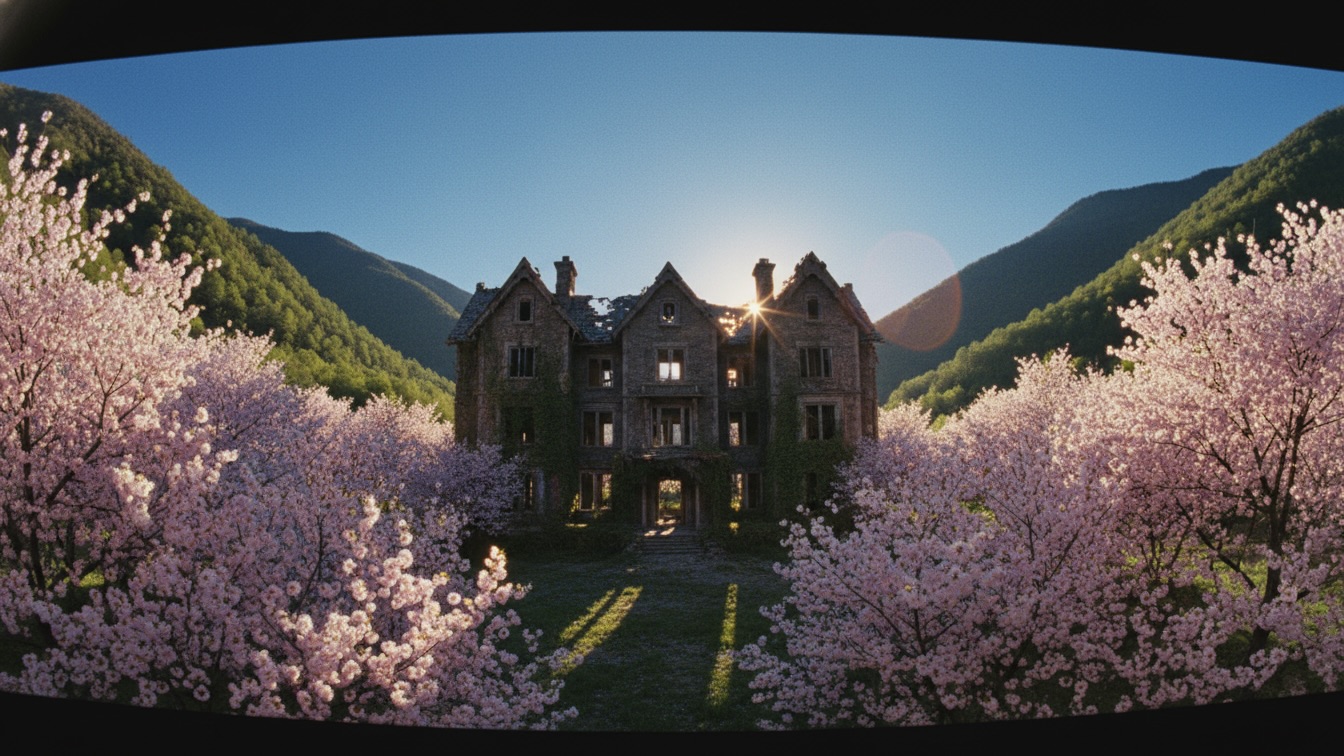
Bette grabbed her jacket. She felt a cold knot in her stomach. It wasn't the letter. It was the way Mark said 'journey.' Like it was a job. Like there was a payout at the end. She followed him out to the driveway. The spring air was supposed to be fresh, but it felt thin. The cherry blossoms on the street were dropping petals like pink snow, but they looked like they were rotting on the asphalt. Everything felt slightly off. The light was too bright, but the shadows were too long.
They drove for three hours. The highway turned into a two-lane road, then a gravel path that rattled the chassis of Mark’s SUV. Mark was quiet. He kept one hand on the wheel and the other on his phone, which he kept in his lap. Every time it buzzed, he flinched. He wasn't looking at the scenery. He was looking at the clock. He was urgent. He was rushing toward something he hadn't told her about.
"Why are you in such a hurry?" Bette asked. She watched the trees. They were thick and gnarled, the new spring leaves a sickly, translucent green.
"Just want to get there before dark," Mark said. "These roads are trash."
He was lying. He loved driving at night. He loved the anonymity of it. Bette looked back at the letter. The handwriting was definitely her father’s. Slanted to the left. The 'B' in Bette had a specific little hook at the top. It was a plea. Come home, Bette. The accounts are open. That’s what it had said. Not 'I love you.' Not 'I’m sorry I left.' Just the accounts.
They reached a iron gate. It was rusted shut, choked with dead vines that the spring hadn't managed to wake up. Mark didn't hesitate. He got out, grabbed a crowbar from the trunk, and forced the lock. The screech of metal on metal made Bette’s teeth ache. It sounded like a scream.
"Mark, maybe we shouldn't," Bette said, stepping out of the car. The air here was different. It smelled like ozone. Like a thunderstorm was about to hit, even though the sky was a clear, piercing blue. And underneath the ozone was something sweet and heavy. Rot.
"We’re here now," Mark said. He tossed the crowbar back into the car. "Don't get cold feet. Think about what he owes you."
"I don't care about the money," she lied.
"I do," Mark muttered, though she wasn't sure if she was supposed to hear it.
They drove up the long, winding driveway. The estate appeared through the trees like a skeletal hand. It was Victorian, three stories of grey stone and peeling white trim. The windows were dark. The most striking thing was the silence. No birds. No insects. Just the sound of the wind through the pines, and even that sounded muffled, like it was coming from underwater.
An old man stood on the porch. He wore a heavy wool coat despite the spring warmth. His skin was the color of wet cardboard. This was the Caretaker. He didn't look surprised to see them. He looked relieved. Like a man watching a debt finally get paid.
"You’re late," the Caretaker said. His voice was a dry rasp.
"The road was hard to find," Bette said. She felt Mark move closer to her. He wasn't being protective. He was positioning himself.
"The road finds who it needs," the Caretaker said. He stepped aside and opened the massive oak door. "Inside. The light is changing."
Bette stepped into the foyer. She stopped instantly. The house was grand, or it had been. Marble floors, a sweeping staircase. But every single mirror—the one over the side table, the pier mirror by the door, the massive gilded one in the hall—was covered. They were draped in heavy black cloth, pinned at the corners. It gave the house the feeling of a funeral parlor.
"Why are the mirrors covered?" Bette asked.
"Safety," the Caretaker said. He didn't elaborate. He pointed toward a room at the end of the hall. "The library. The records are there. Your father was meticulous."
Mark was already moving. He didn't wait for Bette. He pushed past the Caretaker, his boots loud on the marble. He was focused. He was hunting. Bette followed, her heart hammering against her ribs. The air in the house was thick. It felt like walking through invisible cobwebs. Every time she glanced into a corner, she thought she saw a shadow move, a mass of darkness that didn't belong to any furniture. But when she looked directly, there was nothing. Just the silence.
The library was a tomb of paper. Stacks of ledgers, boxes of files, shelves of leather-bound books. It smelled like old dust and that same sharp ozone. Mark began tearing into the boxes. He wasn't looking for letters. He was looking for deeds. He was looking for bank account numbers.
"Mark, stop," Bette said. "Help me find out what happened to him."
"I am helping," Mark said. He threw a folder onto the floor. "I’m finding the value. That’s what matters, Bette. Real life. Not some ghost story."
Bette ignored him. She went to the desk. There was a single ledger there, bound in dark red leather. It wasn't dusty. It looked used. She opened it. The first few pages were her father’s handwriting. Lists of names. Dates. Amounts. It looked like a standard business log. But as she flipped further, the names changed. They weren't business partners. They were neighbors. Friends. People who had disappeared from her life shortly after her father did.
Then she saw a name that made her breath hitch. Henderson.
Mark’s last name was Henderson.
She looked at the entry. April 14, 2015. Henderson Trust. Payment for Silence. 50% Estate Transfer upon Exit.
Bette felt a wave of nausea. She looked at Mark. He was across the room, holding a piece of paper, a grin spreading across his face. He looked triumphant.
"I found it," Mark said. "The mountain property. It’s all here. Bette, we’re set. If you sign this, we never have to worry again."
"Mark," Bette said. Her voice was steady, even though she felt like she was dissolving. "How long has your family known about this place?"
Mark froze. The grin didn't disappear, but it stiffened. It became a mask. "What are you talking about?"
"My father’s ledger," Bette said. She held it up. "Your family trust. You didn't meet me by accident at that coffee shop, did you?"
Mark dropped the paper. He didn't deny it. He didn't try to play it off. He just looked at her with a cold, analytical gaze. The 'red flags' weren't warnings anymore. They were the reality.
"The estate is a curse, Bette," Mark said. His voice was quiet now. Terse. "Your father knew it. My father knew it. It’s a sinkhole for money and blood. But if we sell it to the right people, the debt is cleared. I just needed a blood relative to sign the release."
"He’s dead because of you," Bette said.
"He’s dead because he couldn't pay the interest," Mark said. He took a step toward her. "Sign the papers, Bette. Don't make this harder."
Outside, the wind picked up. The house groaned. The black cloths on the mirrors fluttered, as if something behind the glass was trying to breathe. The shadow mass in the corner of the room surged forward, a literal shift in the light. The ozone smell was deafening now, a physical pressure in her ears.
"Where is he?" Bette asked.
"Who?"
"My father."
Mark pointed to the floor. "Under the foundation. He’s part of the collateral now."
Bette looked at the Caretaker, who was standing in the doorway. He wasn't moving. He was just watching. Waiting for the signature. Waiting for the cycle to complete. The spring blossoms outside were a lie. There was no renewal here. Only the slow, steady rot of a family line.
Bette looked at the ledger, then at Mark. He wasn't the man she loved. He was just a debt collector in a nice jacket. She felt a strange, cold clarity. She wasn't going to sign. But she wasn't going to leave either. The house wouldn't let her. The mirrors weren't covered to protect the people inside. They were covered to keep the things inside from seeing what they had become.
"I'm not signing," Bette said.
Mark’s face contorted. "You don't have a choice."
"Actually," the Caretaker said, his voice cutting through the tension. "She has all the choices. You, Mr. Henderson, are merely a guest. And your time is up."
Mark turned, but the Caretaker was already moving. Not with the speed of an old man, but with the sudden, jarring motion of a glitch in a video. He was in front of Mark in a second. He reached out and pulled the black cloth off the nearest mirror.
Mark screamed. It wasn't a sound of pain. It was a sound of realization. Bette closed her eyes. She couldn't look. She heard the sound of glass shattering, but when she opened her eyes, the mirror was intact. Mark was gone.
Only his phone remained on the floor, the screen cracked, still showing his bank balance. It was zero.
Bette sat at the desk. The ozone smell faded, replaced by the scent of old paper and mountain air. The house felt lighter. The shadows retreated to the corners, small and manageable. She was alone in a house full of covered mirrors, with a ledger that told the story of her father’s death and her own survival.
She picked up a pen. She didn't sign the deed. She began to write a new entry.
Outside, a single cherry blossom petal drifted through the open window and landed on the red leather. It was white, tipped with a bruised purple. Spring had finally arrived at the estate, but it had brought a different kind of life with it.
Bette looked at the door. The Caretaker was gone. The house was hers. The curse was her inheritance, and she was the only one left to count the cost. She leaned back in the chair and listened to the silence. It didn't sound like a scream anymore. It sounded like a beginning.
“She picked up the black cloth from the floor and realized the reflection staring back at her wasn't her own.”


