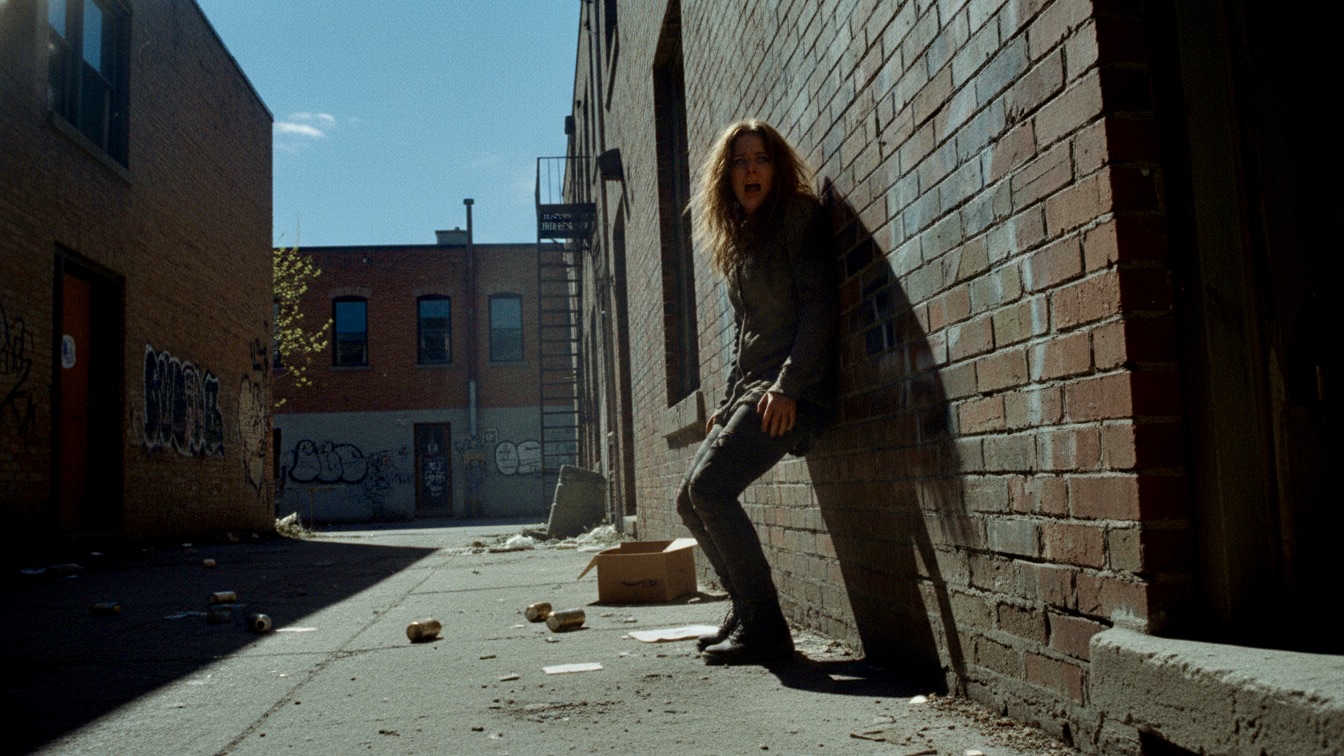
The story follows a group of four individuals—Mae, Will, Dylan, and Nadia—trapped in a secondary diplomatic compound during a violent siege. As they wait for a delayed evacuation that never arrives, the building begins to manifest impossible, shifting physical properties. After learning that the airport is closed and they are stranded, the group descends into the basement to find emergency supplies. Instead of water, they discover ancient, occult-like artifacts that trigger a supernatural collapse of the building's geometry. After Dylan is consumed by a wall that defies physical laws, the remaining three are forced into a desperate, claustrophobic hiding spot as the architecture itself begins to hunt them.
The central theme of the narrative is the fragility of human rationalism when confronted with the incomprehensible. The characters initially attempt to interpret their surroundings through the lens of their current reality, specifically the war-torn environment of the city. They seek logical explanations for the shifting chandelier and the missing stairs, clinging to the belief that the world operates on predictable rules of cause and effect. When these rules dissolve, the resulting terror stems as much from the loss of logic as it does from the physical threat of the building.
Another pervasive theme is the intersection of historical exploitation and present-day horror. The basement serves as a repository for stolen artifacts, suggesting that the compound is literally built upon the foundation of colonial greed and displacement. The building, having been repurposed repeatedly over a century, acts as a vessel for these repressed histories. The manifestation of the stone statue and the shifting walls implies that the environment is not merely a setting but a sentient, vengeful entity that has been awakened by the desperation and fear of those trapped within its walls.
Mae functions as the grounded observer of the group, though her internal state is one of rapid psychological deterioration. She begins the chapter in a state of dissociative numbness, using repetitive habits like wiping her phone screen to manage her anxiety. As the situation escalates, she attempts to act as a stabilizing force for the others, particularly Nadia, but her own internal monologue reveals a deep, visceral terror. Her primary conflict is the struggle to maintain her connection to the mundane world of Toronto, which she uses as a defense mechanism against the encroaching nightmare.
Dylan represents the archetype of the aggressive, control-oriented male who masks his panic with performative action. His pacing and snapping at others are desperate attempts to assert dominance over an environment that is rapidly stripping him of his agency. He refuses to acknowledge the supernatural elements of the building, clinging to his role as a leader until the very moment he is consumed. His disappearance serves as the ultimate narrative turning point, proving that his reliance on physical strength and rigid logic is utterly useless against the shifting reality of the compound.
Will is defined by his physical manifestation of anxiety and his eventual spiral into denial. He is characterized by his self-destructive habit of picking at his hangnail until it bleeds, a clear sign of a man whose internal tension has nowhere else to go. Throughout the chapter, he attempts to minimize the gravity of their situation, using cynical humor and doubt to cope with the impossible. When he is forced to confront the disappearance of his companion, his grief quickly curdles into a frantic, irrational refusal to accept the truth of their entrapment.
Nadia serves as the intuitive, albeit traumatized, consciousness of the group. She is the first to perceive the subtle, wrong shifts in the building’s architecture, correctly identifying the movement of the chandelier and the unnatural nature of the basement. While the men in the group dismiss her observations as hysteria, her sensitivity makes her the most attuned to the danger. She is the only character who seems to intuitively understand that they are not dealing with a structural failure, but a fundamental breach in the reality of their surroundings.
The narrative voice utilizes a stark, visceral style that mirrors the harshness of the war outside and the suffocating atmosphere within the compound. The author employs sharp, sensory details—the smell of cordite, the taste of dust, the vibration of the jaw—to ground the reader in a state of constant physical agitation. This sensory overload makes the transition into the supernatural feel more jarring, as the reader is forced to share in the characters' confusion and rising panic.
The pacing of the story is expertly controlled, moving from a slow, agonizing wait in the lobby to a frantic, claustrophobic descent into the basement. By utilizing short, punchy sentences during moments of high stress, the narrative mimics the shallow, rapid breathing of the characters. The tone remains relentlessly bleak, effectively removing any sense of safety or hope as the story progresses. The shift from a war-zone thriller to a surreal, cosmic horror is seamless, achieved primarily through the author's focus on the distortion of space and the degradation of the characters' sanity.


