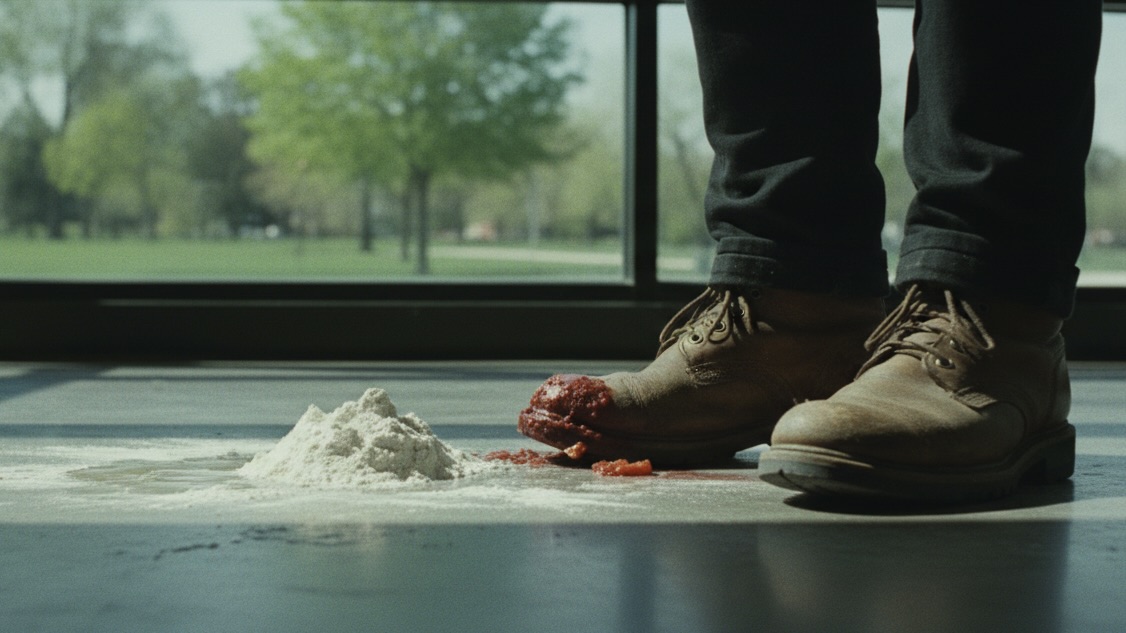
The story follows Arthur, a sixty-three-year-old man navigating a hyper-regulated, algorithmic grocery store in a future society known as a Utopia. His struggle begins with a malfunctioning, locked Smart-Cart that prevents him from competing effectively in a dynamic pricing system designed to exploit consumer speed. Despite his physical limitations and the dismissiveness of younger, more efficient shoppers, Arthur attempts to secure his groceries before a subsidy deadline. The situation devolves into chaos when his cart crashes into a display of expensive heirloom tomatoes, leading to a confrontation with a bureaucratic store monitor. Ultimately, Arthur abandons his groceries and his dignity, leaving the store to find that the orderly, artificial world outside is beginning to show signs of a profound, hidden instability.
The core theme of this narrative is the dehumanizing friction between human fallibility and the rigid, optimized demands of a technocratic society. The author illustrates a world where efficiency is the highest virtue, effectively rendering those who cannot keep pace with algorithms invisible or obsolete. By framing the grocery store as a theater of competition, the text highlights how the Green Equity Initiative has replaced genuine community support with a cold, market-driven logic that punishes the elderly and the physically impaired.
The concept of the Utopia presented here is revealed to be a fragile facade sustained by the collective apathy of its citizens. The shoppers’ refusal to acknowledge Arthur’s struggle underscores a societal shift toward hyper-individualism, where empathy is sacrificed for the sake of maintaining personal status within a credit-based hierarchy. This isolation is further emphasized by the contrast between the vibrant, curated environment of the store and the underlying decay Arthur senses as the story concludes. The narrative suggests that a system built on constant, forced optimization eventually creates its own destruction, as the environmental and social seams of this fabricated reality begin to fray.
Arthur embodies the tragedy of a man who has outlived the relevance of his own generation. His internal state is defined by a deep-seated resentment toward the technological gatekeepers that govern his survival, coupled with the exhausting physical reality of his aging body. He is not merely fighting a broken wheel; he is fighting the systemic erasure of his own history and humanity. His motivation is simple—the desire to procure basic sustenance—but he is trapped within a cycle of scarcity that turns every mundane task into a high-stakes failure.
Arthur’s conflict is as much internal as it is external, as he grapples with the shame of his own perceived inadequacy. When he is clipped by the younger woman or spoken down to by the store monitor, his anger is tempered by the realization that he no longer possesses the social capital to demand dignity. His decision to finally walk away from the store is a pivotal moment of self-assertion, marking his transition from a subservient subject of the algorithm to an observer of its inevitable collapse. He serves as the reader’s lens into the cracks of the system, his frustration acting as a barometer for the structural rot hidden beneath the manicured surface of his world.
The pacing of the chapter is intentionally frantic, mirroring the high-pressure environment Arthur must endure. The author uses short, sharp sentences to convey the suddenness of the cart’s malfunction and the relentless ticking clock of the pricing shifts. This creates a claustrophobic atmosphere that forces the reader to feel the same urgency and anxiety that plagues the protagonist.
The sensory details are particularly evocative, emphasizing the artificiality of the environment. The screeching of the metal wheel, the ozone smell, and the glistening, fake dew on the produce all serve to heighten the sense of sensory overload. By focusing on these tactile, often unpleasant sensations, the narrative voice reinforces the idea that Arthur is an organic being trapped in a sterile, digital prison. The shift in tone from the manic, bright interior of the store to the ominous, rhythmic thumping at the end of the chapter signals a transition from domestic tension to a more existential, looming threat.


