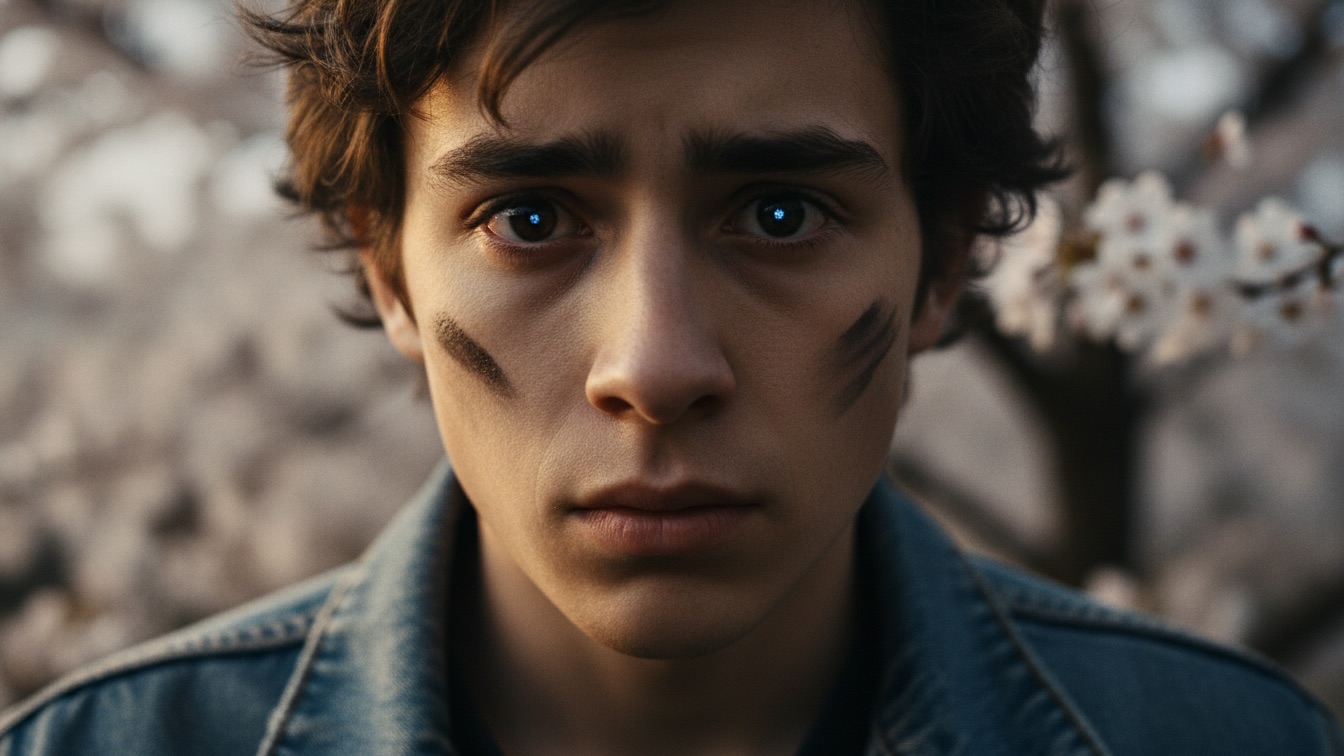
The narrative follows Max and Simon, two young men trapped in a predatory "Academy" that functions as a shadow labor camp for tech conglomerates. Max orchestrates a sophisticated escape by utilizing a hijacked drone to destroy a local power transformer, plunging the facility into darkness during a specific maintenance window. Carrying a ruggedized SSD containing evidence of the facility's illegal exploitation of gifted children, Max leads a terrified Simon through the dark corridors and across the sensor-laden grounds.
Their flight culminates in a desperate motorcycle jump over a perimeter ravine using a salvaged electric dirt bike. The landing is catastrophic, leaving Simon dangling from a rusted rebar spike over a thirty-foot drop while the incriminating drive teeters on the edge of the wall. In a pivotal moment of moral clarity, Max chooses to save his friend's life, allowing the evidence of their suffering to fall into the abyss. Though they successfully breach the physical boundary of the camp, the chapter ends with the ominous presence of a surveillance drone tracking their movements from the sky.
The central theme of the story is the dehumanizing intersection of corporate greed and technological exploitation. The "Academy" serves as a poignant metaphor for systems that commodify human potential, stripping away the childhood of "gifted" individuals to fuel an industrial machine. By framing the students' work as "work-study contracts," the narrative highlights how language is weaponized to mask modern slavery. Max’s realization that the school is merely a mid-tier prison underscores the loss of agency inherent in such an exploitative environment.
Another prominent theme is the heavy cost of moral choice and the definition of true freedom. Max begins the journey viewing the encrypted data on his drive as his only "ticket to a life" and his primary source of leverage against his oppressors. However, the climax forces him to weigh the abstract value of justice and personal gain against the immediate, tangible value of a human life. By choosing Simon over the drive, Max rejects the cold, transactional logic of the Academy, suggesting that true liberation is found in reclaimed empathy rather than just physical escape.
Finally, the story explores the illusion of escape in a high-surveillance society. While the protagonists successfully navigate the physical barriers of fences and walls, the final image of the surveillance drone suggests that the "grid" is more pervasive than a simple power line. The transition from the industrial smells of the camp to the "sickeningly sweet" scent of jasmine indicates a sensory shift toward nature, yet the red eye of the drone reminds the reader that they remain within a digital panopticon. This creates a lingering tension between the physical act of running and the inescapable nature of modern tracking technology.
Max is a protagonist defined by a rigid, tactical psychology developed as a survival mechanism within a hostile environment. He perceives the world through a technical lens, translating human experiences into data points, maintenance windows, and legacy bugs. This cognitive framing allows him to maintain composure under extreme pressure, but it also risks alienating him from his own emotions. His obsession with the "twelve percent" progress bar and the mechanical efficiency of his plan suggests a personality that has been forced to mirror the machines he is tasked with building.
Despite his cold exterior and his frustration with Simon’s perceived weakness, Max possesses a deeply suppressed reservoir of altruism. His decision to save Simon at the expense of the drive represents a psychological breakthrough where he prioritizes human connection over tactical advantage. By discarding the drive, he effectively destroys his "ticket" to a curated future, yet he describes feeling "lighter." This indicates that his true burden was not the physical weight of the labor, but the psychological weight of the transactional mindset imposed upon him by the conglomerate.
Simon serves as the emotional and physical manifestation of the trauma inflicted by the Academy. His character is characterized by somatic symptoms of anxiety, such as his "watery" legs and his constant, restless twitching. Unlike Max, who channels his stress into technical problem-solving, Simon is nearly paralyzed by the reality of their situation. He represents the "gifted" child whose spirit has been most fractured by the transition from a student to a shadow laborer, leaving him dependent on Max’s strength for survival.
Psychologically, Simon functions as the mirror to Max’s humanity, forcing the protagonist to engage with something other than code and hardware. His terror at the edge of the ravine is the catalyst for the story's moral climax, testing whether the "Academy" has successfully turned Max into a machine. Simon’s presence ensures that the escape is not merely a technical exercise but a human struggle. Although he is physically weaker, his survival is the metric by which Max’s successful reclamation of his own soul is measured.
The pacing of the narrative is expertly handled, mimicking the frantic heartbeat of a high-stakes heist. The author utilizes a ticking-clock motif, with specific timestamps like "12:02:50" creating a sense of mounting dread and urgency. This chronological precision mirrors Max’s internal state, where every second is a calculated risk. The transition from the slow-motion "insult" of the progress bar to the explosive action of the motorcycle jump creates a dynamic rhythm that keeps the reader perpetually off-balance.
Sensory details are used to create a stark contrast between the sterile, oppressive interior of the Academy and the overwhelming reality of the outside world. Inside, the air is characterized by "recycled sweat" and "rotting cabbage," evoking a sense of stagnation and decay. In contrast, the outside air is "crisp" and smells of "blooming jasmine," which Max finds almost "sickeningly sweet." This sensory overload emphasizes how disconnected the boys have become from the natural world, making their environment feel as much like a psychological prison as a physical one.
The narrative voice is a close third-person perspective that heavily adopts Max’s technical jargon and unsentimental worldview. Descriptions of the bike as a "skeleton" and the drone strike as "simple physics" provide insight into how Max has been conditioned to think. This stylistic choice makes the moments of emotional vulnerability, such as the "copper taste" of blood or the "bone-jarring crash," feel more impactful because they break through his analytical shell. The final image of the "cold, digital precision" of the surveillance unit serves as a chilling stylistic bookend, returning the prose to the mechanical coldness established in the opening paragraph.


